Russia leads the way in post-Fukushima world…

From Russia: By Igor Alexeev…

russia

Reconstructing nuclear confidence in the world following the Fukushima nuclear plant disaster will be a long and painful process. But real-life energy demands, especially in developing countries, predetermines a significant share of nuclear energy in their national energy consumption structure. Russian experience in this field can offer some interesting solutions to the decision-makers.

The Fukushima incident has contributed a lot to the lay belief that nuclear energy use is a risk not worth taking. Although, according to the data of the non-profit World Nuclear Association, only a very limited number of accidents occurred in over 14,500 cumulative reactor-years of commercial nuclear power operation in 32 countries.

The Three Mile Island, Chernobyl and Fukushima are the most notorious examples of “Houston, we’ve had a problem” crisis situations. Is it possible to find balance between reasonable public concerns and nuclear generation crucial for economic growth? Russian experience in the reconstruction of global nuclear confidence can offer some interesting solutions to the post-Fukishima world.

Nuclear power use goes hand in hand with irrational, fears especially in the so-called developed countries. A popular genre of post-apocalyptic drama has been thrilling Western consumers with pictures of polluted wastelands and toxic rains for several decades. The Fukushima incident triggered the downfall of the atomic industry in the European Union: Germany adopted a total ban, Switzerland and Spain banned the construction of new reactors.

Independent data analysis shows that the roots of these radical decisions lie in the sphere of crowd psychology – the politicians influenced by the green lobby had to stop the atomic panic. However, all energy specialists know: the impact of potential human errors in the nuclear sector has considerably decreased. According to the Organization for Economic Cooperation and Development report risk statistics, natural gas and nuclear industry appear to be the safest energy sources.

The contrast is especially striking in comparison with other realistic energy options (see a timeline by The Guardian Datablog). “Of those we have identified, six accidents happened in the US and five in Japan. The UK and Russia have had three apiece”, – Simon Rogers wrote counting accidents with nuclear reactors after the Japanese tragedy in 2011.

This explains why many sovereign governments like China, India and Iran want to see Russia’s Atomstroyexport as their contractor, despite the fact that they have their own peaceful atom programs. Last April, Finland’s Fennovoima also invited Atomstroyexport (along with Toshiba) to take part in a tender for building the sixth nuclear reactor in the country. The first two Finnish reactors were built by Russian specialists, the third and fourth by the Swedish company. The fifth reactor is now under construction by Germans and French.

The Iranian facility in Bushehr is a particular example of engineering expertise. Russian specialists solved many technological problems and successfully integrated German structural elements into the new reactor. In the late 1990s, Siemens AG (Germany) quit the project mostly for political reasons, leaving behind tons of old hardware.

Nevertheless, with the help of Iranian scientists, the reactor of Bushehr nuclear power plant’s Unit 1 was brought up to 100% of its projected capacity on August 30, 2012, the representative of Atomstroyexport announced last year. Setting all ideological considerations aside, the completion of the project in such highly seismic area was truly a landmark event for the whole industry. The Bushehr facility passed a harsh stress-test during the latest earthquake in Iran.

After 2011, Rosatom went global and concentrated on its key export project – the NPP-2006. Now this reactor combines both active and passive safety systems. Innovative solutions include advanced molten core catchers, a passive heat decay removal system and other updated protection elements. At the same time, US-Japanese and European companies are primarily developing passive nuclear safety systems because power outage reports influenced their risk analysis.

The 1979 Three Mile Island incident in the US led to massive anti-nuclear protests and inspired the sociological theory of “system or normal accidents” by Charles B Perrow, both of which significantly slowed down research in the US civil nuclear industry. In short, the theory holds that high-risk systems are prone to failures however well they were managed. Western companies simply lacked field data on various types of accident situations.

In contrast, Russian specialists since Chernobyl have become really paranoid about disaster prevention and safety issues on both the practical and theoretical levels. For instance, Russian reactors can stand a direct collision from a falling plane – who in the pre-9/11 world could have ever expected that to be necessary? If Rosatom’s modern NPP had been installed in Japan, Fukushima incident might not have happened. Or, at least, the consequences would have been not so devastating.

On April 26 this year, Russia mourned the 25th anniversary of the tragic events in Chernobyl. It was a painful lesson to learn. Russia has done its homework and now its nuclear power plants are the most reliable and technologically advanced atomic facilities on the market. One cannot but hope that politicians elsewhere will understand that sometimes it is necessary to put safety concerns before lucrative business deals with politically “comfortable” partners.

Paraphrasing one famous advertising motto, in the nuclear industry you should really get the best or nothing. Such a strategy might help the decision-makers on nuclear projects to strike the happy medium between environmental concerns and actual energy demands.

Igor Alexeev is a Russian journalist and blogger for Strategic Culture Foundation and Route Magazine. He writes on the oil and gas sector, Eurasian energy security and shipping industries in the Arctic. (Copyright 2013 Igor Alexeev)

Posted by Kyle Keeton
Windows to Russia…

The copy scores 33.4 in the Flesch Reading Ease test…

Hoard Time in Russia…

Is it Time to Hoard?

Putin talks about it and Medvedev talks about it. They are not afraid to call it like it is. Putin the Russian president will tell you that Russia will be alright, but that we have to get ready for what is happening in the west. That tells people to wake up and get on the move, because the crap is going to hit the fan soon. Medvedev sees the hording starting and trying to keep a semblance of control on it. He tells us not to hoard and slow down. Other words: It is going to get rough and you have time to get ready, just do not panic…

“This is how it was in 2008, and now we are witnessing the same thing. However, unlike our friends and partners in Europe and other parts of the world, the Russian economy is showing vitality and prospects of further growth,” Putin said.

In 2008 we really got caught off guard. This time we are watching it develop and the conditions present are all pointing to a crash worse than the last. At least Russia is truthful and is telling everyone that, “The train has run away and no one is big enough to stop it!”

Medvedev is going on record to day saying that we really do not need to stockpile or hoard items. That is the trigger response that tells all Russians that it is going to get rough and while we will get through it okay, it is time to start hoarding at a controlled pace. We still have time to get ready…

Medvedev and Putin talk the right talk and if you look at what they say. They will tell you that it is going to get really rough and Russia has done its best to implement controls and changes to try to keep from following the west off the cliff as everything collapses. Putin and Medvedev always use that duo team work to get the important things across.  China has been doing the same, India has been doing the same, and as a huge part of the world has been doing the same…

The damn western press just spouts about how the rest of the world is doing so terrible and countries like China are going down, down, down and down some more…

America and western puppets, have walked around and through the new type of battlefield that has been laid before her. The world is staring at a western induced collapse, due to pure unadulterated greed and  it also dislikes the trend toward war that is happening…

I told Sveta two weeks ago while at the village, “We need to get a weather sealed type cabinet and fill it with flour, rice, matches, paper, pencils, sugar, salt, medicines and many other items… ” Other words hoarding…

hoardHoarding is the only way to have something after things collapse. The Russians are experts on hoarding and a Russian will tell you that hoarding is an art and has to be done correctly. You hoard only items that will either be good for food, trade, barter or substitute currency and you hoard items for survival. You do not hoard froze items and refrigerated items. Can goods, sealed goods and long life span items is the way to go with food. Sugar, salt and other spices make great money in rough times. I think a spice such as cinnamon is a perfect spice to hoard…

I say, “Hoard, hoard, hoard and hoard some more!”

It will feel awful good to wipe your ass with real toilet paper instead of a piece of news paper or magazine that tells you, “Stock Market at all time high!” 🙂

Post by Kyle Keeton
Windows to Russia…

Narcissistic Personality Disorder a Politician…

NarcissisticWhile only 1% to 2% of the population would be able to be diagnosed with Narcissistic Personality Disorder, it seems that many of those very ill people, are in a career devoted to politics and other governmental situations…

These Narcissistic people are the ones that we rely upon to protect us, to control us and to mold our future…

Short but sweet definition: Narcissistic personality disorder (NPD) is a personality disorder in which the individual is described as being excessively preoccupied with issues of personal adequacy, power, prestige and vanity…

Symptoms of this disorder:

  • Takes advantage of people, places and things to reach own goals
  • Expects and demands to be recognized as superior and special, without any accomplishments
  • Expects and desires constant attention, admiration and positive reinforcement from others
  • Envies others and believes others envy him/her
  • Is preoccupied with thoughts and fantasies of great success, enormous attractiveness, power, intelligence
  • Lacks the ability to empathize with the feelings or desires of others
  • Is arrogant in attitudes and behavior
  • Lies to achomplish and fulfill their goals
  • Has expectations of special treatment that are unrealistic

Bottom line is that we vote these people in to position and then allow them power to bring more like them into power and after awhile they have surrounded themselves with the rest of their peers. Then before you know it we have a bunch of Narcissistic people who have no ability to care for the average person and has only a desire to use you to better their position, power and finances in life…

There is very few politicians that do not fit the mold of a person with a Narcissistic Personality Disorder and we have coddled that situation and allowed them to take over our governments. Governments all over the world…

America even has a president that is a prime example of a Narcissistic…

Post by Kyle Keeton
Windows to Russia…

Assad talks, Russia walks By Pepe Escobar

So Bashar al-Assad has spoken – exclusively, to Argentine daily El Clarin (there’s a huge Syrian diaspora in Argentina, as well as in neighboring Brazil).

Cutting through the fog of Western hysteria, he made some valuable points. The record shows that, yes, the regime has agreed several times to talk to the opposition; but myriad “rebel” groups with no credible, unified leadership have always refuted. So there’s no way a ceasefire, eventually agreed on a summit – such as the upcoming US/Russia Geneva conference – can be implemented. Assad makes some sense when he says, “We can’t discuss a timetable with a party if we don’t know who they are.”

Well, by now everyone following the Syrian tragedy knows who most of them are. One knows that the Un-Free Syrian Cannibals, sorry, Army (FSA) is a ragged collection of warlords, gangsters and opportunists of every possible brand, intersecting with hardcore jihadis of the Jabhat al-Nusra kind (but also other al-Qaeda-linked or inspired outfits).

It took Reuters months to finally admit that jihadis are running the show on the ground. [1] A “rebel” commander even complained to Reuters, “Nusra is now two Nusras. One that is pursuing al Qaeda’s agenda of a greater Islamic nation, and another that is Syrian with a national agenda to help us fight Assad.” What he didn’t say is that the real effective outfit is al-Qaeda-linked.

Syria is now Militia Hell; much like Iraq in the mid-2000s, much like the Western-imposed, “liberated” Libyan failed state. This Afghanization/Somalization is a direct consequence of NATO-GCC-Israel axis interference. [2] So Assad is also right when he says the West is adding fuel to the fire, and is only interested in regime change, whatever the cost.

What Assad didn’t say

Assad is not exactly a brilliant politician – so he wasted a golden opportunity to explain to Western public opinion, even briefly, why GCC petro-monarchies Saudi Arabia and Qatar, plus Turkey, have the hots for setting Syria on fire. He could have talked about Qatar wanting to hand over Syria to the Muslim Brotherhood, and Saudi Arabia dreaming of a crypto-emirate colony. He could have talked about them both being terrified of Shi’ites in the Persian Gulf harboring legitimate Arab Spring ideals.

He could have pointed to the absolute shambles of Turkey’s “zero problems with our neighbors” foreign policy; one day there’s a triad of collaboration Ankara-Damascus-Baghdad, the next Ankara wants regime change in Damascus and routinely antagonizes Baghdad. And on top of it Turkey is puzzled to see Kurds emboldened from northern Iraq to northern Syria.

He could have detailed how Britain and France inside NATO, not to mention the US, as well as their petro-monarch puppets are using the disintegration of Syria to hit at Iran – and how none of these actors supplying the weaponizing and plenty of cash give a damn about the suffering of the “Syrian people”. The only thing that matters is strategic targets.

While Bashar al-Assad was talking, Russia was walking. President Vladimir Putin – well aware that the Geneva talks are being derailed by various actors even before they happen – moved Russian naval vessels to the Eastern Mediterranean; and offered Syria a batch of ultra-modern ground-to-sea Yakhont missiles plus a batch of S-300 anti-aircraft missiles – the Russian equivalent to the American Patriot. Not to mention that Syria already has Russian SA-17 anti-aircraft missiles.

Now try, any one of you NATO-GCC gang, even bypassing the UN, to unleash a mini-Shock and Awe on Damascus. Or to install a no-fly zone. Qatar and the House of Saud, militarily, are a joke. The Brits and France are seriously tempted, but they don’t have the means – or the stomach. Washington has the means – but no stomach. Putin was dead sure the Pentagon would read his message accordingly.

And don’t forget Pipelineistan

Assad could also have talked about – what else – Pipelineistan. It would have taken him two minutes to explain the meaning of the agreement for the US$10 billion Iran-Iraq-Syria gas pipeline that was signed in July 2012. This crucial Pipelineistan node will export gas from the South Pars field in Iran (the largest in the world, shared with Qatar), through Iraq, towards Syria, with a possible extension to Lebanon, with certified customers in Western Europe. It’s what the Chinese call a “win-win” situation.

But not for – guess who? – Qatar and Turkey. Qatar dreams of a rival pipeline from its North field (contiguous with Iran’s South Pars field), through Saudi Arabia, Jordan, Syria and finally Turkey (which bills itself as the privileged energy transit hub between East and West). Final destination: once again, Western Europe.

As in all Pipelineistan matters, the crux of the game is bypassing both Iran and Russia. That’s what happens with the Qatari pipeline – frantically US-supported. But with the Iran-Iraq-Syria pipeline, the export route may originate nowhere else than in Tartus, the Syrian port in the Eastern Mediterranean that hosts the Russian navy. Gazprom would obviously be part of the whole picture, from investment to distribution.

Make no mistake; Pipelineistan – once again tied up with bypassing both Russia and Iran – explains a great deal about why Syria is being destroyed.

The EU oil-for-al-Qaeda scheme

Meanwhile, the real Syrian army – backed by Hezbollah – is methodically retaking strategic Al-Qusayr out of “rebel” control. Their next step would be to look east – where Jabhat al-Nusra is merrily profiting from another typical EU blunder; the decision to lift oil sanctions on Syria. [3]

Syria Comment blogger Joshua Landis drew the necessary conclusions; “Whoever gets their hands on the oil, water and agriculture, holds Sunni Syria by the throat. At the moment, that’s al-Nusra. Europe opening up the market for oil forced this issue. So the logical conclusion from this craziness is that Europe will be funding al-Qaeda.” Call it the EU oil-for-al-Qaeda scheme.

Southwest Asia – what the West calls the Middle East – is bound to remain a privileged realm of irrationality at play. As things stand in Syria, instead of a no-fly zone what should really fly is an “all fly peace” – with everyone and his neighbor involved; US, Russia, the EU, but also Hezbollah, Israel and of course Iran, as Russian Foreign Minister Sergei Lavrov has keenly stressed. [4]

Way beyond the Western obsession with regime change, what the already troubled Geneva conference could yield is a deal following the Syrian constitution – which, by the way, is absolutely legitimate, adopted in 2012 by a majority of votes of the real, suffering, “Syrian people”. This could even lead to Assad not running for president in elections scheduled for 2014. Regime change, yes. But by peaceful means. Will NATO-GCC-Israel let it happen? No.

AssadNotes:
1. Insight: Syria’s Nusra Front eclipsed by Iraq-based al Qaeda, Reuters, May 17, 2013.
2. North Atlantic Treaty Organization-Gulf Cooperation Council-Israel.
3. EU decision to lift Syrian oil sanctions boosts jihadist groups, Guardian, May 19, 2013.
4. Russia says Iran must take part in proposed Syria talks, Reuters, May 16, 2013.

Pepe Escobar is the author of Globalistan: How the Globalized World is Dissolving into Liquid War (Nimble Books, 2007) and Red Zone Blues: a snapshot of Baghdad during the surge. His also wrote Obama does Globalistan (Nimble Books, 2009). He may be reached at pepeasia@yahoo.com.

Post by Kyle Keeton
Windows to Russia…

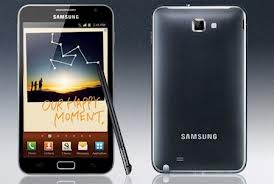
From Russia: Samsung Galaxy Note GT-N7000 – Is a Gingerbread Device…

imagesGingerbread is perfect for the Galaxy Note N7000…

Yes, you heard me! The N7000 is nothing but a Gingerbread device and if you desire more than that, then you need to get a different phone. ICS does run well on it, but the issues related to ICS have made that Android ROM version worthless and many times a disaster to the N7000. I am very happy with Gingerbread and use CheckRom v5 as the everyday driver, but after trying every ROM and trying multiples of versions of each ROM: Well they all suck except for the Gingerbread and even stock Gingerbread rules the roost over the latest and greatest –  Android versions…

Believe it or not I have tried everything up to date that would install properly on the N7000. I just tried “Vanilla Rootbox” and to honest that just put the icing on the cake. It took me a little more than effort and I got my phone back operating (It refused to leave the roost very easily and I had to pull out ODIN to convince it otherwise.). The operating system was “okay” no real complaints, but more options than a commercial airliner. Unless you are just crazy and all you want to do is adjust your phone for days, then go for it. I happen to want something to work right out of the box and most custom ROM’s now days are going in the opposite direction of that philosophy…

The one ROM that has what I want and is not able to fulfill that need due to bugs running all over the place is a MIUI ROM. I install a MIUI ROM and always say. Wow!” Then after less than a day I say, “Time to say goodby!” There is always a game changer involved in those MIUI ROM. They have n0 consistency and that includes the Gingerbread versions. I simple love that ROM, but can not work with a phone that runs like a slug and MIUI is a slug, a beautiful slug…

Update on MIUI for the N7000: I can not stop looking for that perfect MIUI ROM – today I found a version that is ICS based and MIUI. It is made by my favorite developer ibotpeaches – miuiandroid_GT-N7000_ics-2.12.14.zip is what you need to look for and you just may find it is perfect. I am going to try to use it as a daily driver, for a week. I will get back if it does the job… (Cross those fingers…)

I see more and more people reverting back to ICS and even Gingerbread. The Jelly Bean ROM that Samsung pushed out to us is a piece of junk and they only did it to shut people up. I compiled better ROM’s than what they pushed out and that is pretty sad…

Okay I know that hate will be prevalent on this subject and that is okay. I also know that if you put aside the need to try to say you have the latest and greatest OS for Android, then you will re,member how smooth the N7000 ran in Gingerbread. Then remember that she is a dual core and 1 gig of ram. She was made to turn Gingerbread into a powerhouse and she did just that…

She is an old girl now and the N7000 has a lot of life left, she just does not have the horsepower to drive the bigger  load…

It is hilarious to hear and see the comments about Jelly Bean, “The ram is gone! What did they do to my phone? What do you mean I need to reinstall and wipe it all? What is a custom ROM and will that solve everything? The phone is sluggish! I hate the N7000! I hate Samsung! How can I get back my ICS? Help……….??????”

There are some very good ROM out there for the N7000 and if you want stability and Jelly Bean: Try SlimBean is is a damn good ROM. A very good MIUI is by ibotpeaches and it really tries to meet what I need. I keep trying each new version (MIUI) that is put out each month and I will keep hoping…

So far CheckROM has held off the avalanche of Jelly Bean delights that keep coming forth. It defeated all the ICS varients in the past and after flexing its muscles, it walked all over JB also. I really though that Rocket ROM in Gingerbread was the answer and it failed in comparison to CheckROM, but Rocket ROM GB beats ICS and Jelly Bean, hands down…

The phone has to be functional and when it is a daily driver, it has to just plain work. Battery life has to be better than just good, it has to be great and there has to be enough ram to keep things like the browser from crashing. There has to be enough cpu cycles spared to drive that mule down the path. When I click WIFI hot-spot, I want instant WIFI hot-spot. Etc, etc, and etc…

Gingerbread just plain works…

Post by Kyle Keeton
Windows to Russia…

P.S: I love this phone and it will stay my daily driver. It is the best of the best as far as doing what I need to do. I am looking at a new phone, that will become the phone to experiment with. The Note has reached its experimental life cycle and I have outreached its abilities. So maybe the Note 3? Just maybe…

Russia’s Putin Making The Chess Board Moves…

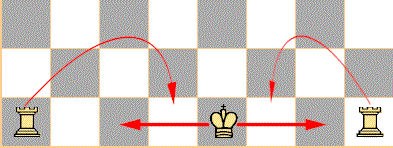
castlingThe Mediterranean has become the latest chess move by Putin. It is a huge move and sets a stage that I saw coming, as games were being played by both sides to stall for time. Time for much different moves on the chess board as we have all just found out. Russia has let America make several moves with very little response and now Putin responds… (But I say, “Russia Plays Chess and America Plays Checkers!”)

I have also stated that China has stepped into the picture and alongside Russia they have and will increase a presence in the Mediterranean. Submarines will become the normality there also, as the pivot point toward WW3 starts to become a reality…

The magic special line to not cross has been reached and we have watched a stumble happen in the west, just as we did when Georgia boldly attempted to instigate a war with Russia and Georgia expected the Calvary to ride in on white horses and save him…

I do not see the western people looking at Syria as a necessary focal point, but I do see that the eastern world, does see Syria as a huge focal point…

Castling seems to be the move that comes to mind as this unfolds…

Post by Kyle Keeton
Windows to Russia…

Why? Russia Asks: Because it Scares the Hell out of the West and its Plans…

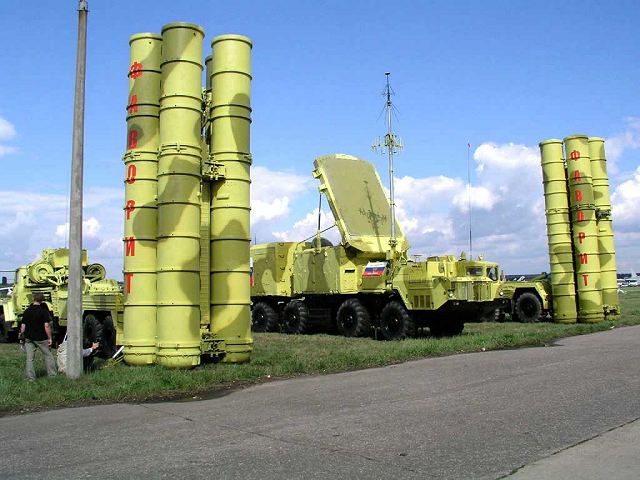
S-300_PMU2_surface-to-air_defense_missile_system_Russia_Russian_armyWhy do those defensive S300 missiles and Syria cause such a stir? Because it means that it is not a fee ride to blow a country up as we try to illegally invade it. They may not stop the end result of the invasion, but they will sink a few aircraft carriers and take a whole bunch of men with them…

Now that would be a lose that would sink the scum-ass politicians in America to the bottom of the ocean, with cement boots free of charge…

SOCHI, May 17 (Itar-Tass) – Russia does not supply banned equipment to Syria, nor does it conceal information about supplies under signed contracts, Foreign Minister Sergei Lavrov said on Friday in comments on western reports alleging Russian supplies of upgraded Yakhont missiles to Syria.

“As for the reports on supplies of armaments from Russia to Syria, I don’t understand why the mass media are trying to make a sensation of it,” Lavrov said, “we haven’t concealed that we supply weapons to Syria under signed contracts without violating any international treaties or our legislation.”

“We foremost supply defensive armaments,” he added.

The fact that these missiles are in Syria has caused the back pedaling that we are seeing right now…

It is called defense and bullies hate defense…

Post by Kyle Keeton
Windows to Russia…

Encircling Russia with US Military Bases: Moscow Catches CIA Spy Red-Handed: By Stephen Lendman…

CIA agents operate most everywhere.  Some pose as diplomats.

Diplomacy provides cover for why they’re sent. Christopher Fogle was caught red-handed. He was assigned to Washington’s Moscow embassy political section. He was third secretary.

A web site name search found no match. It’s no surprise why. He was arrested, declared persona non grata, and expelled. He got off easy. He committed espionage. He should have been imprisoned.

On May 14, Voice of Russia (VOR) headlined “FSB catches CIA Agent Controller red handed,” saying:

The previous evening, Russia’s Federal Security Service (FSB) said Fogle “was arrested while in the process of attempting to recruit a member of one of the Russian special services.” No name was mentioned.

According to the embassy’s political section, it

“presents US foreign and security policy positions to the Government of the Russian Federation and interprets for Washington, Russia’s major foreign, defense and security policies.”

“Also, (it) analyzes and reports on significant events and trends in Russian domestic politics (elections, political parties, Kremlin-regional relations, media, human rights etc.) in so far as they affect Russia’s relationship with the US.”

“The section consists of three units: External Affairs, Political-Military Affairs, Internal Affairs.”

In other words, it spies. It does so under cover of diplomacy. It’s much like during Cold War days. Washington spends unknown sums doing it. Black budgets aren’t revealed.

VOR said:

“While the CIA may place an agent or officer under official cover in any position, even ambassador, it is important to note that the section this particular agent was working in would have been responsible for whatever operations the US has connected to the recent Russian opposition and meddling in the elections processes in Russia.”

When Fogle was arrested, FSB said he had technical devices, a disguise, a large stack of 500-euro notes (about $650 each), and Russian instructions for an intelligence agent he tried to recruit.

A photo showed him lying face down. His arms were pinned behind his back. Instructions apparently were in letter form. It was addressed to a “Dear friend,” saying:

“YOUR COOPERATION VALUED”

“This is an advance from someone who has been highly impressed by your professionalism, and who would highly value your cooperation in the future.”

“We are willing to offer you $100,000 and discuss your experience, expertise and cooperation, and payment could be significantly larger, if you are willing to answer concrete questions.”

It added that $1 million annually would be paid for longterm cooperation. Bonuses were promised for special information.

Instructions explained an anonymous Internet cafe gmail account – unbacggdA@gmail.com. Write to the address was said, wait seven days, and check for an answer.

The closing comment was: “Thank you for reading this. We are very anxious for the opportunity to be working with you in the near future. Your friends.”

VOR said embassy undercover work is “old school….(W)hat’s interesting is the apparent desperation the CIA is operating under in attempting to obtain intelligence about Russia.”

Using an anonymous gmail address is another twist. Russia’s FSB said:

“Recently, the US intelligence community has repeatedly attempted to recruit employees of Russian law enforcement agencies and special departments.”

These attempts were “recorded and passed to FSB Counter-Intelligence.” It prevents widespread internal US meddling. It does so effectively.

Various schemes were discovered. Doing so foiled US schemes. VOR said Washington’s color revolution plot failed. USAID was expelled.

On Wednesday, Russia’s Channel 1 television aired comments from a man called an FSB officer. His identify was concealed. He said:

“Over the past two years we have been observing persistent attempts by the CIA to recruit employees of Russian law enforcement and security agencies.”

“We asked our American colleagues to discontinue such disturbing practices with regard to Russian citizens. However, our requests were ignored.”

He added that Russian counterintelligence knew Fogle was a career CIA agent the moment he arrived. He was closely monitored.

His foiled espionage mission wasn’t his first. His amateurish disguise wasn’t the first time he used one.

Other CIA operatives infest Russia. Its counterintelligence perhaps is on to their schemes. It’s had decades learning how. Its Cold War adversary hasn’t changed.

Golos is a so-called independent NGO election monitor. America’s National Endowment for Democracy (NED) funds it.

In last year’s Russian elections, it alleged over 2,000 irregularities, including 900 in Moscow. Executive director Grigory Melkonyants claimed “massive serious violations.” He was well paid to say it.

NED, its National Democratic Institute (NDI) arm, the International Republican Institute (IRI), USAID, and similar organizations function as destabilizing US foreign policy tools.

Russia’s a prime target. The Cold War never ended. It’s reinvented in new form.

Taking NED or other foreign money violates Russian law. Making baseless accusations compounds malfeasance. Golos is considered a foreign agent.

It’s been fined two or more times. Charges involved violating Russian electoral law. It still operates. Strict new reporting measures are enforced. All NGOs must comply.

Washington’s subversion and destabilization schemes are harder to implement successfully. Fewer opportunities are afforded.

Moscow prefers cooperative relations with America. Good faith offers are made. Washington’s confrontational policies prevent them.

America’s covert war persists. It’s much like the bad old days. Names, faces, strategies and technology alone changed.

Russian effectiveness in preventing CIA subversion exposes a “very large gap in US intelligence,” said VOR.

Michael McFaul is US ambassador. On May 15, he was summoned to Russia’s Foreign Minister to explain. The previous day, he refused to answer journalists’ questions. He faced tougher official ones.

At the same time, Moscow’s Center for Political Information general director Alexei Mukhin believes Russian-US relations won’t change much. “Despite being a very unpleasant incident,” he said, “it is still more or an embarrassment.”

He’s likely right. Both countries know the other spies. Most nations do it. Key is not getting caught. Other issues take precedence. They affect normalized relations.

Last December, America’s Magnitsky Act became law. Putin called it “purely political (and) unfriendly.”

Sergei Magnitsky was a Russian attorney. In 2009, he died in police custody. His death drew international media attention.

He specialized in civil law. He did anti-corruption work. He uncovered evidence of tax fraud. He implicated police, judiciary figures, tax officials, bankers, and Russia’s mafia.

He accused them of stealing around $230 million dollars in 2007 through fraudulent tax refunds.

Initially his death was blamed on medical neglect. Later claims suggested murder. Official investigations began. In July 2011, death by medical neglect was ruled.

Enacting Magnitsky normalized US/Russian trade relations. Doing so came with strings. Moscow raised legitimate objections.

The legislation imposes visa bans, asset freezes, and other sanctions on Russian nationals accused of committing human rights abuses. Other disturbing provisions were included.

Russia responded. The Dima Yakovlev bill was enacted. It imposes visa bans and asset freezes on US officials accused of violating the rights of Russian citizens abroad.

It prohibits US-sponsored NGOs from operating in Russia disruptively. It also targets US citizens associated with them. Another provision bans US citizens from adopting Russian orphans.

At issue is neglect causing harm or death. Dima Yakovlev was a Russian boy. His adoptive father’s reprehensible negligence and abuse caused his death. He was acquitted on manslaughter charges.

Lax US adoption laws and follow-through procedures prevent knowing how other Russian orphans are treated.

US-Russia 2009 reset policies promised a “fresh start.” Rhetoric was more promise than fulfillment. Washington’s intentions prevent normalized relations. Obama is more belligerent than Bush. Conflict is prioritized over diplomacy.

Encircling Russia with US bases is major thorn affecting normalized relations. Militarizing North Africa, the Middle East and part of Eurasia breached GHW Bush’s pledge to Mikhail Gorbachev not to do so.

Washington’s promises aren’t worth the paper they’re written on. Russia understands well. At a time no nation threatens America, the Pentagon maintain a growing network of well over 1,000 global bases. Unknown secret ones exist.

Many are positioned near Russia’s borders. Doing so is provocative and belligerent. So called missile defense systems and advanced tracking radar are for offense, not defense.

Friendly countries don’t treat others this way. Doing so is fraught with risks. Russia knows it’s targeted. US policy destroys trust.

Fogel’s arrest appears strategically timed. On June 17 and 18, Putin and Obama will attend the G8 summit. It’s scheduled for Northern Ireland. They’ll likely talk privately.

In September, they’ll meet again. The G20 summit is scheduled for St. Petersburg. Egg on Obama’s face affords Putin more leverage. How things will play out remains to be seen.

Major bilateral and geopolitical issues must be addressed. On May 15, Russia Today (RT) headlined “Presidential post: Putin’s response to Obama letter to be ‘mailed’ soon.”

Obama’s letter discussed missile defense, nuclear disarmament and transparent interaction. Putin’s response is expected shortly. It’s “exact content” isn’t known.

Russia’s Kommersant daily learned the main topics. RT said Obama proposed a legally binding agreement. He wants to assure neither country plans aggressive moves against the other.

It bears repeating, American promises aren’t worth the paper they’re written on. The 2010 New Start treaty was deeply flawed. It reflected old wine in new bottles.

Nuclear disarmament isn’t planned. Rhetoric changed, not policy. Washington plans new, upgraded weapons. They’ll replace outdated ones.

Dangerous testing continues. First-strike capability is prioritized. Plans include doing so from space. Putin understands the threat.  Mutual distrust won’t change. Putin has just cause for concern.

On May 15, he chaired a council of Russia’s top military officials. Discussion focused on developing defensive missile systems. At issue is countering America’s threat. It’s a menace too great to ignore.

Stephen Lendman lives in Chicago. He can be reached at lendmanstephen@sbcglobal.net.

His new book is titled “Banker Occupation: Waging Financial War on Humanity.”

http://www.claritypress.com/LendmanII.html

Visit his blog site at sjlendman.blogspot.com.

Listen to cutting-edge discussions with distinguished guests on the Progressive Radio News Hour on the Progressive Radio Network.

It airs Fridays at 10AM US Central time and Saturdays and Sundays at noon. All programs are archived for easy listening.

Post by Kyle Keeton
Windows to Russia…

From Russia: Today we are all Palestinians – I exist so thence I am a terrorist…

“Today we are all Palestinians!” We abuse humans and abuse humans and abuse humans all through history…

I care! I care – that we do this to humans, any humans and it has happened many times in the history of mankind. Seems that history really does repeat itself…

Time and time again…

Sometimes I get frustrated and want to scream out loud and yell at all the gods that we, all over the world so want to believe in and ask, “What! You all playing a game of poker in heaven and smoking too many cigars and drinking too much whiskey? How about looking down here for a little while and see how screwed up we have made everything. Looks like we need a little bit of guidance! Either get on the job or give it to someone who cares…”

I am a believer, I am a believer in something – you have to be after surviving a brain tumor (10 years ago) and 6 heart attacks (8 years ago most likely caused by the chemo). I can say someone (god) was there as I went through all that, because no one else was. My family turned on me years ago…

Then I stop and contemplate – do they not have the power to help the whole world? Do they only help one at a time and in special circumstances? For it seems that when we genocide a group or at least try to, the gods turn their backs on us. I say gods because there is an array of different feelings on that subject and the matter of one god or a hundred is all the same to me…

I just ask time and time again – “Where is the protection for the Humans?” Because we damn for sure are not interested in protecting humans, as the dollar($) is the king of our world and all that is wrong with the world has been instigated and produced by humans against humans…

The truth is: “Today we are all Palestinians!” and I want to know where god(s) is/are while we suffer by the billions…

Thence I am a terrorist, a white middle aged man living in Russia, to find peace and quiet…

I always think of my Bible, I think about how time and time again, that the wicked survive, the cunning survive and the tricky survive. This is who god blesses, time and time again. Jacob and Esau is a perfect example of this…

I shake my head and then wonder, am I the crazy one and do I ask too many questions and do I expect too much…

Sorry but sometimes (and this week has been one of those sometimes) I like to stir the pot…

I exist so thence I am a terrorist…

God help us all…

Post by Kyle Keeton
Windows to Russia…

Russia: Moscows Eiffel Tower!

Hello,

I came upon this article of what was a great Soviet Union Dream at one time. When I first saw this tower about a 7 years ago I was struck in aw! It is huge, but it is less than half the size it should have been. I could not imagine if they had succeeded to get the steel to build the original plans.

Fantastic Dreams for Moscow’s Eiffel Tower:

The prominent lattice-worked radio and television broadcasting tower on Moscow’s Shabolovka Street – the Shukhov Tower, which was built at the start of the past century, has never been repaired or renovated during its almost 100-year history. Now, experts say this unique structure – designed by Vladimir Shukhov, an outstanding Russian engineer – is in a deplorable state. Vladimir Fyodo­rovich Shukhov, the designer’s great grandson and foun­der of the Shukhov Tower Foun­dation, agreed to an interview, in which he speaks candidly about the tower reconstruction project, which includes some very interesting surprises, including the construction of an observation deck at the top of the tower.

Vladimir Fyodorovich, what is the status of the tower, one of Moscow’s architectural landmarks?

Most international experts acknowledge the Shukhov Tower as one of the most beautiful and prominent achievements of engineering, a masterpiece of engineering art. But unless urgent measures are taken to save it right now, the tower may simply be lost within the next decade.

The tower, which served as support for radio and television antennas for 85 years, has never been renovated and is in poor repair. Unfortunately, nothing is being done to improve the situation.

Today, the tower is off limits to tourists or specialists: it is fenced off with barbed wire along the perimeter. I believe that this is tantamount to using barbed wire to fence off an area around Moscow’s Kremlin, about 1 km wide, and showing visitors its beauty from a distance: “Now look at those little turrets – that’s the Kremlin!”

Here, I need to say a few words about the tower’s technical characteristics. My great grandfather was the first engineer in the world to use the lattice-style technique. Due to its latticed structure, the Shukhov Tower’s steel shell is subject to minimum wind load, which is the main hazard for high-rise structures.

The lattice steel structure combines strength and lightness: three times less metal per unit of height was used on the Shukhov Tower than on the Eiffel Tower. It was projected to attain the height of 350 meters with a mass of just 2,200 tons, whereas the Eiffel Tower, with a height of 305 meters, weighs 7,300 tons. Due to a shortage of steel during the Civil War in Russia, the tower only reached a mere 148.5 meters.

The tower’s round conical frame is comprised of six sections, 25 meters each. The lower section rests on a concrete foundation with a diameter of 40 meters, three meters deep. During its 85-year history the Shukhov Tower has served as a support for radio and TV station antennae. On March 19, 1922, the unique tower on Shabolovka went into operation.

In your view, what steps should be taken to preserve the tower?

The Shukhov Tower Foundation has for the past several years been campaigning to develop the area around the tower. European experience in the restoration of unique architectural structures requires that appropriate surrounding infrastructure. Presently, the tower is not being used according to its original function – i.e. to retransmit radio and TV signals. Therefore, it is necessary to approach its reconstruction in a comprehensive manner, integrating adjacent territory into the project. We believe that a scientific/art center named after Shukhov could be constructed around the tower – a modern business, technological and cultural complex.

The complex could comprise a business center, congress hall, a center of culture and arts, and possibly an interactive museum to Vladimir Shukhov and his followers. My great grandfather was an excellent photographer/artist: he has left behind about 2,000 high-quality photos on glass, which could be exhibited.

How could the tower be used in the future?

A small observation deck could be built on top of the tower, which must not, however, affect the lightness of the entire structure. The idea is only to build a small observation platform on the penultimate level, at 125 meters above the surface – just like the one on the Eiffel Tower. Another option is to provide “virtual excursions” to the tower’s highest point – offering a panoramic view of Mos­cow: visitors will be able to admire the sights of the capital via video cameras attached to the top of the tower while sitting in a cafe on ground level.

What hampers the project’s implementation?

The territory around the tower belongs to different organizations and agencies – for example, units of the All-Russia State Television and Radio Broad­casting Company (VGTRK).

Needless to say, until a decision concerning the use of the land around the tower is made at the state level, we cannot really consider attracting investors or launching the project. We already have investors who are interested in this project, but no one will want to sink money in developing a territory that belongs to a host of legal entities. Apart from its moot property status, the land under the tower is surrounded by a closely guarded belt, 50 to 300 meters wide, and it is almost impossible to come close to the tower as such.

In Paris, avenues and alleys lead to the famous Eiffel Tower, and tourists can walk around it at their leisure. For our tower to become a kind of a public attraction, it should be accessible with a recreational zone around it.

How much money is needed to carry out your project?

Before starting the work to restore the tower, it is necessary to examine it thoroughly. The last such examination was made more than five years ago. Its results indicate that the metal structure has aged and worn down considerably. But the situation is not catastrophic, and with modern technology the tower can be restored fairly quickly. At the same time, in order to determine concrete methods and the time frame for reconstruction, another, more detailed expert examination is needed. This requires more money than we have available at the moment.

In our estimate, such an examination may cost from 1 million to 3 million rubles ($40,000 to $120,000), but it turns out that the Russian Television and Radio Broadcasting Network, on whose balance sheet the tower is listed, does not intend to provide these funds, since it has stopped using the tower as a retransmission facility. Our proposal is being considered by various bodies of legislative and executive power, but thus far without result.

I believe that the only agency that can get the project off the ground is the Moscow city government. The city authorities plan to create a tourist route, called Glass Street, which will be a pedestrian mall under a glass roof leading from Shabolovka Street to Europe Square at the Kiev railway terminal.

Since the Shukhov Tower is at the start of this route, the planners completely supported our concept for preserving the tower and incorporating it into the Glass Street project. Moscow City Hall realizes that making the Shukhov Tower into a tourist attraction will bring additional investment to the city treasury. But before the city government can take on the project, it is critical to transfer the tower and the adjacent area to city ownership.

Private investors could also be attracted to the project – both at home at abroad. Few people deny that the Shukhov Tower is in need of reconstruction, but on the other hand, the relevant agencies are doing little to put the plan into action.

To allow this tower to deteriorate is a shame. Land marks like this are almost impossible to replace.

As we modernize our world we should not forget the past……..

Moscow almost had a tower larger than the Eiffel Tower, Now that is Cool!

Post by Kyle Keeton
Windows to Russia…