Russia, U.S. begin data exchange under New START

The United States and Russia have begun exchanging information on their nuclear stockpiles under a new U.S.-Russian arms reduction treaty, a senior U.S. official said.

“With entry into force of the Treaty, we have begun implementing an extensive regime of mutual monitoring and information exchange,” Rose Gottemoeller, the Assistant Secretary of State for Arms Control, Verification and Compliance, said.

“Our Nuclear Risk Reduction Center transmitted the U.S. database to Russia over this past weekend. Such information includes data on the Parties’ missiles, launchers, heavy bombers, and warheads subject to the Treaty,” she added.

Under the new arms control deal, which replaces the expired START 1 agreement, the sides are to hold their first information exchange within 45 days after it came into force on February 5. Data exchanges are to be held every six months.

The right to begin conducting on-site inspections officially begins 60 days after the treaty’s entry into force, which is April 6, Gottemoeller said. However, she said, the United States has already conducted an exhibition of the B-1B heavy bomber at Davis Monthan Air Force Base in Arizona on March 18 and an exhibition of Russia’s newest intercontinental ballistic missile, the RS-24 Yars, is ongoing.

“On-site inspections are a vital complement to the data exchanged. They provide the “boots on the ground” presence to confirm the validity of data declarations, thus helping to verify compliance with Treaty obligations, as well as adding to our confidence and knowledge regarding Russian strategic forces located at those facilities,” she said, adding “the same is true for Russia, since all Treaty measures are reciprocal.”

The new treaty on strategic arms reduction, signed in April 2010 by the presidents of Russia and the United States, Dmitry Medvedev and Barack Obama, trims nuclear arsenals of both nations to a maximum of 1,550 nuclear warheads, down from the current ceiling of 2,200. The treaty was ratified by the U.S. Congress in December and by the Russian parliament in January.

Main news of March 21

RUSSIA

* In a rare faceoff with Russian Prime Minister Vladimir Putin, President Dmitry Medvedev said on Monday he stood by Moscow’s decision not to veto the UN Security Council resolution on Libya

* The production of ballistic missile systems in Russia will double starting in 2013, Prime Minister Vladimir Putin said

* Russia will not participate in any operations in regard to the no-fly zone in Libya, Russian President Dmitry Medvedev said

* Germany’s BASF signed a memorandum of understanding with Russia’s gas giant Gazprom to enter the South Stream pipeline project

* A delegation from the International Olympic Committee (IOC) arrived in Russia’s Black Sea resort city of Sochi on Monday to inspect the country’s preparations for the 2014 Winter Olympic Games

* A missile production plant in southern Siberia has produced enough Bulava ballistic missiles to complete its tests and arm the first Borey class strategic submarine, Deputy Prime Minister Sergei Ivanov said

* Russia will invest 3 trillion rubles ($100 bln) in the development of the country’s defense industry in the next decade, Deputy Prime Minister Sergei Ivanov said

* Russian President Dmitry Medvedev has fired six police generals, the Kremlin press service said

* All air defense regiments in the Russian Armed Forces will be equipped with advanced S-400 Triumf and Pantsir-S missile systems by 2020, Prime Minister Vladimir Putin said

* The use of military force against the civilian population in Libya is unacceptable, Russian Foreign Minister Sergei Lavrov said

* Russian President Dmitry Medvedev has appointed senior senator Mikhail Margelov special presidential envoy for cooperation with Africa, the Kremlin said

* Moscow police detained five people on Sunday for organizing an unauthorized St. Patrick’s Day Parade

WORLD

* The international coalition has implemented a no-fly zone above Libya and averted “a bloody massacre in Benghazi,” British Prime Minister David Cameron sai

* One of Libyan leader Muammar Gaddafi’s sons died in a Tripoli hospital of suffering severe burn wounds, a German website reported

* Libya’s temporary defense committee accused “other parties” of violating a ban on military operations in the country, JANA news agency reported citing the committee’s statement

* Norway sent six F-16 Falcon fighters to join the UN-authorized military operation against Muammar Gaddafi’s regime in Libya, the Norwegian NRK television and radio broadcasting station said on its website

* Supporters of Libyan leader Muammar Gaddafi attacked UN Secretary General Ban Ki-Moon in Cairo on Monday, the Agence France Presse news agency reported

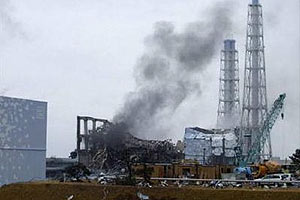
* Workers at Japan’s crippled Fukushima nuclear power plant were evacuated on Monday after reactor No. 3 emitted a cloud of gray smoke, Kyodo reported, citing plant operator Tokyo Electric Power Co.

* The devastating earthquake and tsunami that hit Japan 10 days ago may cost the country’s economy $235 billion, or 4% of GDP, the World Bank said in a report

Medvedev, Gates to discuss missile defense in St. Petersburg

Gates

Russian President Dmitry Medvedev and U.S. Defense Secretary Robert Gates will discuss the issues of Russian-U.S. military and technical cooperation, including those related to missile defense, during their meeting in St. Petersburg on Tuesday, the Kremlin has said.

“Russian-U.S. relations have reached a very high level, which is proved by the serious results of joint work in various spheres,” a statement issued by the Russian presidential administration said.

“Besides signing and ratifying a new [strategic] arms reduction treaty, [the counties] managed to conclude bilateral negotiations on [Russia’s accession to] the World Trade Organization (WTO) and launch a perspective cooperation in the hi-tech and innovation sphere; an agreement on cooperation in the peaceful use of nuclear energy has also come into force,” the statement said.

Gates, who arrived in St. Petersburg on Monday, will also hold talks with his Russian counterpart Anatoly Serdyukov on Tuesday. The visit is Gates’ final trip to Russia as Pentagon chief as he is to retire in 2011, before the 2012 election campaign begins.

Missile defense is expected to become a major issue of discussion during the talks.

“Russia is ready to tackle the common tasks aimed at protecting the continent from possible missile threats together with its partners while sticking to a range of principal conditions, including the existence of real guarantees that the countries’ anti-missile potentials will not be aimed at each other, as well as [guarantees of] equality and indivisibility of security,” the Kremlin said.

Russia and NATO agreed to cooperate on the so called Euro missile defense system during the Russia-NATO Council summit in Lisbon in November 2010. NATO insists there should be two independent systems that exchange information, while Russia favors a joint system.

U.S. welcomes ‘mutually reinforcing’ missile defense cooperation with Russia

The United States sees Russia as a full-fledged participant in the European missile defense system, Ellen Tauscher, the U.S. Under Secretary of State for Arms Control and International Security Affairs, has said.

“There are a few more key components to our approach that we are applying to our missile defense architecture in Europe,” Tauscher said. “We want to protect all of Europe, not just some of Europe. We want our European allies and friends to buy into the European Phased Adaptive Approach; it is not something that we want to impose on them – that’s not what friends do,” she said.

“Finally, we have started discussing potential missile defense cooperation between the United States and Russia and NATO and Russia; we want Russia in the missile defense tent rather than outside that tent,” she added.

U.S. Defense Secretary Robert Gates, who is currently on a visit to Russia, will hold talks with Russian President Dmitry Medvedev and Defense Minister Anatoly Serdyukov on Tuesday in St. Petersburg. Missile defense is expected to become a major issue of discussions.

Russia and NATO agreed to cooperate on the so-called Euro missile defense system during the Russia-NATO Council summit in Lisbon in November 2010. NATO insists there should be two independent systems that exchange information, while Russia favors a joint system.

Russia has retained staunch opposition to the deployment of missile-defense systems near its borders, claiming they would be a security threat. NATO and the United States insist that the shield would defend NATO members against missiles from North Korea and Iran and would not be directed at Russia.

Tauscher said the United States and Russia would work together to ensure that “our missile defense systems are mutually reinforcing.”

“Russia has assets it can bring to the table, like their early warning radars. There are assets that we can bring to the table as well. We are eager to begin a joint analysis, joint exercises, and sharing of early warning data that could form the basis for a cooperative missile defense system,” she said.

Tauscher also dismissed speculations that Russia and the United States were holding “secret talks” and “cutting secret deals” on missile defense. “Nothing could be further from the truth,” she said.

Windows to Russia!

The Rules of Accreditation and Stay of Correspondents of Foreign Mass Media on the Territory of the Russian Federation…

The Rules of Accreditation and Stay of Correspondents of Foreign Mass Media on the Territory of the Russian Federation:

Decision of the Government of the Russian Federation No. 1055 of September 13, 1994

1. The legal status and professional activity of foreign correspondents accredited in the Russian Federation, including nations of the CIS, shall be governed by the respective international treaties of the Russian Federation, the Russian Federation Law on Mass Media and other legislative acts of the Russian Federation, as well as by the present Rules.

2. The opening of offices of foreign mass media in the Russian Federation shall be accomplished with the permission of the Ministry of Foreign Affairs of the Russian Federation (hereinafter referred to as the “MFA of Russia”) unless otherwise provided by the international treaties of the Russian Federation.

3. The accreditation of foreign correspondents in the Russian Federation shall be done by the MFA of Russia in accordance with Articles 48 and 55 of the Russian Federation Law on Mass Media unless otherwise provided by the international treaties of the Russian Federation.

4. Application* for opening an office of a foreign mass medium shall be sent by its senior officials to the MFA of Russia directly or via the diplomatic representation of the Russian Federation in the respective country.

5. The decision to open the foreign mass medium’s office shall be taken by the MFA of Russia within two months from the receipt of application, whereupon a certificate of opening of the office shall be issued.

6. Accreditation as correspondents of foreign mass media in the Russian Federation may be granted to journalists irrespective of their citizenship, the representatives of periodicals, radio, television, video, and newsreel programs and other forms of periodical mass dissemination of information.

7. Application for accrediting a correspondent of a foreign mass medium shall be sent by the senior officials of the foreign mass medium to the MFA of Russia in the manner provided by Clause 4 of the present Rules.

8. The decision to accredit the correspondent of a foreign mass medium by the MFA of Russia shall be adopted within the time specified in Clause 5 of the present Rules.

9. Accredited correspondents shall be issued a foreign correspondent certificate valid for two years.

10. Family members of a correspondent shall be issued a card of a family member of a correspondent of a foreign mass medium, valid for the same period.

11. Accreditation as special correspondents may be temporarily granted journalists irrespective of their citizenship who have arrived in the Russian Federation with visa support from any other Russian organizations, and they shall be accredited by the MFA of Russia upon request from senior officials of those organizations.

12. Temporary accreditation as special correspondents by the MFA of Russia may also be granted journalists who have arrived in Russia to take the place of the regular correspondents in the case of their vacation, disease or business trips to other countries.

13. Special correspondents are to be issued a special correspondent card for a period from three months with a possible extension to six months.

14. Registration as technical staff for offices of foreign mass media may be granted persons irrespective of their citizenship working at the offices as producers, editors, secretary-interpreters, and specialists for the maintenance of television and cine equipment and means of communication. Persons performing any other kinds of activity at the offices are regarded as service personnel and are not subject to registration as official technical staff.

15. Application for registering a technical employee shall be sent to the MFA of Russia by senior officials of a foreign mass medium or a correspondent thereof accredited by the MFA of Russia on the form and in the manner provided by Clause 4 of the present Rules.

16. The decision to register the technical employee with the MFA of Russia shall be taken within two months from the receipt of the application.

17. Registered technical staff shall be issued a certificate of a technical employee of the office of the foreign mass medium, which is valid for two years.

18. Senior officials of a foreign mass medium shall, not later than fifteen days before the expiration of a correspondent (technical employee) certificate, ask the MFA of Russia to extend it. The extension of a technical employee certificate shall also be done upon request from a correspondent accredited by the MFA of Russia.

19. In the case of loss of a certificate, the correspondent or office technical employee involved shall notify the MFA of Russia, and the question of issuing a duplicate will be considered within two weeks.

20. An accredited correspondent may be re-accredited on the basis of an application from senior officials of a new mass medium. The decision on re-accreditation will be taken within two months.

21. Staff members of foreign diplomatic missions and consular institutions, of the apparatuses of military attaches or airlines’, banks’, and trade, industrial and intermediary firms’ representations registered in Russia, and persons who are workers of Russian mass media may not be accredited as correspondents or registered as technical employees for the offices of foreign media.

22. The MFA of Russia may terminate the accreditation (registration) of persons offered by senior officials of a foreign mass medium if there has been a violation by them of the laws of the Russian Federation, in cases provided by Article 48 of the Russian Federation Law on Mass Media and also on the basis of Articles 19 and 20 of the International Covenant on Civil and Political Rights.

23. The MFA of Russia may take retaliatory action against correspondents of mass media of countries where restrictions on Russian citizens are in force.

24. Upon completion of their work in the Russian Federation accredited foreign journalists are to surrender the issued certificates to the MFA of Russia.

25. Entry into the Russian Federation by newly appointed correspondents (special correspondents, technical employees) from among foreign citizens shall be on passports or substitute documents if an entry visa is available, issued by a consular institution of the Russian Federation.

Consular institutions of the Russian Federation will issue entry visas to persons of this category within five working days on the terms of reciprocity, given the consent of the MFA of Russia to their accreditation (registration).

26. One-year multiple exit-entry visas are to be issued to accredited correspondents and registered technical staff of offices of mass media of countries with which appropriate bilateral agreements exist, irrespective of their permanent place of residence, unless there are other bilateral arrangements.

27. In the case of temporary replacement of a regular correspondent (for the period of a vacation, disease, business trips to other countries, etc.) entry visas shall be issued to the persons who fill in for them in the manner provided by Clause 25 of the present Rules.

28. Upon arrival in the Russian Federation, a foreign correspondent, technical employee, and members of their families are required, within three days, excluding days off and holidays, to register with the respective bodies of the Ministry of Internal Affairs of the Russian Federation.

29. Accredited correspondents of foreign mass media in the Russian Federation shall – irrespective of their citizenship – have the rights and duties of a journalist as envisaged by the international treaties and laws of the Russian Federation, as well as by the present Rules.

30. Accredited correspondents shall have the right to create on the Russian Federation territory a professional journalist organization acting by a charter approved by its members, of which the provisions are not contrary to the laws of the Russian Federation.

31. Foreign mass media representatives accredited by the MFA of Russia and their family members may invite as personal guests citizens of foreign states. The solution of visa matters and those of legalization of their stay in the Russian Federation shall be accomplished via the MFA of Russia.

32. Representatives of foreign mass media accredited** in the Russian Federation – correspondents and foreign employees of the respective offices – may in keeping with customs rules import and export for business purposes office equipment, computers, radio and TV equipment, professional audio, video, cine and photo equipment, spare parts and consumables for such types of equipment, information material on various media, household items and cars for personal use (not more than one car for each correspondent or foreign employee of the office), without customs duties and payments during the whole period of their accreditation in the Russian Federation, on the condition of the export of that equipment from the territory of the Russian Federation after expiration of the term of accreditation.

33. Accredited correspondents and media offices’ technical employees, as well as members of their families may use the services that are provided by the appropriate subdivisions of the MFA of Russia for the diplomatic corps in Russia.

34. Foreign correspondents accredited by the MFA of Russia shall have the right on a basis of reciprocity to move freely on the territory of the Russian Federation, with the exception of security facilities for which special permission is required for visitation.

35. Citizens of the Russian Federation accredited (registered) as correspondents (technical employees) of foreign mass media shall enjoy the status of a foreign correspondent (technical employee) only in the performance of their professional functions.

——————————————-

* The application to the MFA of Russia for opening an office of a foreign mass medium or accrediting a correspondent in the Russian Federation shall include a letter on the medium’s official letterhead, signed by a senior official or officials of the medium, or a diplomatic note of the embassy of the respective country to the Russian Federation, information on the mass medium, the biography and journalistic background of the correspondent, and his/her two photographs.

In addition, for Russian citizens, when applying to the MFA of Russia on these matters, a certificate is required that the persons have been registered with the area authorities of the State Tax Service of Russia.

** Clause 32 as reworded has been introduced to the Rules by Decision of the Government of the Russian Federation No. 899 of August 4, 1999.

Russia ready to equip 1st Borey class sub with Bulava missiles

Bulava SLBM

A missile production plant in southern Siberia has produced enough Bulava ballistic missiles to complete its tests and arm the first Borey class strategic submarine, Deputy Prime Minister Sergei Ivanov said on Monday.

“A batch of missiles sufficient to finish the tests and equip one submarine has been produced already. Larger production would cause the missiles to stock up,” Ivanov said after a meeting of defense industry officials in the southern Siberian republic of Udmurtia.

The Bulava (SS-NX-30) submarine-launched ballistic missile carries up to 10 MIRV warheads and has a range of over 8,000 kilometers (5,000 miles).

Despite several previous failures, officially blamed on manufacturing defaults, the Russian military has insisted that there is no alternative to the Bulava and pledged to continue testing the missile until it is ready for service with the Navy.

Russia is planning to conduct at least four Bulava test launches this year and deploy it on the new Borey class strategic submarines.

The tests launches will most likely be conducted from the Yury Dolgoruky.

The Yury Dolgoruky, which has recently completed sea trials in the White Sea, is expected to enter service with the Russian Navy in the near future, pending the outcome of the Bulava testing.

Three other Borey class nuclear submarines, the Alexander Nevsky, the Vladimir Monomakh, and Svyatitel Nikolai (St. Nicholas) are in different stages of completion. Russia is planning to build eight of these subs by 2015.

Preparations for Sochi 2014 Winter Olympic Games

Windows to Russia...
Olympics

A delegation from the International Olympic Committee (IOC) arrived in Russia’s Black Sea resort city of Sochi on Monday to inspect the country’s preparations for the 2014 Winter Olympic Games.

Germany’s BASF to enter South Stream project

Windows to Russia...
Gas Lines...

Germany’s BASF plans to sign a memorandum with Gazprom later on Monday to enter the South Stream pipeline project, BASF board chairman Juergen Hambrecht said.

“The memorandum of understanding is just a beginning, we will continue the work,” he said at a meeting with Russian Prime Minister Vladimir Putin.

The Russian premier, in his turn, welcomed Germany’s support for the project, “including the position of Chancellor Angela Merkel.”

The South Stream is designed to transport Russian gas to Europe under the Black Sea bypassing Ukraine. The capacity of the 900-kilometer pipeline, planned to become operational in 2015, is intended to eventually reach 63 billion cubic meters per year. Gazprom said in mid-June that it was ready to start South Stream’s construction in 2013.

Wintershall, the oil and gas subsidiary of BASF, holds a 15.5% stake in another major project by Gazprom, the Nord Stream gas pipeline.

Coffee and 2400 Posts on Windows to Russia…

While I was sipping that morning cup of coffee. I had thinking’s brought to my mind that Windows to Russia had exceeded 2400 posts (exact is 2421). So that, (due to my own personal brain processes) extended my thoughts into what countries view Windows to Russia the most. I discovered that United States, Russian Federation, Germany, South Korea, Great Britain, Canada, Slovenia, France, China, Netherlands round out the top 10 from USA number one on down to number ten. Russia is knocking on the door of the USA for number one spot and Germany is dancing right behind. Germany has grown tremendously in the last few months and it has been a pleasure to receive e-mails from Germany. They are so polite and pleasant. Talking about polite and pleasant lets talk about communicating with China. Now if you remember, I was blocked in China and after several e-mails on my part to certain associations (one was Baidu) in China. I got a response that said that they would review my sight for exceptionalism’s. (I liked that big word they used!) Something happened because now I am being hit by China again. I expect at the pace they are hitting, that by the end of the month, China will be around number 5 on the list…

Then while sipping that coffee I realized that I had finally achieved the separation of http://windowstorussia.com and http://kylekeeton.com and that was not an easy process. If you remember several years ago I had decided to put Windows to Russia on her own domain. From that domain I created Coffee Talk, Russian News From Russia, Thoughts of Moscow and Windows to Russia. I literally killed Windows to Russia and had to start from scratch again. It has paid off…

In the last few months News and Coffee have decided to start taking off. The readership has tripled and now news is starting to rival Windows to Russia. But I have 5500 post on news and update it continually now every 6 to 8 hours. I am thinking about trying to set up an every other hour update on the news site but I really have very little time. Thoughts of Moscow is another pet project of mine and is in the developmental stage…

If you are interested in what the number one search word in Google is for Windows to Russia? It surprised me and I bet it will surprise you also…

Cottage Cheese: is the number one Windows to Russia term. They average 600 to 700 hits a day on that particular term. Day in and day out. Now the term Russia and coffee is right behind it, but it has for months been the number one. I find that Cottage Cheese is usually around the 6th or 7th spot on in the top 10 Google search. Now do not yell at me if Google does not show it to you when you search for it. I do not understand the whens and whys of Google, but I do know that Cottage Cheese is the king per Google webmaster tools…

It always amazes me that no matter how hard I work at other words to get them ranked. A search phrase like Cottage Cheese rules the site… 🙂

That is it for today. I am going to finish my coffee…

Russian Arctic Expedition Time…

A unique expedition from the the Arctic region in Russia kicks off from Russia to Canada on Monday March 21st, 2011. In an event that will see a caravan of snow vehicles covering around 8,000 kilometers amid wild weather conditions…

Originally this trek was to be undertaken on February 17th, 2011. But due to weather anomalies it had to be postponed until conditions improved in Russia…

It seems that this is a huge test also for the GLONASS navigation system designed by Russia. As I understand Russia wants to make this navigation system second to none and is in the market to challenge GPS…

Territorial claims on the Arctic are held by Russia, the United States, Norway, Greenland and Canada. Russia has sought to show predominance in Arctic exploration and in 2007 planted its flag in the seabed of the Arctic Ocean… (Russia is going to plant a Arctic flag…)

But actions by Russia over the last 4 years are ringing alarm bells in the West. They say that Russia is trying to boost its stake over the pole’s petroleum rich sea bed. Russia has the availability to increase her share of Arctic territory if they can prove that the Lomonosov Ridge, is part of the continental territory of Russia. That increases Russia claims by a huge amount…

They also say there will be a website set up to be able to track the expedition as it travels those long cold kilometers from Russia to Canada. But I have not found the link yet – when I do I will post it…

I find this interesting and lets hope that they get to start and have a safe trip…