Script Attack again by the Department of Homeland Security of the USA…

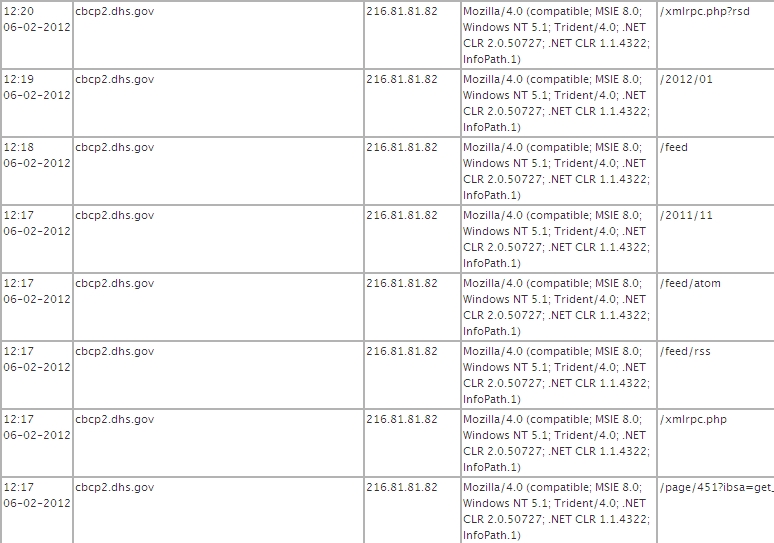
Department of Homeland Security just rocked our boat on Windows to Russia. They tried to brute force the login.php and they Dos attacked us into sever lock up. But we had a little surprise for them and it worked…

We were down 10 minutes instead of 10 hours…

Here is the information from one source of many. It looks like the DHS has a history of attacking sites it does not like…

Offensive IP Database
IP Reputation Card
IP number 216.81.81.82
Hostname cbcp2.dhs.gov
DNS history timeline Display
Route/Range/Block 216.81.80.0-216.81.95.255
216.81.80.0/20
Offensive IP count in this block 3
Network DEPARTMENT OF HOMELAND SECURITY
Country US, United States
Total Offensive Actions 11
Offensive Actions in last 90 days 11
Offensive Actions against 1 Unique OAL(s)
First Offensive Action date 2011-11-22 16:33:49 UTC
Last Offensive Action date 2011-12-15 14:33:21 UTC
Current time for your reference 2012-02-06 17:34:49 UTC
Services / Options Comments | Alert | Blacklists

Offensive IP Database
Sample Actions from 216.81.81.82
Date (UTC) Category Offensive Action
2011-12-15 14:33:21 Script Attack GET /myblog/index.php/2011/07/08/candice-engle/’+pb_to_image+’play.png
2011-11-22 16:42:18 Script Attack GET /myblog/index.php/faqs/’+pb_to_image+’console.png
2011-11-22 16:42:16 Script Attack GET /myblog/index.php/faqs/’+pb_to_image+’play.png
2011-11-22 16:34:07 Script Attack GET /myblog/index.php/pricing/’+pb_to_image+’console.png
2011-11-22 16:34:07 Script Attack GET /myblog/index.php/pricing/’+pb_to_image+’play.png
2011-11-22 16:34:00 Script Attack GET /myblog/index.php/about-us/’+pb_to_image+’bgoverlay.png
2011-11-22 16:34:00 Script Attack GET /myblog/index.php/about-us/’+pb_to_image+’play.png
2011-11-22 16:34:00 Script Attack GET /myblog/index.php/about-us/’+pb_to_image+’console.png
2011-11-22 16:33:49 Script Attack GET /’+pb_to_image+’play.png
2011-11-22 16:33:49 Script Attack GET /’+pb_to_image+’bgoverlay.png
2011-11-22 16:33:49 Script Attack GET /’+pb_to_image+’console.png

attack

It is a fact and I am sick and tired of the kids (DHS) playing with computers to abuse websites. I hear all the time how American government complains about their sites being attacked and such. So it seems that they have no reason to complain because the Department of Homeland Security is attacking Windows to Russia in a several mode style attack…

Quit it DHS, because I am not going to stop telling the TRUTH and that is the real issue isn’t it? The TRUTH…

Kyle Keeton
Windows to Russia!

PS: For those who forgot this is common place for us at Windows to Russia see links below:
http://windowstorussia.com/attacked-and-crashed-by-the-gate-computers-located-at-the-us-space-and-naval-warfare-systems-command.html
http://windowstorussia.com/us-department-of-homeland-security-has-been-attacking-windows-to-russia.html

Cup of Coffee and Flush the туалет (Toilet)…

toiletI grabbed a cup of coffee and did some thinking’s! After what I have been seeing posted all over by the Western press this weekend, it is time to flush the туалет because the stink is getting way too strong. Every time I think that I have seen the epitome of the ways of the Western world. I am left open mouthed again at the atrocity that is shown by the West…

Update from Russian press: “Russian Foreign Minister Sergei Lavrov has referred to the West’s assessment of the voting on the UN Security Council Syria resolution as unseemly and hysterical.” This is from a man who was there and in on the whole UN charade…

I find it interesting how slow the Eastern press is to respond to issues and how fast the West responds to issues. But since I worked the corporate world in America, I know how they prepare and now that I live in the East, I know how they don’t prepare. It is just simple facts, the Western press has pre-written stories that just need a little fine tuning and off to print they go. The West knows that news is happening in the world and they are ready to print the second it (whatever) is final or in many cases before it is final. The East just waits until the news happens and then they worry about printing it. Totally different mindset…

But lets get on track of what my thinking’s are. I watched a Western press elate the deaths in Syria in a purposeful display of manipulation to affect the outcome of the UN voting. At one point the West was screaming that Syria had just killed 500 people on the day of the vote at the UN. Then it settled at 200 people and then, it became a number of much less proportions after the voting was over. Last I saw the West was spouting 48 had been killed. This was the same incident that earlier had been exponentiation to 500 murdered by evil Syrian regime…

Then after the vote was done! OMG the onslaught of lies overwhelmed the airwaves and are still being spouted at a furious pace that looks to have no let up in the accumulation of data. The Western shrills that are stationed in Moscow are working overtime and the Western press in the West is no hold barred, degrading Russia and China for their decision in veto of a situation that would have led to the deaths of hundreds of thousands of Syrians…

I watched a Western world wet their pants in hatred and despair, when they did not get their way in the UN vote. The calls for removing Russia and China from the UN, because they are in the way of the Western Empires advances is growing stronger. The calls for war against China and Russia just stepped up a notch to the level of mildly frenzied. The word nuke them all, is so common place on American forums and blogs that it is scary. The war drums are so loud and furious that nothing else can be heard. America is wanting war in Syria, Iran, Russia, China, North Korea, Venezuela and several others. Many of the comments that I am seeing are just plain appalling…

It is also interesting to see that China and Russia are just now starting to get the media in gear to explain their position. The one thing that I have to say is that Russia and China see eye to eye on this issue of Syria. I also see that they see the same on Iran. It looks like the line is being drawn in the sand and we will have to wait to find out who will finish the world destruction that the West has started to try to do. It is starting to look like Russia and China are going to have to step in and try to chastise the children of the West…

Ok I know that not everyone in the West is crying out for death from the skies, but I have to say that a lot more people in the West are becoming war mongers everyday. I look at the social networks like Facebook and see swaths of comments that are centered around destroy Iran, Save Syria from the evil, Nuke North Korea and Spread Democracy by any means. Most of what is repeated by people is what we hear on the MSM everyday, day in and day out. I look at friends on Facebook and see what they post, sometimes it is scary as you read, “America is so great and we need to shove that greatness down Iran’s throat! or  Go USA and take Syria out, who cares about the UN!” These are people who could not even find Iran or Syria on the map, but they want to destroy them…

I also watched the twisted words from Iran in the media this weekend. Once again we twist what Iran is saying and give it a false meaning of death to Israel.  Of course Iran has the rights to verbalize words back because Israel and America have been threatening total annihilation of Iran and the words used were much harsher than anything Iran uses. But we do not talk about the threats from the West just about the threats from the East and foes…

I always thought that journalism was to be balanced and fair reporting. I thought that giving both sides was mandatory! That is why I post in my “Russian News from Russia” blog and “Fresh Coffee with a Cup of News” blog – both sides. Now Windows to Russia is my personal blog and that is what I want to post. It is my opinion or opinions that I respect. I do not claim to be a journalist, I am just a very high powered blogger who sits in Russia, who many times writes about the falsities of the Western press, plus life in Russia mixed in amongst the opinions…

That is part of the problem that the US governments has with me. I am not on their payroll and I write what I want. In fact I am on no one’s payroll (Russia definitely does not pay me! Though I wish someone would!) and I lose money on Windows to Russia every month, but even if I was on someones payroll, I would still write what I feel is correct and never – would money have something to do with my opinion. I guess I will stay a poor blogger writer…

So today I am flushing the toilet of the Western press. It just stunk too bad and needed a good flush and clean. Took a whole bottle of Ajax to scrub it away but finally the stink is gone and I am going to keep it away…

I do not see a benefit in the other side, when they do not have any rules that they have to follow. When we can fake videos, use photos from different situations, when we change the words people use, when we manipulate by lies and when we tell only what the government says we can! Then that is no longer news but censored data that has no emotions behind it any more. Pre ordained massages that are templated by the higher ups and used to convey data to the masses in the most efficient and speediest way possible…

Flush! Oh the smell is better already and that cup of coffee is oh so good…

Kyle Keeton
Windows to Russia!

PS: You want a better truth to your news? Then start looking at Iran, Russian, Chinese, South American, Indian and other news sources not associated with the Western press. Just be very careful and check out who owns the news sources. Ex. Al Jazeera is a perfect situation of a bought out by the West news source…

Saudi Arabia in Charge of US Policy: by John Stanton

“The Hanbali school, known for following the most Orthodox form of Islam, is embraced in Saudi Arabia and by the Taliban..” Council of Foreign Relations–Islam: Governing Under Sharia, 24 October 2011.

“In August a judge in Tabuk considered sentencing a man to be surgically paralyzed after convicting him of paralyzing another man in a fight two years earlier.” Human Rights Watch ,2011.

“In September a Qatif court sentenced two high school pupils to six months in prison and 120 lashes for stealing exam questions.” Human Rights Watch, 2011.

Watching, listening, and reading the media coverage, government commentary and think tank analyses on Iran’s nuclear capability and the desire by some to destroy it is like taking in Abbott and Costello’s Who’s on First and Math skits.

The logic behind the entire push for massive military action against Iran makes about as much sense as Costello’s math calculations. Abbott’s acceptance of it all (“you are hired”) is an appropriate analogy for the USA’s role in the madness as it is being suckered into another war in mid-east Asia at the insistence of Saudi Arabia, Bahrain, Qatar, Israel and similar Abbott and Costello governed countries.

If the USA has so much power, why are second and third rate countries in charge of its policies in mid-east Asia?

All statements coming out of the mouths of US government officials signal confusion within the grand brains of the political, economic and military leadership. The US may or may not support a Saudi-Israeli operation against Iran said Secretary of Defense Panetta and Joint Chiefs of Staff Chairman general Martin Dempsey (USA) recently. That is utterly unbelievable.

These are flammable times already and yet government officials, commentators–(and US presidential candidates–the world over are making foolish and unsupported statements about Iran and, hence, are ratcheting up the tension. President Obama says “I can’t control Israel (the USA controls/monitors all air traffic routes into and out of Iran). Israeli leadership says “only 500 casualties from an air strike” (using the logic of General Buck Turgeson in the movie Dr. Strangelove). The House of Saud says “cut the head off the snake (Colin Powell, former US Army general, once said this in reference to Saddam Hussein). In 1993 Israel said Iran would have nuclear weapons by 1999. Then they said that Iran would have them by 2001.

The pro-Iranian war movement, and the Iranian leadership itself, would do well to get a copy of The Fog of War, 11 lessons from Robert McNamara, former Secretary of Defense, and watch it repeatedly. One of the points McNamara makes in the film is “I lived the Cold war every day, 24/7”.

The Cold War has not ended as popularly reported. It has just shifted focus.

They are all Schemers: Big Plot and Deadly Subplots

In the overall US strategic scheme the Iranian matter as a subplot. The central focus of the story is an attempt by the USA’s political, economic and military leadership to answer two questions: How can strategy, policy, operations and tactics (SPOT) be developed now to inhibit the development of China and Russia’s instruments of national and international power? What SPOT’s are necessary to maintain America’s dollar and military dominance even as China and Russia–and to a lesser degree India and Brazil–are developing methods (currency swaps or basket of currencies minus the US dollar) to bypass the foundation of American global dominance-the dollar (and T-Bill)?

Another subplot is “it’s about the oil.” But the data doesn’t quite support the argument. According to the Energy Information Agency there are only two mid-east Asian countries in the top ten that the US imports energy from. Saudi Arabia is in the number two spot with Mexico close behind. Iraq comes in at number seven. Rounding out the top ten are Canada (number one), Venezuela, Nigeria, Ecuador, Angola, Colombia, and Russia (Brazil is number eleven). The USA imports 49 percent of its energy needs. It is not a stretch to say that with the right combination of US political and economic policies, and some sacrifice by the American people, it could wean itself of off Saudi and Iraqi oil.

So, how and why is it that Saudi Arabia is able to shape US foreign policy towards the mid-east Asian region as it does in the face of the Nazi-like rule of its own people? Why do Americans and Israelis so easily sell their souls to the Saud’s? Why isn’t Saudi Arabia featured at Regime Change Central?

John Macarthur writing in Harper’s Magazine (2007) observed that “…I can’t shake the idea that the Israel lobby, no matter how powerful, isn’t all it is cracked up to be, particularly where it concerns the Bush administrations past and present. Indeed, when I think of pernicious foreign lobbies with disproportionate sway over American politics, I can’t see past Saudi Arabia and its royal house…Given my dissident politics, I should be up in arms about the Israel lobby. Not only have I supported the civil rights of the Palestinians over the years, but two of my principal intellectual mentors were George W. Ball and Edward Said, both severe critics of Israel and its extra-special relationship with the United States.

Foreign Agents for Beheadings

According to the Foreign Agents Registration a listing of 30 June 2011, the following US organizations and citizens represented Saudi interests: Hogan Lovela in Washington, DC (foreign policy interpretation of US Congressional legislative actions, lobbying); Ketchum in New York (media relations); International Merchandising Association in Ohio (brand management); Patton Boggs (monitoring US government statements on Saudi Arabia, legislative analysis, lobbying); Qurvis LLC (monitoring US media, spreading positive stories about Saudi Arabia, lobbying, developing Internet-WWW presence).

The US Department of State, Human Rights Bureau, reported that in 2010 Saudi Arabia was an awful place to live unless you are a guy “…no right to change the government peacefully; torture and physical abuse; poor prison and detention center conditions; arbitrary arrest and incommunicado detention; denial of fair and public trials and lack of due process in the judicial system; political prisoners; restrictions on civil liberties such as freedoms of speech (including the Internet), assembly, association, movement, and severe restrictions on religious freedom; and corruption and lack of government transparency. Violence against women and a lack of equal rights for women, violations of the rights of children, trafficking in persons, and discrimination on the basis of gender, religion, sect, and ethnicity were common. The lack of workers’ rights, including the employment sponsorship system, remained a severe problem.”

Then there is the country analysis done on Saudi Arabia by Human Rights Watch (2011). “Human rights conditions remain poor in Saudi Arabia. King Abdullah has not fulfilled several specific reform promises; reforms to date have involved largely symbolic steps to improve the visibility of women and marginally expand freedom of expression. Authorities continue to systematically suppress or fail to protect the rights of nine million Saudi women and girls, eight million foreign workers, and some two million Shia citizens. Each year thousands of people receive unfair trials or are subject to arbitrary detention. Curbs on freedom of association, expression, and movement, as well as a pervasive lack of official accountability, remain serious concerns.

Iraqi Government Fears Saudi Arabia

Simon Tisdall writing for the Guardian, UK (2010) reported that the Iraqi government viewed Saudi Arabia as a threat to its internal security. ” Iraqi government officials see Saudi Arabia, not Iran, as the biggest threat to the integrity and cohesion of their fledgling democratic state, leaked US state department cables reveal. The Iraqi concerns, analyzed in a dispatch sent from the US embassy in Baghdad by then ambassador Christopher Hill in September 2009, represent a fundamental divergence from the American and British view of Iran as arch-predator in Iraq. ‘Iraq views relations with Saudi Arabia as among its most challenging given Riyadh’s money, deeply ingrained anti-Shia attitudes and [Saudi] suspicions that a Shia-led Iraq will inevitably further Iranian regional influence,’ Hill writes. ‘Iraqi contacts assess that the Saudi goal (and that of most other Sunni Arab states, to varying degrees) is to enhance Sunni influence, dilute Shia dominance and promote the formation of a weak and fractured Iraqi government.’ Hill’s unexpected assessment flies in the face of the conventional wisdom that Iranian activities, overt and covert, are the biggest obstacle to Iraq’s development.”

Saudi Arabia, Syria: History of Dislike

A Muslim News report (2011) reminds that Saudi Arabia and Syria have been at odds with each other for most of their history. As such, the current turmoil in Syria, in which Saudi Arabia and the US are involved on the ground–should be viewed through a historical microscope. Americans are largely deficient on the study of history other than their own. “Syria prides itself as a secular republic and a bastion of Arab nationalism with close ties to Russia. On the other hand, Saudi Arabia is a reactionary monarchy and embodies itself as a caretaker of Islam, while having an extensive bond with the US and Western Europe. True, the rhetoric of the two countries may not correspond with their practice, but the ideological narratives they superficially embrace are in conflict, and much of their foreign policy aims have been at odds.”

The US government approach to Syria, as it is with Iran, was largely crafted by Saudi Arabia. This is a country who speaks of the humanitarian crisis in Syria as though it is the USA. It is more intolerant of dissent than the USSR ever was. Of all ironies, the fact that the USA negotiated with the USSR for decades and will not with Iran has to be in the top ten ironies of human history. What it says is that on crucial matters of mid-east Asian matters involving war and oppression, the US political process is influenced and designed by repressive governments represented by American citizens. Young people die and will continue to die as a result of this.

Human Rights Watch notes that “US pressure for human rights improvements was imperceptible. In September the Pentagon proposed for Congressional approval a US$60 billion arms sale to Saudi Arabia, the biggest-ever US arms sale. It is unknown whether the UK made efforts through the Two Kingdoms Dialogue to promote human rights, but if so they had no tangible effect…

Before he died in the World Trade Center on 9/11, the former FBI counterterrorism chief John O’Neill complained to French investigator Jean-Charles Brisard that Saudi pressure on the State Department had prevented him from fully investigating possible al-Qaida involvement in the Khobar Towers bombing in 1996, which killed 19 U.S. servicemen, and of the destroyer Cole in 2000. As with Pakistan’s President Pervez Musharraf, there’s always talk of the Saudis playing a double game with al-Qaida publicly denouncing it and privately paying it off but you don’t have to be a conspiracy theorist to understand that the Saudis don’t have America’s best interests at heart.”

John Stanton is a Virginia based writer specializing in national security. Reach him at cioran123@yahoo.com.

The views of the above author are not strictly the views of Windows to Russia. They are an independent view from an outside source and country that brings a better light on the world in general and Windows to Russia is pleased to have John Stanton’s article on its pages today. It is hoped that we will have many more of his writings in the future…

Windows to Russia!

China joined hands with Russia on Saturday to veto an Arab-European draft UN resolution…

When China joined hands with Russia on Saturday to veto an Arab-European draft UN resolution backing an Arab League plan to promote a regime change in Syria, its stance was consistent with its approach to international issues.

The draft resolution that sought to realize a regime change in Syria did not adequately reflect the state of affairs in this Middle East country.

In putting the resolution to the vote, Western powers hoped to further exert pressure on Syrian President Bashar al-Assad to step down, thus paving the way for the removal of a regime that is an obstacle to their policies in the Middle East.

By only exerting pressure on the Syrian government and explicitly trying to coerce its leader al-Assad to step down, the resolution sends the message to armed groups and opponents of his regime that they have the support of the international community. This will undoubtedly make the Syrian situation even more complicated and make it impossible for all parties to reach a conciliatory agreement that is in the best interests of the country and its people.

We’ve seen what happened in Libya. With the armed intervention by some major Western powers, the Libyan regime was overthrown. But instead of the democracy and freedom they were promised, Libyan people cannot even live in peace as the country is in the danger of falling into a sectarian civil war.

It is not a question of whether Syrian leader Bashar al-Assad should step down or not. It is whether the ever-worsening crisis in the country will be brought to an end in such a way that the country will not be plunged into a sectarian civil war and its people plunged into even greater misery.

China maintains that any attempt by the international community to help Syria solve its crisis must respect the sovereignty, independence and territorial integrity of the country.

A messy civil war in Syria will not be conducive to peace in the Middle East.

Russia’s stance that conditions should not be imposed on dialogue, and that any efforts should influence not just the government but also the armed groups is reasonable. Russian Foreign Minister Sergey Lavrov and Mikhail Fradkov, the director of Russia’s Foreign Intelligence Service, will travel to Syria on Feb 7 to meet with Syrian President Bashar al-Assad.

The draft resolution was presented too hastily and the international community should give the Russian diplomatic endeavor time to soften the positions of all the parties in Syria so that an agreement can be reached that is for the good of the country.

The Chinese government believes that, in line with the UN Charter, political consultations are the best way to help a nation solve any political crisis.

Paul Wen from China!

The views of the above author are not strictly the views of Windows to Russia. They are an independent view from an outside source and country that brings a better light on the would in general and Windows to Russia is pleased to have Paul Wen’s article on its pages today…

Windows to Russia!

Suppose…

suppose“My point is, if another country does to us what we do to others, we’re not going to like it very much. So I would say that maybe we ought to consider a golden rule – in foreign policy. Don’t do to other nations what we don’t want to have them do to us” ~ Ron Paul

Source: http://lewrockwell.com/vance/vance277.html

The war-crazed conservatives in the crowd at one of the Republican presidential debates recently held in South Carolina booed and jeered when Ron Paul called for a golden rule in U.S. foreign policy. “We endlessly bomb these other countries and then we wonder why they get upset with us?” added Dr. Paul.

Naturally, the bloodthirsty warmongers at Frontpagemag.com consider Paul’s foreign policy to be absurd, dangerous, and clueless.

But just for a minute, let’s suppose a few things –

Suppose that a presidential candidate in another country said that the U.S. president needs to be taken off this planet. How would Americans feel about it?

Suppose that a presidential candidate in another country said that the U.S. president would go to hell if he died. How would Americans feel about it?

Suppose that the government of another country said that the U.S. president needed to step down. How would Americans feel about it?

Suppose that the government of another country forbade its citizens from traveling to the United States. How would Americans feel about it?

Suppose that the government of another country imposed sanctions on the United States. How would Americans feel about it?

Suppose that the government of another country had a secret program to develop nuclear weapons for offensive purposes. How would Americans feel about it?

Suppose that the military of another country insisted that it had the right to build over 1,000 military bases in foreign countries. How would Americans feel about it?

Suppose that the military of another country insisted that it had the right to station hundreds of thousands of troops on foreign soil. How would Americans feel about it?

Suppose that the military of another country insisted that it had the right to build bases and station troops on American soil. How would Americans feel about it?

Suppose that the government of another country spent more on defense than all the governments of the rest of the world combined. How would Americans feel about it?

Suppose that the government of another country claimed it had the right to assassinate anyone in the United States. How would Americans feel about it?

Suppose that the intelligence agencies of another country insisted on infiltrating the U.S. government and its intelligence agencies to spy on them. How would Americans feel about it?

Suppose that the government of another country spent a trillion dollars on defense, most of which was really for offense. How would Americans feel about it?

Suppose that the government of another country said that the United States must get rid of its nuclear weapons. How would Americans feel about it?

Suppose that the military of another country bombed American soil. How would Americans feel about it?

Suppose that the military of another country invaded the United States. How would Americans feel about it?

Suppose that the military of another country occupied the United States. How would Americans feel about it?

Suppose that the president or secretary of state of another country said that the United States needed a regime change. How would Americans feel about it?

Suppose that the intelligence agencies of another country flew drone planes at will over the United States. How would Americans feel about it?

You know exactly how Americans would feel about these things. So why is it that foreigners aren’t expected to feel the same way?

It is U.S. foreign policy that is absurd, dangerous, and clueless. Ron Paul is the only sane voice that one will hear in the remaining Republican presidential debates.

February 6, 2012

Laurence M. Vance [send him mail] writes from central Florida. He is the author of Christianity and War and Other Essays Against the Warfare State, The Revolution that Wasn’t, and Rethinking the Good War. His latest book is The Quatercentenary of the King James Bible. Visit his website.

Copyright © 2012 by LewRockwell.com. Permission to reprint in whole or in part is gladly granted, provided full credit is given.

The Best of Laurence M. Vance

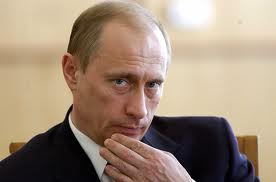
Putin: Democracy and the quality of our state…

images2In a newspaper article Vladimir Putin describes on the evolution and the future of democratic institutions in Russia.

Read the full Kommersant Daily article by Vladimir Putin below.

Society cannot have sustainable development without a viable state, and, conversely, genuine democracy is an indispensable condition for building a state that serves the interests of society.

Genuine democracy cannot be produced overnight. You cannot just copy it by reproducing somebody else’s model. Society has to be ready for democratic mechanisms. Most of the people should consider themselves citizens, meaning they should be willing, on a regular basis, to give their attention, their time and their energy to participate in administrative work. In other words, democracy only works when people are willing to invest something in it.

In the early 1990s, our society was inspired by the collapse of the autocratic Soviet one-party system, which was happening before people’s eyes. People were inspired by the transition to democracy, which seemed so near, especially since examples of civilized, mature democracy were so near – in the US and Western Europe. Yet the introduction of democratic forms of governance almost immediately resulted in stopping the necessary economic reforms, and a little later those forms themselves were taken over by local and Moscow-based oligarchic elites, who shamelessly used the state for their private interests and pocketed the wealth that belonged to the people.

I know from experience that even in those days there were many honest and intelligent people in the government. They genuinely cared about the common good. Thanks to them, the state did not perish. Daily problems would be more or less resolved, and some urgent reforms were conducted, even if inconsistently and slowly. But on the whole the system proved to be stronger than they.

As a result, what we got in the 1990s with the supposed coming of democracy was not a modern state. What we got was turf wars between various clans and lots of semi-feudal fiefdoms. Instead of a fundamentally new level of living, we faced tremendous social losses. Instead of a fair and free society, we had the lawlessness of self-appointed “elites,” who openly disregarded the interests of common people. All that has poisoned Russia’s transition to democracy and a market economy, making many Russian people wary of these very concepts – and unwilling to participate in public affairs.

Russian philosopher and jurist Pavel Novgorodtsev gave the following warning back in the early years of the 20th century: “People often think that the proclamation of various freedoms and universal suffrage in itself has some magic power that can set people on a new path. But what it leads to in reality is often oligarchy or anarchy, not democracy.”

In the 1990s, we encountered both anarchy and oligarchy. That period saw the extreme shortage of responsible statesmanship. It would be naïve to think it was all because of greedy oligarchs or dishonest officials. In the early 1990s, our society consisted of people who were free from Communism but had not yet learned to take their lives into their own hands. They still expected the state to take care of them. They often lived in their illusions and did not know how to resist when being manipulated. Because of that, for some time both economic and political affairs were dominated by the improper principle where the more daring people get the lion’s share of the pie.

But our society has passed through a difficult maturation process. This enabled us all to pull our country out of the mire, revive the state and restore the peoples’ sovereignty, the foundation of genuine democracy.

I would like to stress that we achieved all this through democratic, constitutional means. The policies we pursued in the 2000s consistently reflected the will of the people. Elections confirmed this time and again. In fact, this was also confirmed by opinion polls between elections.

If we take a look at the list of rights that our people deem essential, the rights they treasure the most are by far the right to work (the possibility to earn a living), the right to free healthcare, the right to education for children. To restore and secure these fundamental rights was the task that the Russian state has been working on. Dmitry Medvedev and myself, as presidents, have been working on that.

Today, our society is very different from what it was in the early 2000s. Many people have become more wealthy, better educated and more demanding. The fact that people expect more from authorities today, and that middle-class people have gone beyond the small universe of building their own prosperity, is a result of our efforts. We have been working towards that goal.

Political competition is the heartbeat of democracy, its driving force. If such competition reflects the real interests of various social groups, it makes the state much, much stronger – in developing the economy, in mobilizing resources for social projects and in securing protection and justice for people.

Today, the quality of our state does not match civil society’s readiness to participate in it. Our civil society has become much more mature, active and responsible. We need to renew the mechanisms of our democracy. They should have the capacity to match increased public activism.
­On developing democracy

­A whole package of proposals for developing our political and party system was submitted to the State Duma recently. They will simplify the procedure for registering a political party; they will waive the requirement to collect signatures in order to participate in State Duma or regional legislative assemble elections; they will reduce the number of signatures one must collect in order to register as a presidential candidate.

The registration procedure, regulations for political parties, electoral techniques – all these things are important, of course. The political climate, just like the investment climate, requires constant improvement. But we should also pay special attention to the way our political mechanism account for the interests of various social groups.

I strongly believe that we do not need the circus of various candidates competing with each other to give more and more unrealistic promises. We don’t need a situation where all that is left of democracy is the façade, where democracy is understood as a one-time entertaining political show and candidates’ casting, where substance is forgotten for the sake of shocking statements and mutual accusations, where real politics is reduced to shady deals and decisions made behind the scenes but never discussed with voters. We should avoid this blind alley. We should resist the temptation to “simplify” politics, to create a false democracy merely to please somebody. Of course, there is always some room for special techniques in politics. This cannot be avoided. But spin doctors and image makers should not control politicians. In fact, I think that our people will not buy that any longer.

We need to tune the mechanisms of our political system in such a way that it will account for, and reflect, the interests of major social groups and publicly reconcile those interests. In addition to providing a legitimate government, our political system should guarantee that people see it as fair – even when they are in the minority.

We need a mechanism that allows people to nominate responsible candidates – professionals who care about national development and who can achieve definite results – for positions at various levels of government. We need a clear, quick and transparent mechanism for preparing, making and implementing both long-term and short-term decisions.

We need to create a political system where it is possible – and necessary – to be honest with people. Whoever offers a solution or a program should be responsible for implementing it. Those who elect decision-makers should realize for whom and what they are voting. This will produce trust, constructive dialogue and mutual trust between society and the government.
­New mechanisms of involvement

­We need to be able to react to society’s needs, which are growing more and more complicated and gaining totally new traits amid the ‘data age’ we live in.

An enormous and ever-growing number of Russians are getting used to obtaining information instantly, at the push of a button. The free and, more importantly, uncensored accessibility of information on the situation in the country naturally determines the people’s demand to be involved in politics and administration permanently, not on an election-to-election basis.

Therefore, today’s democracy – as the power of people – cannot be confined solely to going to the polling station, and end there. Democracy, in my view, lies in the fundamental right of a nation to choose its authorities, as well as in being able to constantly influence both the authorities and their decision-making process. Thus, democracy should have mechanisms for direct and constant action and efficient channels for dialogue, public control, communication and feedback.

What is feedback, in practical terms? The ever-increasing quantity of political information should evolve into a quality of political involvement and civil self-government and control. Above all, this means wide discussion of bills, decisions, and programs taken on every level of state power, and the evaluation of existing laws and their efficient application.

Citizens and professional and public unions must be able to ‘beta-test’ all state documents. Even now, constructive criticisms from professional communities such as businesspeople, teachers or scientists help us avoid poor decisions and find better ones.

For example, last year during the evaluation of the ‘regulating impact’, carried out jointly with the business community, nearly every other regulatory project was turned down as ‘worsening the conditions for Russia’s economic development.” It is a good thing that such a filter is now in action, and we should make sure it fully encompasses all the spheres that are important for the business community.

The language of legislation must be improved. It should be made at least understandable by those the regulations are aimed at, if not harmonious (in the ancient world, laws would often be written in verse to facilitate memorization). It is important to create user-friendly, interactive interfaces for public authorities’ web portals, so that their plans and programs can be fully available, they can be publicly discussed, and their implementation monitored. I would like to ask professional philological communities and web designers to help the state with that. Such a contribution will be greatly appreciated by history.

Next, we must understand that one of the key trends in today’s world is the further complication of society, with the needs of various professional and social groups becoming more and more specific. The state has to rise to this challenge to meet the complex social reality. An important measure here is the development of self-regulatory organizations, whose powers and capabilities must grow. On the other hand, those organizations themselves should use the powers they have more actively. I mean, in particular, the right to develop and submit for approval technical norms and national standards in corresponding sectors and professions.

We must avoid the bureaucratization of self-regulatory organizations and prevent them from erecting self-regulatory barriers (mostly in areas where inadmissible risks are absent or where security is already guaranteed through other state-enforced methods of regulation). This demands the total informational openness of SROs and regular public reports to society and market players. I expect self-regulation to become a cornerstone of Russia’s strong civil society.

We already publicize proposed laws on the Internet, where everyone can make suggestions or propose amendments. Each is considered, and the best and most relevant ones are included in the final version. This mechanism of collective search for optimal solutions, or crowdsourcing as specialists call it, must become the norm on all levels.

All these steps, however, only help to exercise a passive right, meaning a citizen’s right to respond to various ideas and projects proposed by the authorities, who are the only source of legislative initiative in this case. But we need to provide for the active right, which is to give people the chance to shape the legislative agenda by proposing their own bills and expressing their own priorities.

In this regard, I suggest introducing a rule for a mandatory revision in Parliament of those initiatives that collect one hundred thousand or more signatures on the Internet. A similar rule works in the UK, for instance. Certainly the anonymous Internet cannot serve this purpose, even though in a number of instances it helps discover the moods of society. A procedure should be developed for the official registration of those who want to participate in this system.

An Internet democracy should be integrated into the overall development of institutions of the referendum democracy, and it should be particularly extensively applied at the municipal and regional levels. In each municipality, heads and deputies of municipal assemblies shouldn’t be the only officials appointed by direct election. Public evaluation should also be given to other officials taking key positions. For instance, district residents should be given an opportunity to express their opinion on the performance of the head of the district police station after his first year of work; whether they want to see this man continue doing his job in their district. The same way, the question should be raised about the head of the local housing and utilities service; and about the justice of the peace, unless he is elected by citizens.

Citizens at the city and municipal levels should be given the opportunity to vote and to bring up their topical problems at local referendums or Internet polls, and pinpoint their issues and ways of resolving them.

Changing the work of public councils in executive authority bodies is an important task. Presently, their operation is rather formal, or demonstrational, plainly speaking. We must give up the departmental approach in establishing these kinds of councils; for instance, their membership should be approved by the Public Chamber of Russia, and for regional bodies, by the corresponding public chambers. Public councils should stop being a convenience for department heads. We should make sure they include truly independent experts and representatives of the NGOs concerned. We should establish a set of standard regulations and programs that cannot be adopted without prior public discussion at the public council. Public councils may be authorized to participate, equally with the corresponding authorities, in the operation of competition and certification commissions, as well as commissions on settling conflicts of interest.

Several words on the prospects of the Electronic Government project. Presently, our citizens have access to all information on political debates in the Parliament, on world markets, and on the marriages and divorces of Hollywood celebrities. What they can’t do in the Internet, however, is get data on their utility bills, review their medical files, or find out the name of their district police officer.

The official website on state procurement tenders has already become a powerful counter-corruption mechanism. Many of the state services are now available online, which is good. But most people need information that’s relevant for them: on their homes, nearby areas, neighboring parks, schools, or their municipalities.

Particular attention should be paid to the foundation of electronic authorities, namely, websites of municipalities and regions.

I suggest that during this year, the Public Chamber and the Presidential Council on Civil Society and Human Rights develop, discuss publicly, and introduce draft lists of information for customers to be made available obligatorily on the websites of educational and medical institutions.

The Electronic Government project should be aimed more precisely at the needs and requirements of the people. Information on the operation of state and municipal authorities should be disclosed as fully as possible. By means of informational technologies, the state mechanism should be made comprehensive and accessible to the public.
­Local Self-Governance: A School of Democracy

­Alexander Solzhenitsyn wrote on the significance of self-governance: “It is the only format where people would be able to unerringly select nominees they know well, both as professionals and as personalities. False reputations would not stand a chance here, nor would sly rhetoric or partisan recommendations… There can be no decent and sustainable life without a well organized local self-government, and the notion of civil liberty itself would become meaningless.”

This quote conveys a most accurate observation: nationwide democracy stems from democratic localities. Local self-governance educates citizens in responsibility. It is also a kind of a vocational school for aspiring politicians, as it encourages the key skills essential in politics, such as the ability to find common ground and broker a deal with various social and professional groups, to be coherent in communicating your ideas to the public, and to represent and advocate the rights and interests of one’s constituents. I believe that local self-government is exactly where politicians and public executives should get their schooling.

As far as specific measures for enhancing the efficiency of local self-governance are concerned, first of all, local authorities should remain local: that is, municipalities should avoid excessive expansion and ensure that they are easily accessible. Secondly, municipalities should become entirely self-sufficient and autonomous, in financial terms. They should have substantial funding sources to provide for performing their functions and dealing with the day-to-day issues of their constituencies. They need to end their addiction to handouts from higher authorities, which undermines their self-reliance, restrains initiative and encourages a free-rider attitude. In essence, such dependency defeats the very purpose of municipal governance.

In this respect, I suggest that municipalities be entitled to manage all the taxes collected from small businesses, which are currently subject to preferential taxation. Certainly, we will need to find the right balance between the competencies of municipalities and those of regions. Should municipal authorities be provided with greater financial resources, the scope of their responsibilities vis-à-vis their local residents may also be expanded.

Greater economic independence is particularly crucial for large and medium-sized cities. This is where most of the nation’s economic potential and its most enterprising citizens are located. Cities are the powerhouses for economic growth, as well as centers of civic activity. In transferring a great deal of competencies and financial resources from the federal center to the regions, it is important to make sure that this will not result in municipalities being exposed to arbitrary control by senior regional officials.

It is no less important to promote partnership relations between regional governors and mayors, and between regional and municipal legislatures. It is no secret that their relations are often dispute-ridden, and such tensions might escalate once the direct election of governors is introduced. This is especially bound to happen in a situation where a regional government is dominated by one party, and a city administration by another.

We must do away with the practice whereby regional authorities impose certain performance benchmarks for local administrations and make financial support conditional on the latter’s compliance. Municipal administrations should be primarily accountable to their constituents.

Small towns, which are home to a significant share of our population, represent a separate and often a very troubled issue. Such localities often lack sustainable sources of income and are forced to live off subsidies from the regional budget. At the same time, a small township may provide an excellent venue for practicing municipal democracy. People in such localities know each other very well, and all local institutions operate in full public view rather than behind closed doors. I believe we should ensure that such municipalities are provided with lost-standing and stable sources of subsistence, which implies that regional subsidy rates should be stable and known in advance. We must guarantee small townships against a situation where a mayor is predominantly occupied with soliciting money from the regional budget, while the task of assessing the mayor’s performance rests with higher authorities rather than the constituency. Provided that we accomplish this task, we would be able to anticipate the emergence of a new generation of politicians and efficient administrators.
­Russian Federalism

­One of our pivotal tasks in the early 2000s was countering blatant separatism as well as its latent, subtle varieties, along with breaking up the convergence between certain regional authorities and organized crime or nationalist groups. By and large, this mission has been accomplished.

Today, at a new stage of development, we are reintroducing the direct election of governors. At the same time, the President of Russia will retain certain instruments of oversight and management, including the right to dismiss governors. This will enable us to strike the right balance between decentralization and centralism.

The federal center should be capable of both assigning and redistributing competencies. And not only competencies, but also funding sources for municipal and regional budgets. However, we must ensure that the country will not become uncontrollable in the process. Government authority is not to be squandered. It would be unacceptable to mindlessly reshuffle resources and competencies among the various levels of power. Neither centralism nor decentralization should be followed blindly as a fetish.

The distribution of governing competencies among the various levels of power must be based on clear criteria: any specific function shall be assigned to the level of power that is most capable of performing it with the best efficiency and to the greatest benefit of Russia’s citizens, business activity and overall development.

It is also obvious that the trend of consolidating regions within the Federation has not exhausted its potential by a long shot. However, any progress in this area must be expedient and well-advised, with public opinion playing a major role in deliberations.

We should also bear in mind that Russia’s various territories are diverse in terms of social and economic development. They also belong to various cultural environments, which cannot be compared to one another in terms of being “better” or “worse.” People’s lifestyles are determined by their specific traditions, customs and models of behavior. Therefore, we have certain assets of unquestionable value, namely the powerful consolidating factors such as the Russian language, the Russian culture, the Russian Orthodox Church as well as Russia’s other customary religions. And of course, there is the longstanding experience of positive and creative coexistence within a single Russian state, which dates back centuries. This experience proves most evidently that Russia needs a strong, capable and authoritative federal center, which plays a key stabilizing role in the framework of inter-regional, inter-ethnic and inter-religious relations among the various communities that make up our country. With that in mind, it is our historic task to promote Russian federalism to its full potential and provide an enabling environment for the robust development of each region.
­Building a competitive nation

­In today’s globalized world, it’s all about different countries competing for ideas, talent and capital, which in the long run means competing for the future of their nations in the new, global environment that has emerged.

We need to make a shift in the mindset of public service to build a prime competitive environment for living, creating and doing business in Russia. All government agencies and institutions must be geared to this purpose. We must keep in mind that the Russian people, and entrepreneurs in particular, are aware of how things are done in other countries and have the right to go for the best option.

It’s crucial to focus on the following key priorities.

First, we must break the tie-up between power and property and set a clear line of demarcation defining the limits of government involvement in the economy. I mentioned this in my article on the economy.

Second, we should introduce, on a nationwide basis, the best viable practices of the leading nations concerning how their state institutions function. The decision on the adoption of specific patterns should be made with regard to proven effectiveness – they should make applications for government services more comfortable, convenient, and time and cost-efficient. In this regard, we should bring our service standards in line with international benchmarks.

Third, we will promote competition among state managers – governors, mayors and officials – at all levels and whenever it is appropriate. The government should supervise, identify and introduce the best practices of state governance. The best solutions will be widely put in practice at the national level, and – for the notice of voters – at the regional and municipal levels, too.

Fourth, we should switch to next-generation state services – those tailored not to the executor but to the consumer – be it a private firm bringing its goods through customs, a person getting an official paper or a car driver filing an accident report.

Government department and agency web sites should make it clear for people what kind of services such bodies provide, how citizens can access them and what responsibilities each official holds.

Fifth, we have just passed a new law giving us the tools to assess officials’ performance and liability for failure to meet high standards in providing state services to entrepreneurs and other groups. If someone does not abide by the standards, they should be fined. I suggest taking this a step further by toughening the law in terms of punishment – a gross violation or repeated digression from standards should mean disqualification, and the person in question should not only be fired, but also barred from holding a state or municipal office for several years.

Sixth, the challenges of state governance need to be dealt with by public employees with the appropriate qualifications and expertise. We must introduce a new wage system that will be flexible enough to adapt to shifts in the labor market and to changes relevant to specific professions. This is paramount to enhancing the cadres of public officials, attracting new responsible and effective managers.

Seventh, the institution of ombudsmen will be further expanded by making it more professional and to cover more specific areas. I believe that the position of a business ombudsman should be set up in every Russian region.
­We must root out corruption

­Red tape and bureaucracy have never been a source of national pride in Russia. Historians will remember a conversation between Tsar Nicholas I and his chief of secret police Alexander Benckendorf, when the former announced he wanted to stamp out graft, and got the following question in return, “Do you think there will be anyone left around you?”

All talk of corruption in Russia is trivial. In our history, there’ve been attempts to curb corruption through repression. Of course, the fight against bribery relies on repressive measures. But the problem is much more profound – it comes from the lack of transparency and accountability of government agencies to society, which I mentioned earlier, and the poor motivation of public servants. These are the areas that present enormous challenges.

In the turbulent 1990s teenagers dreamed of becoming oligarchs, but now they opt for state official, according to opinion polls. Many view public service as a source of fast and easy cash. If such motivation persists, if people join public service not to serve but to live off it, then any purges would be useless – exposed thieves would be replaced by others.

To get the upper hand in the fight against systemic corruption, we need to divide not just power and property but executive power and the system of checks over it. Political responsibility for the drive against corruption should be shared by the authorities and the opposition.

It would be proper to make legislative changes to how candidates for chairman and auditors of the Audit Chamber are nominated, as well as to the way some members of the Public Chamber are appointed. Candidates must be nominated not by the president, as it is now, but by the Council of the State Duma, with approval of all factions.

I believe it’s high time for members of the State Duma to make the practice of parliamentary investigations an effective procedure.

The fight against corruption must become a national course, not a matter for political speculation, an object of populist statements, political exploitation, a goal of short-term campaigns. Primitive decisions, like a call for mass repressions, are not a solution. Those who cry of rampant corruption and demand retribution fail to comprehend that in a corrupt environment, repression could also become subject to corruption. And the scale would be horrific.

We offer real, systemic solutions that will ensure a far more effective rehabilitation of state institutions and the use of new principles in our staff policy – in the selection and rotation of officials and their compensation. Eventually, our goal is to make reputational, financial and material losses so great that corruption would no longer pay.

I believe we should identify corruption-prone positions both within the executive power and the management of state corporations. An official in charge of such a position should be eligible for a high salary but should agree to absolute transparency. They should declare their expenses and big family purchases, current place of residence, how they pay for vacations, etc. We should consider introducing some of the anti-corruption measures adopted in Europe – they have great expertise in that area.

We can now give a definite reply to Benckendorf’s question – we know who’ll stick around. There are many of them – both within and beyond public service.

There are many professionals who’ve been toiling all their life just for the salary in federal and municipal agencies. They are offended when journalists label every official a corrupt one. Just think of the many people – honest and effective – who are discouraged from public service by such rhetoric.

I believe both society and the mass media should give justice to the group of employees who are honest in performing their work. Public opinion should focus on the cases where there is sufficient evidence of corruption schemes. This will ensure that such court cases are not stuck mid-way.

A real action plan against serious corruption will help us to tackle the petty corruption that people face when dealing with police, courts, housing and utility services, medicine and education.

We will act consistently, reasonably and with determination. We will remove the fundamental causes for corruption and punish particular officials. We will boost motivation for those who want to serve Russia in good faith. We have always had plenty of such people, and they will be given a chance.

We have defeated oligarchy, and we will defeat corruption.
­Reforming the court system

­The main issue lies with the conviction-prone, punitive character of our court system.

We must tackle it by adopting the following steps.

First, we will make justice available to people by introducing administrative proceedings not only for businesses but also to hear disputes between people and officials. According to the spirit and meaning of administrative proceedings, an ordinary person is more vulnerable than the official they are in dispute with, and the burden of proof lies with the administrative agency, not the individual. This is why the practice of administrative proceedings has originally been oriented to protecting the rights of individuals.

Second, social movements will gain the right to file lawsuits to defend the interests of their participants. In this case, an individual can resolve a dispute with a governor, for example, on behalf of a large social organization, not on his own. We will extend the areas where joint lawsuits could be filed by individuals.

Third, arbitration courts now have an open database of all court decisions. We need to set up a similar database for general session courts. We will think about making online broadcasts of court hearings and publications of verbatim records. It help us to assess the performance of every judge and track contradictions in decisions taken on similar cases but involving different parties, and to identify decisions which have not been guided by plain logic. Furthermore, elements of the precedent law will help to ensure the constant evolution of the court system.

Fourth, we need to revive legal journalism to debate the legal issues facing society more widely, to improve the level of legal awareness.

* * *
In conclusion, I would like to underline that our proposals are practical. It’s these solutions that make the power of the people – democracy – a genuine one. It’s these solutions that make public service function in the interests of people. And together, they ensure that Russia and its people enjoy sustainable and successful growth.

Source:

Windows to Russia!

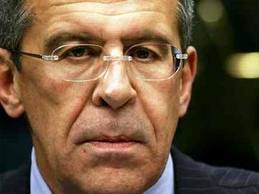
Russian Foreign Minister Lavrov Explains Russia’s Veto on Syria Resolution in UN…

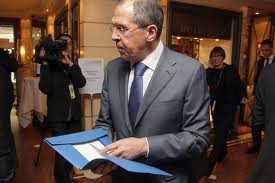
images1Russian Foreign Minister Sergei Lavrov on Saturday explained why Russia had vetoed a resolution on Syria in the UN Security Council, saying that without Russia’s latest amendments, the draft would be unilateral and would harm Syria if adopted.
Veto-wielding UN Security Council members Russia and China on Saturday blocked the Morocco-proposed draft resolution on Syria that called on President Bashar al-Assad to step down. Thirteen of the council’s 15 members voted in favor of the draft, backed by the Arab League and the West.

At least 5,400 people have been killed in the Syrian government’s 11-month crackdown on protesters, according to the UN. Syrian authorities blame the violence on armed gangs affiliated with al-Qaeda and say more than 2,000 soldiers and police have been killed.

Lavrov said he had on Friday sent Russian amendments to the draft resolution to U.S. State Secretary Hillary Clinton and Russia’s envoy to the UN Vitaly Churkin so that all partners could get familiarized with them.

“The rationality and objectivity of these amendments should not cause anyone’s doubt,” Lavrov said.

Some Western countries have been trying to persuade Moscow to support a resolution effectively authorizing a military operation, but Russia has repeatedly insisted that the Western drive for a stronger crackdown on Syria is preparation for a “Libyan scenario.”

In Libya, rebels ousted and killed long-standing dictator Muammar Gaddafi in October 2011 after a months-long military standoff in which they received assistance from NATO forces.

Although UN Security Council diplomats had toned down the latest draft in an apparent move to overcome Russia’s opposition, Lavrov said the Morocco-submitted plan was “unilateral.”

The Russian foreign minister said extremist groups that provoke violence in Syria should be assessed in a proper way, which has not been done. He said the resolution did not set enough demands on anti-government armed groups, and that Russia was concerned it could jeopardize Syria’s national political dialogue.

Besides, he said, the draft resolution contained a demand that all Assad’s forces should withdraw from cities and towns.

“This phrase, without being linked to a simultaneous termination of violence on the part of armed extremist groups, is absolutely provocative, as no president with self-respect, no matter how treated, will agree to surrender inhabited localities to armed extremists without resistance,” he said.

U.S. Ambassador to the United Nations Susan Rice said on Saturday she was “disgusted” by the Russian and Chinese veto on the draft, and that “all further bloodshed” that could follow will be on the two countries’ conscience.

“For months this council has been held hostage by a couple of members. These members stand behind empty arguments and individual interests while delaying and seeking to strip bare any text that would pressure Assad to change his actions,” Rice said.

UN Secretary General Ban Ki-moon also condemned the veto, and his statement distributed through his spokesperson called it “a great disappointment to the people of Syria and the Middle East, and to all supporters of democracy and human rights.”

“It undermines the role of the United Nations and the international community in this period when the Syrian authorities must hear a unified voice calling for an immediate end to its violence against the Syrian people,” Ban said.

Russia along with China already vetoed a European-drafted resolution containing the threat of sanctions against Syria in October 2011.

Lavrov said another problem was the draft’s demand that Assad step down.

Russia, one of Assad’s firm supporters during the uprising against his regime, indicated earlier this week that it would veto the draft resolution calling on Assad to step down and providing for “further measures” should he refuse. Moscow has proposed its own draft, which the West criticized as being too soft.

“We have repeatedly said that we are not protecting Assad but international law. The prerogative of the UN Security Council does not envision interference in internal processes,” Lavrov said.

Lavrov also said on Saturday he and Foreign Intelligence Service head Mikhail Fradkov will visit Syria and meet with President al-Assad on February 7 on instructions from Russian President Dmitry Medvedev.

Russian Ambassador Churkin said after the Security Council vote: “The draft resolution that was put to a vote did not reflect Syria’s realities well enough and sent conflicting signals to the political forces in Syria.”

Asked why Russia initially agreed with the resolution but then changed its mind, Churkin said the situation has changed in the past month since the Arab League put forward its plan for Syria.

The heads of the Russian and Chinese delegations said their countries hope the international community continues its efforts to stop violence in Syria.

Qatar-based satellite TV broadcaster Al Jazeera reported on Saturday citing UK-based Syrian Observatory for Human Rights that at least 217 people have been killed in a new major army offensive in the central Syrian city of Homs. Syrian authorities denied any involvement.

Source:

Windows to Russia!

UN Veto: The West is Really, Really and Really Upset at Russia and a little bit at China…

vetoThe Western media is in overdrive and the pedal to the metal! They are slamming Russia like no tomorrow and they have been lying triple time all day long, getting ready for this onslaught of media bull crap…

Anyone that believes the media war going on by the West is certified out in left field. That means lots of people are having lots of company in left field right now…

I have seen numbers of dead for just today in Syria range from 200 to 1000 by the main stream media. I have seen numbers of total dead (being tossed around like a leaf in the wind) of anywhere from 10,000 to 20,000 and that number will grow. Just watch…

America is acting like Russia took the candy right out of its mouth and America is throwing one hell of a temper tantrum over the stolen candy…

I am flabbergasted at what I am seeing and all because Russia and China refuses to believe the Western lies…

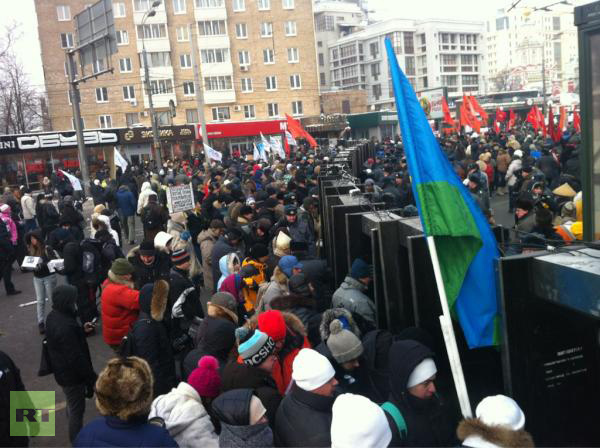
Yes all the reports today on Syria and the Russian rallies were extremely fabricated and falsified. I expect the West to go in any day and blow the hell out of Syria as pissed as they are over the veto’s in the UN vote…

Russia and China both are giving warnings and from what I see in America, “Big War” is on the horizon…

Sick, strange and sad country that America is. We are the cause of what is happening in Syria and are even supplying arms to the al-Qaeda just like we did in Libya…

Just as you all are believing the propaganda you are being fed, by the Western Media…

Kyle
Windows to Russia!

PS: Russia warned about the veto and the West refused to give on the Russian points in question…

Man – those war drums are loud tonight…

“Europe needs a peace pact”: Sergey Lavrov delivered a foreign policy thesis at the Munich Security Conference…

Violation of international law by NATO threatens the world order, says Russian Foreign Minister Sergey Lavrov. The Minister also proposed to conclude a “peace pact for Europe”, suggesting that this may serve as a starting basis, as he pointed out that the issue of European missile defense threatens to divide the branches of European civilization…

On Saturday in Germany, opened the 48th Munich Security Conference. Russia was represented by her country’s Foreign Minister Sergey Lavrov.

One of the main focus of the Minister made on the task of creating a Euro-Atlantic space of equal and indivisible security. According to him, Europe needs a peace pact, and they can become a European Security Treaty . “Europe needs a peace pact, an end to the era of the Cold War, as a broad co-operation can only be built on a platform of trust, – the Minister said. – As we all remember the famous Russian-American wisdom, “trust but verify” Such a pact should be legally binding. “

According to him, “the term would be to work towards building a common security space extensive, consisting of connected in” ring “of the regional segments, whose members were linked to the complex legal and political obligations.” “One of these segments would be the area of ​​the girth of our proposed Treaty on European Security (OSCE participating States), within which it would be very helpful to political cooperation between NATO and the CSTO, in favor of what we stand for many years, but never can achieve a clear answer, “- said the Minister.

Speaking about Russia’s role in global processes, Lavrov pointed out that on the world map there is another area that has such massive potential for economic development. “I mean, first of all, the translation of the Russian economy on the innovation track the use of this work, vast opportunities of Siberia and the Far East” – the minister said, adding that Europe should be interested in the success of this project – just as it had supported in his during the reforms of Peter the First.

According to “Interfax” , referring to the actions of external actors in relation to intra-state conflicts, Lavrov said: “The military-political instability in certain regions should not become a” magnet “for the application of force in terms of weakening the usual leverage the leading states to international events “. “Supporting one side of the internal conflict, the attempt to impose outside political structure of the scheme – a dangerous path leading to the expansion of areas of instability and enhance the elements of chaos in international relations. The examples are not far to seek, “- said the Minister.

“It is not advice from outside”

As the political situation in Russia, Lavrov said that the democratic process in the country should be dictated by internal needs, rather than outside advice. “Again and again the thesis of” incorporation “of Russia in the” advanced West “without developed traditions of centuries of foreign policy independence of our country: the pace and nature of democratic processes in our country will be dictated solely by internal needs, rather than outside advice,” – said Lavrov, adding that Moscow does not consider it justified a cautious, even suspicious, the attitude of European partners to the steps and plans for the development of Eurasian integration.

According to him, the decision of Russia, Belarus and Kazakhstan set an example for the deepening of integration processes in the post-directed “to expand the horizons of mutual cooperation.” Lavrov said that now “there is a relative narrowing of the impact and opportunities for countries that are usually referred to the historic West, the weakening of their role as the” engine “of global development.” “I do not want to say that Russia is experiencing in this regard some gloating, not least because the EU – our main trade and economic and investment partner,” – the minister said.

In addition, as reported by ITAR-TASS , Lavrov said that Russia will not participate in schemes that have the purpose of containment of China, “which is our good neighbor and strategic partner.” “The alignment of the opposing alliances – a recipe for the last period, which in modern terms could result in slippage to global catastrophe, – the Minister.

“The threat is the military position of NATO”

In his speech, Lavrov touched upon cooperation with NATO. In his words, Russia considers a threat from an alliance violation of international law and jurisdiction. “Russia does not mention the threat of NATO expansion – said the Minister. – Threat of war is NATO’s position that violates international law and jurisdiction. ” According to the Ministry of Foreign Affairs, “Russia sees this as a threat not only for themselves but also for the general world order.”

In this case, said the minister, Russia still can not get agreement from NATO the term “substantial combat forces” that the alliance has promised not to place on the territory of new members. “Military Infrastructure (NATO) is approaching us fast enough, despite the commitment after the collapse of the Soviet Union, NATO is not that the infrastructure will be located on the territories of new NATO members. So my question is regarding the elements of the missile defense system, whether it is covered under the scope of this obligation or not? But all our attempts to start a discussion in NATO, how big should these combat forces to become significant, does not succeed. NATO does not want to discuss it, “- continued the Russian Minister.

In this connection Lavrov sees no serious progress in the negotiations between Russia and the U.S. deciding missile defense system in Europe – European missile defense. The Minister stressed that in recent years we are talking about consultation, not full-fledged negotiations. Russia and NATO have agreed to cooperate on the draft European missile defense at their summit in Lisbon in 2010, but negotiations stalled over the refusal of Washington to confer legal security of the system being deployed not directed against the Russian deterrent. In late November last year, Russian President Dmitry Medvedev has announced a package of measures of military-technical and diplomatic nature that Russia will respond to the deployment of a missile defense system in Europe.

Lavrov said that Russia “welcomes all efforts to restore confidence” between the two countries and welcomed the publication of an international commission of experts of Euro-Atlantic security initiative (Euro-Atlantic Security Initiative, EASI). The Commission proposed an action plan to overcome the disagreements between Russia and the U.S. security, as well as the convergence in this area of ​​Russia and NATO. The report was presented on Saturday in Munich.

Lavrov said that the issue of European missile defense threatens to divide between the branches of European civilization. “Disturbing” call “is a problem of European missile defense, threatening to drive a wedge between the branches of European civilization. At the root of it all the same unwillingness to ensure equal and indivisible security in legally binding form, “- Lavrov warned.

“We’re not friends Assad”

During the discussions, “the margin” of the conference we were talking about the situation in Syria . The Minister recalled the appeals of Russia to the United Nations to prevent slippage of the situation in the country to civil war. “We fully support the peaceful protest demonstration in Syria, but the armed opposition uses them for its own purposes, – Lavrov said.

In Moscow, he said, there are no special concerns of Syrian President Bashar al-Assad, but there is concern about security in the world. “We’re not friends Assad, just as we were not friends of Colonel Gaddafi – said the head of the Russian Foreign Ministry. – But we do not accept claims to unilateral sanctions, which are taken without consultation with us, and especially the extra-territorial sanctions order. “

Concerning the Moroccan draft resolution in the UN Security Council, Foreign Minister stressed that Russia insists on the removal of ambiguities in the text. “We must … remove all ambiguity in the text of the resolution – said Lavrov. – Vnutrisiriysky dialogue should be conducted without preconditions. ”

According to him, in the Western draft resolution to a much greater degree of condemnation of the Syrian government than the opposition, and claims must be presented to both sides of the conflict. “Otherwise, we’ll take completely unrealistic, or position, or will submit a signal that the Security Council clearly takes one side in the Civil War,” – said the Minister.

The second drawback of the Western draft resolution, said Lavrov, is that on the one hand, it offers the Syrians to begin negotiations without preconditions, without having to prejudge the outcome, but, on the other hand, states that this dialogue will be conducted according to the schedule proposed by the League of Arab States (LAS). “Of course, the schedule of PAH should be taken into account, but you have to remove the contradiction between the requirement to carry out this chart at 100% and position on the inadmissibility prejudge the outcome” – he said.

Commenting on the supply of Russian weapons to Syria, Lavrov assured that they will not affect the balance of power in the Middle East region. “Whatever we sell Syria – this did not change the balance of power nor to the” Arab spring “, it does not affect the situation in the country, what we deliver – it’s not small arms, this is not what is used in the conflict” – he said.

Syria remains the largest exporter of Russian arms in the region. Now the stage of execution is a contract to supply the coastal defense systems “Bastion” with supersonic cruise missiles “Yakhont”. The largest contracts signed: supply 24 fighter jets and eight divisions MiG-29M/M2 air defense systems “Buk M2E”.

“In the fields,” Sergei Lavrov conference held informal bilateral meetings with U.S. Secretary of State Hillary Clinton and NATO Secretary General Anders Fogh Rasmussen. Discussed the problems of European missile defense, relations within the NATO-Russia Council and the situation in the UN Security Council.

The Munich Conference was founded in 1962 by German journalist Ewald von Kleist as a “meeting of defense officials,” the NATO member countries. Since 1999, it also involved political and military leaders from Central and Eastern European countries and representatives of the business. Users browsing this forum brings together an international panel of about 40 countries. The conference agenda includes the issues of combating international terrorism, UN reform and NATO, the resolution of the situation in hot spots, strengthening regional and global security.

In 2007 at the Munich conference with a keynote speech on foreign policy, which caused a huge international response by the President of Russia Vladimir Putin. The Forum is traditionally held numerous informal meetings, during which promising ideas being discussed in international security.

Windows to Russia!

Russia – 36,000 Opposition Rally – 135,000 Pro Rally: Peaceful and calm…

Russia had rallies and they went off very peaceful today. Here is the live posting by RT as things happened. Sorry everyone it was kinda boring and very very cold… (-21 C)

15:45 MSK: RT ends its live feedback on Saturday’s protests in Russia. Have a nice day!

15:37 MSK: Around 20 people who attended various rallies in Moscow sought medical attention for hypothermia.

15:06 MSK: Police officials say around 175 thousand people attended rallies in Moscow on Saturday. According to their data, 36 thousand were on Bolotnaya Square and around 135,000 on Poklonnaya Hill.

14:52 MSK: Rally on Poklonnaya Hill over. Park Pobedy metro station is closed due to overcrowding

14:46 MSK: Next opposition rally to be held on February 26th, according to organizers.

14:43 MSK: Rally on Bolotnaya over, people are slowly leaving the square. Organizers say at least 120 thousand people attended, while official police estimates put the numbers at 38 thousands tops.

14:15 MSK: Watch live feeds from both Bolotnaya Square and Poklonnaya Hill on RT

14:04 MSK: According to police data, around 100 thousand people are attending the pro-Putin rally on Poklonnaya Hill.

13:55 MSK: Rally on Bolotnaya begins with people still flocking to the square.

13:37 MSK: As more people are arriving at Bolotnaya Square, which is situated on an island at Moscow River, police have deployed hovercraft. They are patrolling on the frozen river.

13:20 MSK:Observers by metal detectors on Yakimanka Street say at least 50 thousand people have passed through on their way to the rally. Police estimates are significantly lower at 23 thousand participants.

13:08 MSK:First group of protesters arrive on Bolotnaya Square, thousands more following.

12:57 MSK: Liberal Democrat rally over. Bolotnaya Square open to protesters.
12:47 MSK: Presidential candidate Mikhail Prokhorov has arrived at Yakimanka Street with some of his supporters.

­12:46 MSK: The Moscow Metro is having trouble accommodating all the people passing through stations closest to Yakimanka Street and Poklonnaya Hill. It’s like a special Saturday rush hour.

12:45 MSK: Latest turnout estimate by the police: 11,000 marching at Yakimanka, 35,000 at the Poklonnaya rally, 1,000 at Pushkin Square. Organizers of the Yakimanka march claim a higher turnout of 12-15,000.
12:40 MSK: Protesters in Yakimanka are displaying their creativity. There is a “human tank” among them wearing a cardboard turret over his head bearing the slogan, “tanks are not afraid of filth.” A giant crocodile is being carried on sticks by half a dozen protesters.

12:37 MSK: Police halt the flow of people onto Yakimanka Street for five minutes to prevent crowding.

12:31 MSK: The Poklonnaya Hill rally, which is scheduled to start in some 30 minutes, has attracted 15,000 people, according to police estimates.

12:31 MSK: The Liberal Democrat rally in Pushkin Sqare has 500 participants, police report.

12:31 MSK: Media estimate the number of people on the Bolotnaya march at 7,000 so far.

12:20 MSK: Protest march starts. Demonstrators carry banners displaying anti-government slogans and sing a popular 1980s song by Viktor Tsoy demanding change. The song was one of the emblems of the Perestroika era.

12:19 MSK: ­Police have set up 32 walk-through metal detectors at Yakimanka Street, the starting point for the march to Bolotnaya Square.
Metal detectors at Yakimanka Street (tweeted by @varlamov)

12:16 MSK: ­Moscow police are deploying some 9,000 officers on Saturday. They are to maintain public order and ensure that all the events pass off safely.

12:12 MSK: ­One of the key factors affecting the rallies will be the cold snap, or “General Moroz”, as it is jokingly called. The wave of extreme cold, which has seen temperatures dip to -20 degrees Celsius, could affect the turnout and pose a health risk to those taking part.

12:10 MSK: ­Meanwhile at Poklonnaya Hill, another rally is gathering. The activists at this event are protesting at what they see as a threat to political stability in Russia coming from the Fair Elections movement. They accuse the opposition of exploiting the public’s mood of protest in a bid to overthrow the government and seize power for themselves. A large section of the Russian media has labelled the event “a pro-Putin” rally, although the organizers have tried to distance themselves from the prime minister. Putin himself voiced his support of the rally, whose slogan is, “We have much to lose.”

12:08 MSK: ­Several presidential candidates had originally planned to deliver speeches at the rally, but later changed their minds. Businessman Mikhail Prokhorov said he would attend the event, but only in a personal capacity. Lib Dem leader Vladimir Zhirinovsky has organized its own rally, scheduled for the same time. Sergey Mironov of Fair Russia decided not to attend. Community leader Gennady Zyuganov is out of Moscow on Saturday.

12:06 MSK: ­The “Fair Election” movement has organized a march in central Moscow which is expected to end with a 30-minute rally at Bolotnaya Square, which in December was the scene of one of the biggest opposition demonstrations seen in modern Russia. Protesters angry at what they saw as a rigged parliamentary election are coming back to demand, that next month’s presidential poll is free and fair. The rally is being called “For Fair Elections!” Between 20-30,000 people are expected to turn out.

12:03 MSK: In Russia’s Far East and Eastern Siberia, a series of events have already passed off peacefully. But the main focus today is on Moscow’s two rallies, which are expected to draw the largest numbers.

12:01 MSK:There are a range of views being expressed as the election date approaches. Some are throwing their weight behind a particular presidential hopeful. Others are raising their voices against the political situation in the country. Yet others fear Russia is being dragged into chaos, as has happened in some Arab Spring countries.

12:00 MSK: Hello! It’s Saturday, February 4. Exactly a month from now Russia is to elect its new president. Today sees a number of political rallies across the country and even abroad. RT will be broadcasting regular news updates and keeping you informed through Twitter, Facebook and its website.

Windows to Russia!