Cup of Coffee and Pancake Week…

This morning with that wonderful cup of coffee here in Russia, I was doing some thinking’s about how things have settled again with Windows to Russia. Now I can start think again about writing some more in the blog…

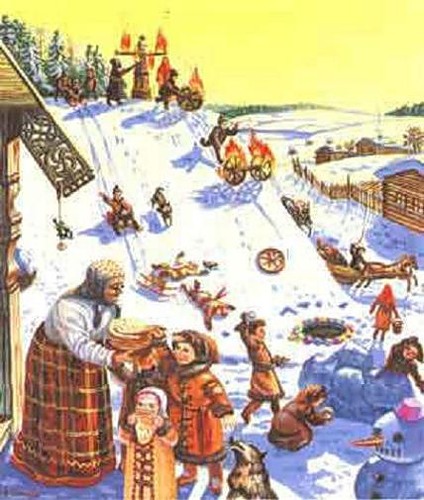
So while I am late with the information: This week is Pancake week in Russia…

Maslenitsa is a traditional festival that marks the arrival of spring. As is the case with many ancient holidays, Maslenitsa has a dual ancestry – both pagan and Christian…

Past article: From Russia: Maslenitsa Time of the Year!

That is a good article on what has happened this week. I have lots of articles on Maslenitsa just follow this link to see them…

http://www.google.com/cse?cx=partner-pub-6949949917702753%3Aqac5zxa3urv&ie=ISO-8859-1&q=Maslenitsa&sa=Search#gsc.tab=0&gsc.q=Maslenitsa&gsc.page=1

Enjoy the pancakes this week as they are very important and it is never too late to eat pancakes. Remember to share some…

Also it looks like I will be very busy trying to fix all the damage done to the blogs. We lost lots of photos that I happened to mistake not backing up. So even though the government in the US tried to take us down, that would not matter as much as the fact that I failed in my job, to protect the blog… 🙁

Kyle Keeton
Windows to Russia!

Putin speaking before the 130,000-strong assembly of supporters at Moscow’s Olympic Stadium…

Speaking before the 130,000-strong assembly of supporters at Moscow’s Olympic Stadium, Vladimir Putin gave a humdinger of a speech and battle rally for and with Russia…

Just watch the video and click on the subtitle button cc it will give you English titles…

Good video and a side of Putin that we do not see very often…

Kyle
Windows to Russia!
PS: For doubters the stadium seats 78,000 and it was standing room only…

Big victory today in an ongoing war over the internet…

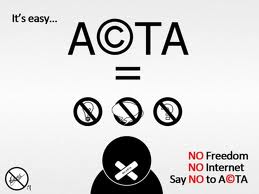
Big victory today in an ongoing war over the internet. This so called “anti – piracy” program has been initiated by the entertainment industry in America, whose only business is to pay off politicians, pump out government propaganda and spread lies. I was shocked to see that relatively civilized and  advanced Europe had actually fallen a victim to the US propaganda and tried to impose this senseless and stupid law upon its Citizens. It shows that some politicians in Europe are definitely bought by America. I just hope that courts in Europe aren’t as corrupt as they are in the USA, and that it will provide a proper burial forever for the ACTA!

News: The EU has suspended the ratification of the Anti-Counterfeiting Trade Agreement (ACTA) and referred the text to the European Court of Justice to investigate possible rights breaches. The European Commission decided on Wednesday to ask the EU’s top court “to clarify that the ACTA agreement and its implementation must be fully compatible with freedom of expression and freedom of the internet.” The ACTA debate “must be based upon facts and not upon the misinformation or rumor that has dominated social media sites and blogs,” says EU Trade Commissioner Karel De Guch. The EU will not ratify the international treaty until the court delivers its ruling, he added…

Cross your fingers and lets keep fighting because the second we look away they will be back with more trash to shove down our throats…

Kyle Keeton
Windows to Russia!

Coffee in Russia and I am still posting: Slap me down again and I promise to get right back up…

Windows to Russia is now spread out over three servers. We were knocked offline again and again and again and again and again and again…

But here I am still posting. I decided to take a break from resetting websites and post a small article. They did succeed in taking out our image files and corrupted the rest of the server, but here I am still posting…

So even though I have my moments that I want to give up and let them win. They are just fleeting moments…

So I will now tell you how I feel about the constant barrage of attacks that Windows to Russia is going through. These are attacks that are instigated by the US government against Windows to Russia…

So: Go to Hell DHS (Department of Homeland Security) and cronies! Keep going because you are just making me more determined to stay on line. So keep on slapping me down. I am doing nothing wrong and I am not being a bad/evil person. I am no terrorist – nor a radical individual that wants destruction of the World. I do express my opinion and if that is all it takes to be abused and used and slaughtered. Then the world we have created in America, Sucks…

So bottom line is that you are pissing me off and come – hell or high water, I will keep this site online and I will post what I consider appropriate information, even if it is in disagreement with the stifling philosophies of the American government and her cronies…

I will tell all who are reading this that you better do some thinking’s, because what I am going through with Windows to Russia, no one who is an America should have to deal with. I grew up in a country that freedom of expression, liberty, rights and life was appreciated and endorsed by all and one! 99% of all attacks are from and based out of America and they come from government installations…

Yes I am pissed…

Kyle Keeton
Windows to Russia!

PS: Go for it, I am waiting and will come back every time you slap me down…

In Russia: Two + Cups of Coffee (Chicory) and some Thinking’s…

Update: We went through another rough night! It was not good enough to attack just us. The whole hosting company was under attack. This lasted about 12 hours and was not fun. I saved most data but it looks like I will be only part operating for a day or so. But we are still here against the wishes of a government entity…

The site has been up and the site has been down. It seems to have been down. more than up that last 24 hours. First we were slammed by a DDoS attack that took us down for several hours then the results from that attack corrupted our database (Thanks to my government in the USA!). So as I was trying to correct that issue our host decided that 2am Russian time was a good time to work on their servers. They explained as we lost out site again for the third time yesterday, that they were rearranging the clusters of servers and all will be so much better after they are done…

Well – done for them was about 12 hours later and then I still had to spend 4 to 5 hours dealing with a database that I could not get too, to fix because they decide to mess up the servers. So I was really pissed off and upset and drank way too much chicory… 🙂 (Good thing there is no caffeine in chicory!)

I still lost some data and Sveta knows how to put it back into the system and I will wait for her to do it. I have messed enough with stuff and I do not want to mess in the MySQL as I am very tired and might do something stupid… 🙂

So that is it today, not that I do not have lots to say, it is just that I want some peace and quiet before I post an article that will get the government riled up and they try to crash me again…

One day everyone will not be afraid to speak out and tell the government what you think? When that day comes the government will be the ones afraid, not you. Then people like me will not be as easy to take offline because there will be too many people to stifle…

Wake up people!

Kyle Keeton
Windows to Russia!

Putin’s transition is over. Modern Russia starts today: by Jon Hellevig…

During his two first terms as president and his tenure as Prime Minister, Putin accomplished a remarkable transformation of Russia from a virtually bankrupt country suffering under a criminal anarchy into a prosperous emerging democracy with all the attributes of a normal country. But 12 years at the helm of such a vast country with all its accumulated problems has been far too short a time to cure all its ills. And some things can be cured by time alone, during a process of peaceful and stable development of social practices in all fields of life. Therefore it is so important that Putin will be re-elected to oversee the continuous peaceful social development.

Not withstanding these remarkable achievements, I predict that we have only seen the beginning. Putin has built the platform which will now enable him to turn the newly stable Russia into a modern progressive country. Therefore we may speak in terms of Putin versions 1.0 and 2.0, the former being a Putin of the transition period, and the latter Putin the modern reformer.

Back in 1991 everybody acknowledged that a transition period was needed before Russia could become a mature democracy with a fully formed market economy. But few understand that it is only now that the transition period has been completed. And it is only now after the transition period and the normalization of the country that any sweeping and formative reforms can be implemented.

The early reformers and their advisors did not understand what would be the nature of the transition period. People and their social practices were not in the picture. It was generally thought that the transition could be undertaken solely through a number of decisions and concentrated actions without regard to time and the conflicting needs and interests of real people. Nothing expresses the spirit of the post-Soviet market reforms better than the ill-omened war cry of “shock therapy.” Devised by people who must be thought of as the mad scientists of horror movies, they actually inflicted the shock on entire populations. Democracy too would happen, they fancied, just by letting everything loose. But what followed was chaos and anarchy.

We must precisely see the first 12 years of Putin’s rule as a transition period, not only a transition from the Soviet system but also a transition from the criminal anarchy of the 1990’s. This should explain all Putin’s actions in the sphere of democratic institutions, media, social life, business, and macroeconomic stability. They were aimed to bring order, bring elementary social protection, and bring security against domestic and foreign threats. In short Putin 1.0 was about a normalization of the country. This normalization now provides a platform for pursuing intelligent, fine-tuned but sweeping reforms in all areas of life.

In the series of pre-election articles where Putin has outlined his vision for Russia he sets some bold goals for the future of the country. But his critics say “Where has he been during the last 12 years?” The question is: Where have they been? How come they cannot grasp what a different country Russia is today in every positive sense!

They don’t understand that the system of corruption that stemmed from the Soviet economy of scarcity, and became the norm in the 1990’s, could not be tackled without a sufficient level of state power, which was nonexistent when Putin came to power. It is only in the very recent years that Putin has been able to put in place a functioning state apparatus that can take on the problem. And therefore, no doubt, in a few years we will see great progress in this respect.

“The last 12 years show that Putin has failed in reviving industrial production,” the critics claim. But they do not understand that it is only a few years ago that Russia reached a situation where questions of far-reaching policies on industry could be raised in the first place (other thing that in reality all is not so dire in this respect when we look at the facts). Prior to that, the quality and reach of government was too weak for that; there were no economic conditions for that either; and the priorities had to be elsewhere. Not to forget that the policymakers and their advisors (and critics) had to go through a learning curve as well. Russia has been only some 2 or 3 years in a position to seriously deal with these issues. It is therefore now that Putin is seizing the opportunity, at the moment when it is first given, to launch a comprehensive reindustrialization and modernization program.

During his presidency Medvedev quite correctly set as his priority the modernization of the economy. It seems to me, however, that the program laid too much emphasis on calling forth a high-tech revolution, instead of stressing the need of a general modernization of all aspects of business. I mean that more fundamentally the government should make a concentrated effort to modernize the laws and administrative practices that hinder businesses to thrive in a competitive global economy. This means an accent on a total de-bureaucratization of the country. Sure a lot has happened in this respect, but it seems to me that the problem has not even been fundamentally recognized, although Putin’s election program now for the first time speaks about the problem in the right terms. Of Russia’s three ills inflation is now finally under control, the nature of corruption has been understood and there is a plan and force to tackle it, but the fight against bureaucracy is still haphazard.

Even more important for the economy than the plans to reindustrialize and modernize the country are Putin’s social programs of raising the pensions and salaries of state employees. Since Putin ascended to the presidency in 2000 the average pensions have risen some 15 times from an equivalent of $18 to $300, having thus reached an acceptable level considering the present purchasing price parity. In the same time the salaries of judges have been raised some 10 times, creating the most fundamental condition for the emergence of an independent judiciary. Next in line were the salaries of police coinciding with a total reform of the entire authority including its rebranding from militsiya to police. From January this year these salaries have gone up with 200%. The salaries of military have been hiked from start of the year with some 250 to 300% so that, for example, a lieutenant’s salary now range from  a starting salary of 50,000 rubles ($1,700) to  80,000 rubles ($2,600) compared to the meager 17,000 rubles ($600) of last year. When comparing these salaries with those of other countries, one also has to keep in mind that the income tax in Russia is only 13%, flat for all income levels, meaning that the take-home pay is comparably even higher. And now in his election program Putin has promised to raise by a quantum leap the salaries of doctors and healthcare professionals, school teachers and college professors, as well as increase child support, and raise the student stipends with a whopping 500%.

And then some people still want us to wonder why the Russian people vote for Putin! According to the opposition, which represents the only sources that the western press quotes on these matters, nobody would support Putin. But, on the contrary, why on earth would people support the opposition that actively opposes these social policies?

Is this populism? Yes, says the opposition, so says the western press. But why is it not populism to pay decent salaries in Europe? The more when Russia can afford it and Europe cannot. Just ask the Greeks, Spaniards, Italians, Portuguese, Irish, whose salaries have been cut for the sake of austerity. Or the men and women who are condemned to more years of hard labor as the retirement ages are raised all over in Europe.

Putin is putting the salary hikes through, because this is the moment when it can be done.  Because justice cannot be postponed.

But this is not only a question of justice and equity. This generous social spending represents from the other hand a massive economic stimulus package – a stimulus that must be seen as the most clever ever devised. Beats hands down any Keynesian juggle to throw good money after bad in a frantic activity to build roads, bridges, school building, libraries and fire stations. In the Putinian stimulus there are many pluses, in one sweep you reach social justice and economic stimulus; spread wealth evenly over the country, and ensure that the stimulus goes towards causes that will immediately help the local economy. Not to mention the advantages of this kind of stimulus over the EU and USA policies of propping up the banks with tax payers’ money (or by printing more of it).

Again the critics from the unconstructive opposition claim that this social spending is unbearable and will cause a budget deficit. Well, debtless as Russia is, it can afford a budget deficit if it were to come. But as these critics don’t get the stimulus side of this, they can’t grasp that this money will fuel the economy so that its effect will multiply as it moves through the economy resulting in a higher GDP and higher tax revenues. Such celebrated don’t-do-anything economists as Kudrin have difficulties to grasp this logic.

Now Putin’s Russia (as they say) is a normal country, with the foundations of a democratic market economy and welfare country. The transition is over. And modern Russia starts today, with the reelection of Vladimir Putin.

——-

The writer (Jon Hellevig) is a Finnish lawyer and Managing Partner of Hellevig, Klein & Usov (www.hkupartners.com) who has lived in Moscow for 15 years. He has written the book Expressions and Interpretations (www.hellevig.ru) discussing Russia’s social development from the viewpoint of philosophy and philosophy of law. He is also the author of several books on the Russian tax and labor law…


The views of the above author are not strictly the views of Windows to Russia. They are an independent view from an outside source and country that brings a better light on the world in general and Windows to Russia is pleased to have Jon Hellevig’s article on its pages today. It is hoped that we will have many more of his writings in the future…

Posted by Kyle Keeton
Windows to Russia…

Ouch – Hamid Karzai, Afghanistan’s leader, Pakistani president, Asif Ali Zardari and Iran’s president, Mahmoud Ahmadinejad…

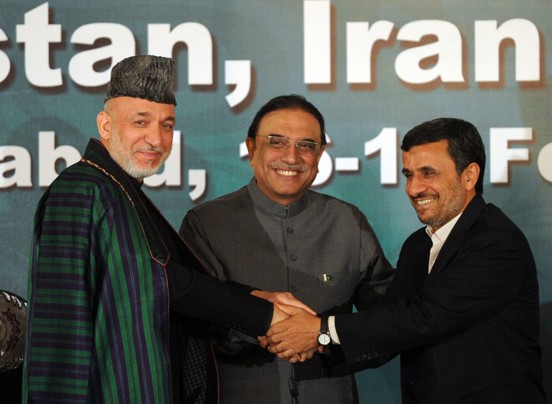
Hamid Karzai, Afghanistan’s leader, Pakistani president, Asif Ali Zardari and Iran’s president, Mahmoud Ahmadinejad had a pow wow today and a lot came out of it. What a way to end the week for Iran after they have been assaulted left and right by Israel, France, Britain and America…

After seeing the trash talk by the controlled American press, it is obvious that America is worried…

Could there be some countries starting to tell America to back off. Could we be seeing the division widen, between the West and East? Could the world be getting tired of being bullied?

The Western media articles are acting a hoot over this… 🙂

They are seriously upset and spinning the yarn…

Kyle Keeton
Windows to Russia!

The Silverware is Real Sterling in Russia…

When I was little we use to break out the real silverware when holiday guests came over. That was when you knew that good food was going to be served. These moments of real silverware came at Thanksgiving and Christmas usually and no other time. I remember my mother and father saving money for a special set of silverware. It cost a fortune and since we were dirt poor, it was almost an impossibility to achomplish. But my dad said it had to be and that was that. So we use to water down the ketchup, mustard and drank powdered milk, plus many other things to save money. We finally got our silverware for special occasions…

It was in a special cherry wood box and was a set for 12 people, made of real sterling silver. I use sneak and look at it when no one watched. It was like a treasure because we worked so hard to get it. It was a treasure and treated it as such. Normal silverware was aluminum or stainless or plain steel. The steel would rust and the aluminum would corrode/pit…

Now lets fast forward to today’s time and understand where I am coming from with this story…

Russians have tons of silverware, real silverware and or sterling silverware! We have tons of the stuff. It is amazes me every time I pick up a spoon that is tarnished and I have to polish it. They turn black from tarnish…

Everywhere we go to visit someone we see real silverware. Eat out and you have real silverware. Eat at home and you got real silverware. Yes we have stainless steel also and aluminum and plastic but people eat with real silverware as if there is nothing special. I fact to not eat with real silver silverware is strange now for me…

It seems that after I have done some investigating, it seems that in the Soviet era, real sterling silver was normal for most people. It seems that no one looks at it like it is special, except for the fact that they have to clean the stuff all the time and that can be a pain…

We have a ton of the stuff and most of it is put away in our storage area. I bought stainless steel wear when I came to Russia and now I understand why Sveta looked at me like I was crazy then. In the village we use aluminum ware and some silverware. I use stainless most of the time at home because my old habits of “labels” is at work. Silver Silverware is for “special”…

This is just one of those quirks that comes across my mind as I go through my day. It is an example of what perceptions that we have as to how Soviets lived. I lived a life in America that was poor and real silverware was a monumental undertaking to have. Yet I was told that Soviets would love to have my life and live as good as I do… 🙂 (Just like I was told that the Chinese would love our life!)

That it seems was just a bunch of hogwash! It seems that many Soviets were eating off of fancy fine dinning utensils while us normal Americans were lucky to have stainless steel wear. I know I lived it in America and now I live it in Russia, as I have hundreds of pieces of sterling wear now in Russia, to eat off of all the time, anytime I feel like…

Just an interesting thought of mine from Russia and now you know something new about Russia. That is why I love Russia…

Kyle Keeton
Windows to Russia!

Encircling Russia, Targeting China, NATO’S True Role in US Grand Strategy: by Diana Johnstone…

On November 19 and 20, NATO leaders meet in Lisbon for what is billed as a summit on “NATO’s Strategic Concept”. Among topics of discussion will be an array of scary “threats”, from cyberwar to climate change, as well as nice protective things like nuclear weapons and a high tech Maginot Line boondoggle supposed to stop enemy missiles in mid-air. The NATO leaders will be unable to avoid talking about the war in Afghanistan, that endless crusade that unites the civilized world against the elusive Old Man of the Mountain, Hassan i Sabah, eleventh century chief of the Assassins in his latest reincarnation as Osama bin Laden. There will no doubt be much talk of “our shared values”.

Most of what they will discuss is fiction with a price tag.

The one thing missing from the Strategic Concept summit agenda is a serious discussion of strategy.

This is partly because NATO as such has no strategy, and cannot have its own strategy. NATO is in reality an instrument of United States strategy. Its only operative Strategic Concept is the one put into practice by the United States. But even that is an elusive phantom. American leaders seem to prefer striking postures, “showing resolve”, to defining strategies.

One who does presume to define strategy is Zbigniew Brzezinski, godfather of the Afghan Mujahidin back when they could be used to destroy the Soviet Union. Brzezinski was not shy about bluntly stating the strategic objective of U.S. policy in his 1993 book The Grand Chessboard: “American primacy”. As for NATO, he described it as one of the institutions serving to perpetuate American hegemony, “making the United States a key participant even in intra-European affairs.” In its “global web of specialized institutions”, which of course includes NATO, the United States exercises power through “continuous bargaining, dialogue, diffusion, and quest for formal consensus, even though that power originates ultimately from a single source, namely, Washington, D.C.”

The description perfectly fits the Lisbon “Strategic Concept” conference. Last week, NATO’s Danish secretary general, Anders Fogh Rasmussen, announced that “we are pretty close to a consensus”. And this consensus, according to the New York Times, “will probably follow President Barack Obama’s own formulation: to work toward a non-nuclear world while maintaining a nuclear deterrent”.

Wait a minute, does that make sense? No, but it is the stuff of NATO consensus. Peace through war, nuclear disarmament through nuclear armament, and above all, defense of member states by sending expeditionary forces to infuriate the natives of distant lands.

A strategy is not a consensus written by committees.

The American method of “continuous bargaining, dialogue, diffusion, and quest for formal consensus” wears down whatever resistance may occasionally appear. Thus Germany and France initially resisted Georgian membership in NATO, as well as the notorious “missile shield”, both seen as blatant provocations apt to set off a new arms race with Russia and damage fruitful German and French relations with Moscow, for no useful purpose. But the United States does not take no for an answer, and keeps repeating its imperatives until resistance fades. The one recent exception was the French refusal to join the invasion of Iraq, but the angry U.S. reaction scared the conservative French political class into supporting the pro-American Nicolas Sarkozy.

In search of “threats” and “challenges”

The very heart of what passes for a “strategic concept” was first declared and put into operation in the spring of 1999, when NATO defied international law, the United Nations and its own original charter by waging an aggressive war outside its defensive perimeter against Yugoslavia. That transformed NATO from a defensive to an offensive alliance. Ten years later, the godmother of that war, Madeleine Albright, was picked to chair the “group of experts” that spent several months holding seminars, consultations and meetings preparing the Lisbon agenda. Prominent in these gatherings were Lord Peter Levene, chairman of Lloyd’s of London, the insurance giant, and the former chief executive of Royal Dutch Shell, Jeroen van der Veer. These ruling class figures are not exactly military strategists, but their participation should reassure the international business community that their worldwide interests are being taken into consideration.

Indeed, a catalogue of threats enumerated by Rasmussen in a speech last year seemed to suggest that NATO was working for the insurance industry. NATO, he said, was needed to deal with piracy, cyber security, climate change, extreme weather events such as catastrophic storms and flooding, rising sea levels, large-scale population movement into inhabited areas, sometimes across borders, water shortages, droughts, decreasing food production, global warming, CO2 emissions, the retreat of Arctic ice uncovering hitherto inaccessible resources, fuel efficiency and dependence on foreign sources, etc.

Most of the enumerated threats cannot even remotely be construed as calling for military solutions. Surely no “rogue states” or “outposts of tyranny” or “international terrorists” are responsible for climate change, yet Rasmussen presents them as challenges to NATO.

On the other hand, some of the results of these scenarios, such as population movements caused by rising sea levels or drought, can indeed be seen as potentially causing crises. The ominous aspect of the enumeration is precisely that all such problems are eagerly snatched up by NATO as requiring military solutions.

The main threat to NATO is its own obsolescence. And the search for a “strategic concept” is the search for pretexts to keep it going.

NATO’s Threat to the World

While it searches for threats, NATO itself is a growing threat to the world. The basic threat is its contribution to strengthening the U.S.-led tendency to abandon diplomacy and negotiations in favor of military force. This is seen clearly in Rasmussen’s inclusion of weather phenomena in his list of threats to NATO, when they should, instead, be problems for international diplomacy and negotiations. The growing danger is that Western diplomacy is dying. The United States has set the tone: we are virtuous, we have the power, the rest of the world must obey or else.

Diplomacy is despised as weakness. The State Department has long since ceased to be at the core of U.S. foreign policy. With its vast network of military bases the world over, as well as military attachés in embassies and countless missions to client countries, the Pentagon is incomparably more powerful and influential in the world than the State Department.

Recent Secretaries of State, far from seeking diplomatic alternatives to war, have actually played a leading role in advocating war instead of diplomacy, whether Madeleine Albright in the Balkans or Colin Powell waving fake test tubes in the United Nations Security Council. Policy is defined by the National Security Advisor, various privately-funded think tanks and the Pentagon, with interference from a Congress which itself is composed of politicians eager to obtain military contracts for their constituencies.

NATO is dragging Washington’s European allies down the same path. Just as the Pentagon has replaced the State Department, NATO itself is being used by the United States as a potential substitute for the United Nations. The 1999 “Kosovo war” was a first major step in that direction. Sarkozy’s France, after rejoining the NATO joint command, is gutting the traditionally skilled French foreign service, cutting back on civilian representation throughout the world. The European Union foreign service now being created by Lady Ashton will have no policy and no authority of its own.

Bureaucratic Inertia

Behind its appeals to “common values”, NATO is driven above all by bureaucratic inertia. The alliance itself is an excrescence of the U.S. military-industrial complex. For sixty years, military procurements and Pentagon contracts have been an essential source of industrial research, profits, jobs, Congressional careers, even university funding. The interplay of these varied interests converge to determine an implicit U.S. strategy of world conquest.

An ever-expanding global network of somewhere between 800 and a thousand military bases on foreign soil.

Bilateral military accords with client states which offer training while obliging them to purchase U.S.-made weapons and redesign their armed forces away from national defense toward internal security (i.e. repression) and possible integration into U.S.-led wars of aggression.

Use of these close relationships with local armed forces to influence the domestic politics of weaker states.

Perpetual military exercises with client states, which provide the Pentagon with perfect knowledge of the military potential of client states, integrate them into the U.S. military machine, and sustain a “ready for war” mentality.

Deployment of its network of bases, “allies” and military exercises so as to surround, isolate, intimidate and eventually provoke major nations perceived as potential rivals, notably Russia and China.

The implicit strategy of the United States, as perceived by its actions, is a gradual military conquest to ensure world domination. One original feature of this world conquest project is that, although extremely active, day after day, it is virtually ignored by the vast majority of the population of the conquering nation, as well as by its most closely dominated allies, i.e., the NATO states.

The endless propaganda about “terrorist threats” (the fleas on the elephant) and other diversions keep most Americans totally unaware of what is going on, all the more easily in that Americans are almost uniquely ignorant of the rest of the world and thus totally uninterested. The U.S. may bomb a country off the map before more than a small fraction of Americans know where to find it.

The main task of U.S. strategists, whose careers take them between think tanks, boards of directors, consultancy firms and the government, is to justify this giant mechanism much more than to steer it. To a large extent, it steers itself.

Since the collapse of the “Soviet threat”, policy-makers have settled for invisible or potential threats. U.S. military doctrine has as its aim to move preventively against any potential rival to U.S. world hegemony. Since the collapse of the Soviet Union, Russia retains the largest arsenal outside the United States, and China is a rapidly rising economic power. Neither one threatens the United States or Western Europe. On the contrary, both are ready and willing to concentrate on peaceful business.

However, they are increasingly alarmed by the military encirclement and provocative military exercises carried on by the United States on their very doorsteps. The implicit aggressive strategy may be obscure to most Americans, but leaders in the targeted countries are quite certain they understand what it is going on.

The Russia-Iran-Israel Triangle

Currently, the main explicit “enemy” is Iran.

Washington claims that the “missile shield” which it is forcing on its European allies is designed to defend the West from Iran. But the Russians see quite clearly that the missile shield is aimed at themselves. First of all, they understand quite clearly that Iran has no such missiles nor any possible motive for using them against the West. It is perfectly obvious to all informed analysts that even if Iran developed nuclear weapons and missiles, they would be conceived as a deterrent against Israel, the regional nuclear superpower which enjoys a free hand attacking neighboring countries. Israel does not want to lose that freedom to attack, and thus naturally opposes the Iranian deterrent.

Israeli propagandists scream loudly about the threat from Iran, and have worked incessantly to infect NATO with their paranoia.

Israel has even been described as “Global NATO’s 29th member”. Israeli officials have assiduously worked on a receptive Madeleine Albright to make sure that Israeli interests are included in the “Strategic Concept”. During the past five years, Israel and NATO have been taking part in joint naval exercises in the Red Sea and in the Mediterranean, as well as joint ground exercises from Brussels to Ukraine. On October 16, 2006, Israel became the first non-European country to reach a so-called “Individual Cooperation Program” agreement with NATO for cooperation in 27 different areas.

It is worth noting that Israel is the only country outside Europe which the U.S. includes in the area of responsibility of its European Command (rather than the Central Command that covers the rest of the Middle East).

At a NATO-Israel Relations seminar in Herzliya on October 24, 2006, the Israeli foreign minister at the time, Tzipi Livni, declared that “The alliance between NATO and Israel is only natural….Israel and NATO share a common strategic vision. In many ways, Israel is the front line defending our common way of life.”

Not everybody in European countries would consider that Israeli settlements in occupied Palestine reflect “our common way of life”.

This is no doubt one reason why the deepening union between NATO and Israel has not taken the open form of NATO membership. Especially after the savage attack on Gaza, such a move would arouse objections in European countries. Nevertheless, Israel continues to invite itself into NATO, ardently supported, of course, by its faithful followers in the U.S. Congress.

The principal cause of this growing Israel-NATO symbiosis has been identified by Mearsheimer and Walt: the vigorous and powerful pro-Israel lobby in the United States.

Israeli lobbies are also strong in France, Britain and the UK. They have zealously developed the theme of Israel as the “front line” in the defense of “Western values” against militant Islam. The fact that militant Islam is largely a product of that “front line” creates a perfect vicious circle.

Israel’s aggressive stance toward its regional neighbors would be a serious liability for NATO, apt to be dragged into wars of Israel’s choosing which are by no means in the interest of Europe.

However, there is one subtle strategic advantage in the Israeli connection which the United States seems to be using… against Russia.

By subscribing to the hysterical “Iranian threat” theory, the United States can continue to claim with a straight face that the planned missile shield is directed against Iran, not Russia. This cannot be expected to convince the Russians. But it can be used to make their protests sound “paranoid” – at least to the ears of the Western faithful. Dear me, what can they be complaining about when we “reset” our relations with Moscow and invite the Russian president to our “Strategic Concept” happy gathering?

However, the Russians know quite well that:

The missile shield is to be constructed surrounding Russia, which does have missiles, which it keeps for deterrence.

By neutralizing Russian missiles, the United States would free its own hand to attack Russia, knowing that the Russia could not retaliate.

Therefore, whatever is said, the missile shield, if it worked, would serve to facilitate eventual aggression against Russia.

Encircling Russia

The encirclement of Russia continues in the Black Sea, the Baltic and the Arctic circle.

United States officials continue to claim that Ukraine must join NATO.

Just this week, in a New York Times column, Zbigniew’s son Ian J. Brzezinski advised Obama against abandoning the “vision” of a “whole, free and secure” Europe including “eventual Georgian and Ukrainian membership in NATO and the European Union.” The fact that the vast majority of the people of Ukraine are against NATO membership is of no account.

For the current scion of the noble Brzezinski dynasty it is the minority that counts. Abandoning the vision “undercuts those in Georgia and Ukraine who see their future in Europe. It reinforces Kremlin aspirations for a sphere of influence…”

The notion that “the Kremlin” aspires to a “sphere of influence” in Ukraine is absurd considering the extremely close historic links between Russia and Ukraine, whose capital Kiev was the cradle of the Russian state. But the Brzezinski family hailed from Galicia, the part of Western Ukraine which once belonged to Poland, and which is the center of the anti-Russian minority. U.S. foreign policy is all too frequently influenced by such foreign rivalries of which the vast majority of Americans are totally ignorant.

Relentless U.S. insistence on absorbing Ukraine continues despite the fact that it would imply expelling the Russian Black Sea fleet from its base in the Crimean peninsula, where the local population is overwhelmingly Russian-speaking and pro-Russian. This is a recipe for war with Russia if ever there was one.

And meanwhile, U.S. officials continue to declare their support for Georgia, whose American-trained president openly hopes to bring NATO support into his next war against Russia.

Aside from provocative naval maneuvers in the Black Sea, the United States, NATO and (as yet) non-NATO members Sweden and Finland regularly carry out major military exercises in the Baltic Sea, virtually in sight of the Russia cities of Saint Petersburg and Kaliningrad. These exercises involve thousands of ground troops, hundreds of aircraft including F-15 jet fighters, AWACS, as well as naval forces including the U.S. Carrier Strike Group 12, landing craft and warships from a dozen countries.

Perhaps most ominous of all, in the Arctic region, the United States has been persistently engaging Canada and the Scandinavian states (including Denmark via Greenland) in a military deployment openly directed against Russia. The point of these Arctic deployment was stated by Fogh Rasmussen when he mentioned, among “threats” to be met by NATO, the fact that “Arctic ice is retreating, for resources that had, until now, been covered under ice.”

Now, one might consider that this uncovering of resources would be an opportunity for cooperation in exploiting them. But that is not the official U.S. mindset.

Last October, US Admiral James G Stavridis, supreme Nato commander for Europe, said global warming and a race for resources could lead to a conflict in the Arctic. Coast Guard Rear Admiral Christopher C. Colvin, in charge of Alaska’s coastline, said Russian shipping activity in the Arctic Ocean was “of particular concern” for the US and called for more military facilities in the region.

The US Geological Service believes that the Arctic contains up to a quarter of the world’s unexplored deposits of oil and gas. Under the 1982 United Nations Law of the Sea Convention, a coastal state is entitled to a 200-nautical mile EEZ and can claim a further 150 miles if it proves that the seabed is a continuation of its continental shelf.

Russia is applying to make this claim.

After pushing for the rest of the world to adopt the Convention, the United States Senate has still not ratified the Treaty.

In January 2009, NATO declared the “High North” to be “of strategic interest to the Alliance,” and since then, NATO has held several major war games clearly preparing for eventual conflict with Russia over Arctic resources.

Russia largely dismantled its defenses in the Arctic after the collapse of the Soviet Union, and has called for negotiating compromises over resource control.

Last September, Prime Minister Vladimir Putin called for joint efforts to protect the fragile ecosystem, attract foreign investment, promote environmentally friendly technologies and work to resolve disputes through international law.

But the United States, as usual, prefers to settle the issue by throwing its weight around. This could lead to a new arms race in the Arctic, and even to armed clashes.

Despite all these provocative moves, it is most unlikely that the United States actually seeks war with Russia, although skirmishes and incidents here and there cannot be ruled out. The U.S. policy appears to be to encircle and intimidate Russia to such an extent that it accepts a semi-satellite status that neutralizes it in the anticipated future conflict with China.

Target China

The only reason to target China is like the proverbial reason to climb the mountain: it is there. It is big. And the US must be on top of everything.

The strategy for dominating China is the same as for Russia. It is classic warfare: encirclement, siege, more or less clandestine support for internal disorder. As examples of this strategy:

The United States is provocatively strengthening its military presence along the Pacific shores of China, offering “protection against China” to East Asian countries.

During the Cold War, when India got its armaments from the Soviet Union and struck a non-aligned posture, the United States armed Pakistan as its main regional ally. Now the U.S. is shifting its favors to India, in order to keep India out of the orbit of the Shanghai Cooperation Organization and to build it as a counterweight to China.

The United States and its allies support any internal dissidence that might weaken China, whether it is the Dalai Lama, the Uighurs, or Liu Xiaobo, the jailed dissident.

The Nobel Peace Prize was bestowed on Liu Xiaobo by a committee of Norwegian legislators headed by Thorbjorn Jagland, Norway’s echo of Tony Blair, who has served as Norway’s prime minister and foreign minister, and has been one of his country’s main cheerleaders for NATO.

At a NATO-sponsored conference of European parliamentarians last year, Jagland declared: “When we are not able to stop tyranny, war starts. This is why NATO is indispensable. NATO is the only multilateral military organization rooted in international law. It is an organization that the U.N. can use when necessary — to stop tyranny, like we did in the Balkans.” This is an astoundingly bold misstatement of fact, considering that NATO openly defied international law and the United Nations to make war in the Balkans – where in reality there was ethnic conflict, but no “tyranny”.

In announcing the choice of Liu, the Norwegian Nobel committee, headed by Jagland, declared that it “has long believed that there is a close connection between human rights and peace.” The “close connection”, to follow the logic of Jagland’s own statements, is that if a foreign state fails to respect human rights according to Western interpretations, it may be bombed, as NATO bombed Yugoslavia. Indeed, the very powers that make the most noise about “human rights”, notably the United States and Britain, are the ones making the most wars all over the world. The Norwegian’s statements make it clear that granting the Nobel Peace Prize to Liu (who in his youth spent time in Norway) amounted in reality to an endorsement of NATO.

“Democracies” to replace the United Nations

The European members of NATO add relatively little to the military power of the United States. Their contribution is above all political. Their presence maintains the illusion of an “International Community”. The world conquest being pursued by the bureaucratic inertia of the Pentagon can be presented as the crusade by the world’s “democracies” to spread their enlightened political order to the rest of a recalcitrant world.

The Euro-Atlantic governments proclaim their “democracy” as proof of their absolute right to intervene in the affairs of the rest of the world. On the basis of the fallacy that “human rights are necessary for peace”, they proclaim their right to make war.

A crucial question is whether “Western democracy” still has the strength to dismantle this war machine before it is too late.

Note: Grateful thanks to Rick Rozoff for his constant flow of important information.

DIANA JOHNSTONE is the author of Fools Crusade: Yugoslavia, NATO and Western Delusions. She can be reached at  diana.josto@yahoo.fr

The views of the above author are not strictly the views of Windows to Russia. They are an independent view from an outside source and country that brings a better light on the world in general and Windows to Russia is pleased to have Diana Johnstone’s article on its pages today. It is hoped that we will have many more of his writings in the future…

Kyle Keeton
Windows to Russia!

THE RUSSIAN MIDDLE CLASS: by Jon Hellevig…

The rapid economic growth enables the overwhelming majority of Russians, the large well-educated culturally advanced population, alias middle class, to fulfill its potential. Not only fundamentally but even in accordance with the economic figures the life conditions of these people more and more resemble those of the Western Europeans.

The Aleksanteri Institute is the center for Russia studies of the University of Helsinki, where the best and the brightest meet. Nevertheless the director of Aleksanteri Institute Professor Markku Kivinen claims that there is no middle class in Russia. According to him “we, the scholars, are disappointed that no middle class has taken root in Russia”. The problem is however not with the Russian middle class, but with the researchers and their so-called research methods. In Russia the teachings of Marx have been long time ago thrown in the waste basket of history, but at home in Finland they are still going strong and quite popular in the Finnish academic community. Marx’s childish capital markets theories and his political agitation are
somehow still perceived to possess kind of a scientific value. It is telling that one of the most recent publications of the Institute is called Marx and Russia (2006) and deals with their pet theme.

Of course in a free country the universities should choose to study what they want, even an ideological oriented research program (although it is unclear why the taxpayers through the Finnish state and the EU will have to pay for it). And it wouldn’t be a problem as such, were it not for the fact that this particular genre of prose is considered as ‘science’ with the backing of the authority and the prestige of the University of Helsinki; if people would not seriously think that this quite ordinary and dull Marxist prose fiction writing should serve as a guide to identify “classes” in Russia (Dr. Melin from the Tampere University even claims that “In accordance with the official theory, based on a speech that Stalin held in the 1930’s the Soviet Union +was a class society, but there were no contradictions between the classes.” However
he does not qualify his quote in anyway e.g. by pointing out that this ”official opinion” of Stalin did not have any scientific value, neither then, nor today. Source: .

In Why I Write George Orwell (Penguin Books) already in year 1946 stressed that the old division between classes was obsolete: “the upward and downward extension of the middle class has happened on such a scale as to make the old classification of society in to capitalists, proletarians and petit bourgeois almost obsolete”.

A part from the “class theories” Finnish sociologists keep their gaze on the official economic statistics. They go through the figures on salary payment, compare those with their own salary, and conclude that no middle class could be detected. The question arises “For heavens sake, where do we need the sociologists, if their studies are based on repeating the economic statistics”? The economic research is strong enough to produce the statistics, and certainly better equipped to interpret them.

Instead real sociology needs a different approach: the sociologist should analyze the surrounding society, how people live, how they interact, the culture and level of education, the intellectual capacities of people.

Upon hearing February 2006 Prof. Kivinen’s claim on the absence of the Russian middle class I have often contemplated over it. In Moscow and St. Petersburg on the streets, in the traffic, in the metro, at work, in coffee shops, I sit and ponder, sit and wonder: “who does not belong to the group, which one is the non-middle class guy, how does Markku define it?” On the contrary I think that most people here are
middle class, if we want to use this lingo of classes, but who do we have left for the other classes; 20 oligarchs do not make a class, and I doubt they would even feel comfortable in such. I would think that from the whole population approximately 70-80% are such that we may well call middle class. Even the economic figures support this view, when you read them correctly. I do not want anybody to forget though that there is a huge social problem; a huge number of people have become socially incapable and marginalized. But this is foremost an economic and socio-political problem, not a class issue. There is no class of marginalized people, but there are a lot of those people.

Being middle class is most of all an issue concerning the general cultural and educational level of people. I propose to subsume this under our broad classificatory “civilization” (even so simultaneously rejecting the value-content: what we consider civilized could well be contested by other people). Russia is a society of civilized people. Middle class people are those that strive for a good education, think and act independently; those who take care of themselves and the well-being of themselves and their loved ones; strive forward, develop; those who buy cars, own their dwellings and want to improve them; travel abroad, read books, go to the theaters, watch both domestic and foreign movies; dispute on matters of taste and politics; are in a sound sense patriotic while at the same time tolerant; want to decide over their own lives and the affairs of their country for themselves; buy branded goods, are particular with their hygiene, dress well, do not believe all they are told, support peace, and given a choice opt for civil service…

The Russians represent all the above values. And now after the fundamentals are set I want to draw attention to some interesting statistics in this connection: In Russia the number of enrollments to higher education (universities and similar) has tripled in Russia compared with the Soviet Union. In the Russian part of the Soviet Union (1985) 590 thousand students entered higher education, in today’s Russia – Putin’s Russia, as they say – 1,6 million students enrolled. This is about 70-80% of the age group ). In fact 200 thousand more than those who finished secondary education enrolled. Today some 6 million people study at higher educations schools in Russia. Russia has probably the highest penetration of participation in education in the world. But this is not any new “highly trained proletariat” as the bad-wishers claim. We can prove this alone by pointing out that 50% of the students pay for the education (The fees are often even quite high, but the free programs have been maintained parallel). From the Avenir salary survey (www.avenir.ru) we may conclude that these highly trained people also reach a high salary level.

Personally I think that the qualitative level of the education still leaves a lot to improve. (Among other things I always want to remind about the problem of training of lawyers. The written presentation, communication, skills are practically neglected.

For example close to none written exams are conducted during all the 5 years of studies, while e.g. in Finland all the studies culminate in the written exams every 1 or 2 months with essay style writing on case studies. A lawyer works and thinks by writing, he develops his argumentation and detects justice by writing. In fact I think this is a huge obstacle on the path of strengthening the judiciary and even civil
society. I would urge Russian universities to stress this). In general, however, I think it is fair to say that this large and enthusiastic education system which in a free country has almost spontaneously developed will in this democratic market economy eventually improve. All is still so new. – But here we are not foremost concerned with the qualitative level, but the penetration. A country, the world leader, with this
increasing huge number of people who study cannot be but, at least, middle class.

The number of personal cars has increased from Soviet times manifold. Still in year 1993 there were 59 cars per thousand persons, in 2005 there were already 250 per thousand In the Soviet Union people were barred from getting telephones. In 1992 only 16,7 of one hundred had access to a fixed line phone, today there are 29,8 lines per hundred persons. On top of that the mobile phone network covers 86,7 % of all people. Almost all households have televisions Number of regular Internet users is up to 23,7 millions In Russia the housing has been privatized to the former residents. The prices per square meter even for older suburban flats range between 1 and 2 thousand dollars in each major town. In Moscow, which is the forerunner of change the prices are even higher. This means that people have acquired significant value in form of private property. (I would even consider that this to a large extent makes up for the ruble savings destroyed by Gorbachov’s economic reforms.). New houses are built on a pace corresponding to 10% of the total outstanding housing pool. However Russia is still deplored of the symbols of Finnish middle class: a monopolistic choice of two yellow press tabloids present in every corner of the country, and the dress-forall-occasions running suit.

When we move on from Marx’s class theories to a sociological analysis of the middle class, then, upon understanding this, we can also throw a glance at the statistics. For now we can see what leverage the economic improvements bring. The Russian middle class is a carrier of a huge potential. It is not a question of the better economy creating a middle class, but bringing out the potential of the existing middle class.
The middle class is already there. With 5 to 10 more years of this kind of development then Russia will judging by any parameters be the biggest market in Europe, and certainly have made significant improvements on strengthening civil society as well.

Yeltsin became the leader of Russia in 1991, but state power in the country was not transferred to him. He got but a vantage point to power, enabling him to fight the former power, now challenged in its monopoly. During the whole Yeltsin period, as today, the country had a democratic constitution. According to the constitution the legislative power was with the parliament, the Russian Duma. All through Yeltsin’s presidency the Duma was controlled by the communist opposition. – Although I do not know if it is correct to call the party holding the legislative power ‘opposition’; I would rather claim that it was the other way around, it was Yeltsin who was in opposition. Finally Yeltsin managed to overcome the communist power elite, and thus prepared the ground for the reforms Putin has been conducting since year 2000. But while the president in opposition was fighting the old regime, there reigned in the country near anarchy. The Russian regions and towns were controlled by more or less criminal and dishonest groups. Media manipulation, other forms of extraparliamentarian pressure, membership in or close ties with organized crime groups and other big time crime were some of the most significant tools those people used in grabbing their undemocratic power stealing national wealth while on that.

All the while statehood was upkept by the fighting president and his small entourage, but foremost of all statehood was maintained by the Russian middle class. It was the Russian middle class that in accordance with its own upbringing and sense of moral who amidst the chaos kept the country going. The teachers as usual opened the schools each morning, teaching the kids, albeit receiving almost no pay for that; the doctors and nurses took care of people the best they could in the toughest of conditions; young people surged to universities even three times more than their parents; tax inspectors were learning market economy and tax collection although the laws were not of much use; the business people created jobs, and taught themselves and others through trial and errors how to act in a free society; the computer specialists created home-made software to cope with the needs of the new information society, and thought others how to use it. The bus drivers started the engines and carried the passengers on time; and the police stood on their posts freezing on the streets, I guess most of them were honest as well.

Now, during Putin, they are making a state out of this country of the middle class. This is what this is all about, nothing more. There are those people that want to deny the Russians this state. And this is what the media war aims at with the means of totally biased and unfair criticism.

The discussion and analysis is confused by the small pool of people who call themselves ”intelligentsia.” Among them there are persons that are long estranged from the people. These persons regard themselves as better than others and morally more fit. Their living consists of criticizing . They criticize all that moves; although, they do not do much moving round themselves, at least not among the people. As they are the moral elite, they pronounce of all things Russian with great authority, but with almost complete lack of understanding of the underlying issues; the sole fact they base the claim on authority on is the history of the long-suffered Russian peoples, the crown of the suffering that they enthrone themselves with. They are
angry at the Russian people for lack of respect and interest in their opinions, and they seek consolation for the fact that in the West people with cold war mentality listen to them and quote them as if they would be the heirs of Dostoyevsky, Akhmatova and other great people of Russia. They enjoy a significant brand-awareness in the West and the demand is pressing.

In George Orwell’s Why I Write I came across a quote which well fits in. Here Orwell described the negative contribution of the British left-wing intelligentsia during the period leading up to the war: ”It is clear that the special position of the English intellectuals during the past ten years, as purely, negative creatures, mere anti-blimps, was a by-product of ruling class stupidity. Society could not use them, and they had not got it in them to see that devotion to one’s country implies for better, for worse…Patriotism and intelligence will have to come together again”.

Many of them were with Yeltsin when the Soviet rule was overthrown, and some took part in the new administration, a new administration where there was need for construction as well, not only criticism and destruction. And soon they returned to the role of dissidents. The members of this small sour intelligentsia are the ones that our Finnish cultural elite and politicians meet, from them they get their feed of “information”, and hence form their own distorted perceptions of the country and go own to disseminate that to others, bordering on propaganda of hatred. I would recommend to them to broaden the scope of Russian people they deal with, I mean, at least, if they want to pose as specialists. Myself, I do like Maxim Gorky used to do, I meet with the people. Among the working people of Russia I meet with general managers, experts, bricklayers, accountants, cleaners, lawyers, guards, drivers etc. I visit homes and country houses of ordinary Russians, I visit friends and their relatives in hospitals, schools; I take part of the joys and sorrows of the people in living society. And the picture that turns out is not the same I read about in the West, or the echoes that vibrate in Moscow.

Take part of living life, meet the 100 million or so people that constitute the Russian middle class that uphold the country. After that, sit down in the comfort of your desk at the editorial office. Then take a deep breath, consider, are you really in the position to sit in a glass house and throw stones on your neighbors.

In a way this middle class issue is the final and decisive battle of this information war against Russia. With this understanding market economy and democracy will further liven up in Russia, which is good for international peaceful people. For when it is admitted that there is a middle class in Russia after all, then both the domestic and external moral elite, lose their argument of ‘knowing better’. They claim that they
know better what is good for Russia than the Russian people who they regard as mere cattle. And consequently they claim that their voice is more important than the voice expressed by the Russian people democratically electing their parliament and institutions.

We may conclude that the Soviet Union in many ways was a failed society, but one thing stands out as a huge contradiction: In the USSR the Russians of today were born, the well-educated civilized morally strong middle class that turned around the society and is building the new country. They managed to keep the cultural heritage of the Russians alive, and even strengthened on the level of individuals all through that period. The state that aimed at an all encompassing collectivity at the end of the day produced the strongest individuals of Europe, maybe of the world. Maxim Gorky’s work is a case in point. He was lifted to the status of an icon of Soviet society, and that is only good, because being brought up in the spirit of Maxim Gorky is not a bad thing at all.

——-

The writer (Jon Hellevig) is a Finnish lawyerand Managing Partner of Hellevig, Klein & Usov (www.hkupartners.com)who has lived in Moscow for 15 years. He has written the book Expressions and Interpretations (www.hellevig.ru) discussing Russia’s social development from the viewpoint of philosophy and philosophy of law. He is also the author of several books on the Russian tax and labor law…


The views of the above author are not strictly the views of Windows to Russia. They are an independent view from an outside source and country that brings a better light on the world in general and Windows to Russia is pleased to have Jon Hellevig’s article on its pages today. It is hoped that we will have many more of his writings in the future…

Windows to Russia!