“Oh Lordy, be with me!” We Set a Record: Two Full Days and We Stayed online…

It is a true miracle. The attacks are still going and the load is there but we have finally gotten a server situation that will handle some crap that is constantly being slated toward Windows to Russia on a daily bases. I actually feel rather good about it and maybe, just maybe I can get Windows to Russia back on track again. It has been so long, in fact years now that I have been under constant attacks from the US government. It all started back when I was on Blogger and has never been easy since we were singled out on Blogger as a threat to the America way of life…

That last statement is what gets me: I thought that the American way of life was freedom, liberty and being able to voice my opinion openly and without reprisals… (Guess that is not true!)

So while I have no doubt that they will gather the resources to take us offline again. I am still going to smile at the fact that we went two full days and did not go down one time…

Now that is a blessing that makes me feel good inside…

Kyle Keeton
Windows to Russia!

PS: 124,000 page views just from the TSA yesterday! Either they love me soooooooo much and sooooooooo long, or they are plain disgusting…

Update: Three full days and counting…

Censorship

OSCE: US, UK among most censored countries:

A representative for freedom of the media at the Organization for Security and Cooperation in Europe (OSCE) said that governments across the world are posing a threat to internet freedom. The governments in the US and UK, known for their willingness to blame their political partners for violating human rights and freedoms, have turned out to be particular tough in suppressing internet freedom. Internet freedom has become one of the most acute challenges faced by nations worldwide. For some governments control over online content has become a kind of an obsession. The Arab Spring uprising and the ‘Occupy Wall Street’ protests have proved that the Internet has long become a very effective tool, even a weapon. The question is who uses it.

Read More
Source: Voice of Russia.

Galactic and Extragalactic Radio Astronomy in Russia…

Galactic and Extragalactic Radio Astronomy: that is the subject that I was translating yesterday!

Sveta brought me an 8 page report on Galactic and Extragalactic Radio Astronomy and it was in Russian and had to be translated into English. A few weeks ago I wrote an actual abstract on Symbolic Dynamics and it brought back all my energies that were spent in the old days on science and mathematics…

I am one of those over qualified individuals that never got to use their education for any purpose what so ever, at least until I came to Russia. Here in Russia I have been able to dwell on subjects that I never was able to in America. Hell, I could never find time to read a book as an adult in America and now I am reliving the series of Gor Books by John Norman and enjoying them more than I did the first time, so many, many years ago…

Now I find time to read and write papers on the usage of mental stimulation in monkeys and what is has to do with the correlation to Symbolic Dynamics. I know, kinda boring isn’t it?

Well not to me and I feel like my brain has finally woke up after all these years. When I was in school, I read a library full of books and then once the army, work and family became prevalent, it became impossible to ever find time to read anything more than a spreadsheet or magazine…

I use to wonder why did I get all that education in Science (Genetics none the less!) and act like I could only get a job that required a high school degree? Why I have a minor in history and psychology on top of a bachelor of science degree. Then I went on to get a degree in human resources and then I topped that off with a degree in quantitative and qualitative management. Plus I iced over that with a degree in dietary management and then sliced it all up nice and neat by getting a degree as a chef. I have a few more expertise’s laying around but those are better left unsaid as they have to do with a past that was intertwined with the armed forces and the terrible things that are done by America…

Never once though have I used my education to do a job until I have come to Russia and then I only lately have expanded myself and use my science background to help out some scientists translate their works into English. That is where my background shines and the ability to think analytically…

I guess that is another reason why I love Russia. They have what seems like a thousand more days of available time to get things done. They are never in a hurry and you have the time to get things done. Working with Russians only requires patience and stay firm on what you believe. They will respect you and desire your expertise…

I have found it interesting that the Russian’s talk opposite of us Americans. What I mean by that is summed up in this statement: “Americans and Russians say the same things, except Russians say it reversed!” Other words you translate something a Russian says and then you almost always inevitably have to move the ending (last half) of the sentence to the beginning of the sentence so that an American can understand it…

example – “See Spot Run!” in Russian looks something like “Spot Run See!” Just move the ending and it makes more sense to me… 🙂

Think and say what you want but that is how I see it and it works for me…

I never realized that the Russians had so much involvement in the scientific world as they do. The schooling that I received was so biased against the Soviet Block countries and Asian countries that it should have been a crime to have called it schooling. I am not saying that I did not get the information, but the information was not properly presented with total accuracy, according to who really discovered and developed ideas and theorems…

The waking up of a brain is a wonderful thing and everyday is a learning experience that I would not want to miss…

Have a nice day!

Kyle Keeton
Windows to Russia!

Russian Freedoms and a Cup of Coffee…

This morning was cold and frosty in the low lying areas. So that cup of coffee was extra special on this May morning. It did not get cold enough to hurt anything but it came close. We finally have crocuses, tulips and jonquils blooming… 🙂

So as I usually do, I was doing some thinking’s while sipping that coffee…

There is times that I am just amazed at my little sweetie! She is the smartest girl I know and she does not even realize that she is that smart. Everything about Sveta is the same as I am, but with different attributes to use those abilities. She has tons of patience and I have tons of “jump of the cliff” and make it work. She loves my ability to instigate and create, new and better. I love her ability to make my creations come to life. Her an I think alike, but we go about solving the issue different ways. I have said before that Sveta is the IBM Server administrator at the huge Gazprom Bank in Russia. She has a job that I could have only dreamed about while living in America in the past. Now I see first hand what a computer wizard can do…

So while sipping that cup of coffee this morning, I am thinking about how Sveta and I moved the to a new server and it was just plain slick. We even changed our name-servers to Free DNS and the response times have improved drastically. As I said yesterday, we are out from under the giant elephant that was sitting on our back and that is a tremendous relief to me. Now maybe I can get back to writing again and not trying to keep the dogs at bay…

Now I was also thinking about the fact that Sveta and I are going to try to make it to the Village this upcoming weekend. Moscow is a madhouse this week coming up, due to Victory Day Parade on the 9th and it is better for us to just leave town. Maybe I can convince Sveta to leave Boza and I at the village for a month! The village home needs the work and I and Boza need the country life. Besides we have to finish the fence that did not get done before Winter slammed us last year…

I would rather Sveta be with us, but her vacation days need to go to better things such as a trip to China or something. Actually I also want to go to Vietnam and revisit some places from the old days…

But what I want and what we do is always two different things! That is okay because I like to dream about somethings, like going to Iran, Pakistan, India and about 100 other places in the world. The perfect life would be to live 5 years in as many countries as you can. Live 5 years in China and 5 years in India and so on and so on and so on…

Okay now it is time to jump for joy and dance in the streets with all you might! Russia jumped one position in the 2012 Press Freedom report by the Washington-based Freedom House think tank, from 173th in 2011 to 172nd in 2012, but is still ranked on par with Azerbaijan and Zimbabwe.

What a fantastic thing to have done! The Western sponsored think tank was very generous and we should all bow down and thank the great Western monolith for the honor…

I find it strange that we, an American and Russian who have 30+ blogs and websites on many many subjects that have to do with virtually everything in the world. Would work so hard to move our websites to (not away from) Russia and other countries to keep our freedoms alive and not be squelched by the Western tyrants…

So after my coffee this morning, I am going to dance for joy at the fact that Russia has made great strides in freedoms and the West has been so nice as to acknowledge those freedoms. Even though the West says that Russia is “Not Free!”

You do realize that they call Russia “Not Free!” But yet here I am living, breathing, walking, traveling, dancing, working, dealing, communicating, analyzing and transacting on a daily basis in Russia and have no issues with freedoms. Neither does anyone else and it seems that no one asks me to report on the state of Russian freedoms. I guess they would not like what I have to say in the Western world think tank called Freedom House…

Do you realize that I am so free in Russia, that I can chose what coffee I want to drink and what coffee I want to brew and I have a thousand types of coffee to chose from? Do you realize that I am so free in Russia that I can have my coffee with cream or milk and or just plain black if I so desire? Do you realize that I can brew my coffee or even buy freeze dried instant and make my coffee exactly how I want to? You say that so can you as you drink your coffee this morning? Well then that is my point! Wat makes Russia “Not Free”? I can do everything you do and most likely do many more things than that you use to be able to do, but now have lost the ability to do them…

Actually I will dance for joy and it has to do with the fact that we got our website out from under a repressive system of censorship, stifling of freedoms and deceitful lies. Somethings are really worth dancing over and Russian freedom of the Internet is one of those things…

Don’t like it? Then come to Russia and find out the truth!

Kyle Keeton
Windows to Russia!

PS: What irks me is that to call Russia “Not Free” as they do in the report is such a flagrant lie that it makes the whole report worthless and very biased…

http://www.freedomhouse.org/sites/default/files/inline_images/FIW%202012%20Booklet–Final.pdf

Oh I have to mention something: Americans like to toss around the fact that they have guns! Guns and more guns! As if that is a freedom and the cats meow to all freedoms. Well sorry to disappoint you but Russians have guns and many many Russians have guns. Hunting is a huge sport in Russia and shotguns are very common in the villages and so are rifles. There is hunting seasons for animals just like in America. Who would have thought – Huh! Anyone who desires a gun can get one and it is not a sterile world of no weapons. That is confusing to many Americans and actually I was surprised years ago, when I realized that many Russians have guns of various types. Handguns are not very popular but hunting weapons are and they are common…

Drone killings – “legal, ethical, wise and conforming to the principle of humanity” by Boris Volkhonsky…

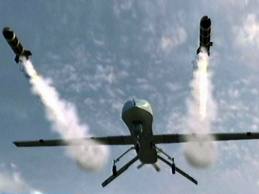
On the eve of the anniversary of Osama bin Laden’s elimination, President Obama’s counterterrorism adviser John Brennan for the first time officially disclosed the open secret that the U.S. is using drone strikes against its enemies. Among other characteristics Mr. Brennan ascribed to the use of drones, most notable are “legal”, “ethical”, “wise” and “conforming to the principle of humanity”.

In fact, Mr. Brennan hardly created any sensation by acknowledging what the rest of the world has known for years. The use of drones has become too commonplace for the Washington strategists to be able to conceal it any longer. But the logic used by the counterterrorist adviser is worth looking at it in detail.

The use of drones is legal, because “the United States is in an armed conflict with al-Qaeda, the Taliban and associated forces…, and we may also use force consistent with our inherent right of national self-defense.” Also, “there is nothing in international law that bans the use of remotely piloted aircraft for this purpose, or that prohibits us from using lethal force against our enemies outside of an active battlefield.”

Well, maybe the U.S. is at war with its own sibling, Al Qaeda, as well as with the Taliban, whom the U.S. indirectly supported via its allies in the region, namely Pakistan and Saudi Arabia, throughout the 1990s. But what about Pakistan whose territory has become one of the main targets of drone strikes? Or does Mr. Brennan want to say that the U.S. “is in an armed conflict” with Pakistan as well?

“Second, targeted strikes are ethical,” because “individuals who are part of al-Qaeda or its associated forces are legitimate military targets.” Mr. Brennan is probably too shy to mention that much too often innocent civilians, including children, fall prey to the drone “targeted” strikes. Or, maybe this simply conforms to the ethics he is preaching.

“Targeted strikes conform to the principle of humanity, which requires us to use weapons that will not inflict unnecessary suffering.” Definitely, what suffering can be inflicted on the operators guiding the strikes from hundreds and thousand miles away as if playing some computer game? As shown above, Mr. Brennan hardly meant the sufferings inflicted on the civilians on the ground.

And this logically brings us to the next thesis. “They (the strikes) can be a wise choice because they dramatically reduce the danger to U.S. personnel, even eliminating the danger altogether.” Indeed, this is a Washington strategist’s golden dream – to be able to eliminate whoever wherever and whenever, while sipping morning coffee somewhere in Bethesda.

The only thing that surprises an outside observer is the fact that not everyone is ready to subscribe to this point of view. The Pakistani leadership has made it a point that the restoration of the strained relationship and reopening of the southern supply route for the NATO coalition in Afghanistan requires an unconditional end to drone strikes on Pakistani territory because they violate Pakistan’s sovereignty.

Mr. Brennan did mention national sovereignty twice in his speech presenting it as an “important check” and “constraint”, and stating that “The United States of America respects national sovereignty and international law.”

And if so, the U.S. authorities seem much more inclined to follow the guidelines presented by Mr. Brennan rather than listen to the objections coming from Islamabad. On Sunday, two weeks after Pakistan’s parliament officially demanded an end to the drone strikes, the U.S. carried out one in North Waziristan, thus prompting a harsh reaction from Pakistani Foreign Ministry which regarded the strikes as being “in total contravention of international law and established norms of interstate relations”.

It remains doubtful, how the U.S. is going to implement the strategic partnership agreement with Afghanistan signed during President Obama’s overnight trip to Kabul without Pakistan’s assistance. But since the drone strikes have been classified as “legal, ethical, wise and conforming to the principle of humanity” by a renowned expert, maybe this will give the U.S. additional leverage in trying to persuade Pakistan that its sovereignty is being respected.

by Boris Volkhonsky, senior research fellow, Russian Institute for Strategic Studies.

May 1st 2012 and -1 or -2 Degrees Celsius Tonight in Moscow, Russia…

The capital’s weather forecasters warned of increasing wind. From 15 to 19 hours in Moscow and the region is expected to strong winds with gusts of 15 meters per second and more…

Emergency crews and public utilities will if necessary will leave promptly, in cases of falling trees, road signs and billboards. City Hall advised motorists not to park under the trees, and pedestrians – to shun advertising structures and signs…

According to forecasters, the center of Russia has been enveloped with cold air. At night and early morning hours in some places the temperature will drop to freezing: in Kostroma, Saratov, Voronezh, and places to minus 2, Yaroslavl, Tver and Moscow – to minus 1 degree. In the coming next days the threat of frosts persist…

In Yaroslavl, Tula, Smolensk and Tver regions in the nighttime and early morning temperatures can drop to minus 3 in Moscow, Kostroma, Ivanovo, Vladimir, Kaluga – down to minus 2, in the Ryazan – to minus 1 degree. Frost zone extended to the Central Black Earth region. In Orel, Lipetsk and Kursk regions is not ruled out lowering the temperature to minus 2 degrees, ITAR-TASS reported…

I just love Russia, Let it snow also… 🙂

Kyle Keeton
Windows to Russia!

Wow – May Holidays are here in Russia…

Sveta and I have been so busy moving Windows to Russia that we almost forgot about the holiday season in Russia. Yes we have another holiday and everyone is off today. Monday, May 1st 2012. The holiday extends in part to the 9th of May, 2012 and that day hosts the Victory Day of the Great Patriotic War Parade…

So we have taken advantage of the time and finished moving Windows to Russia out of USA constrictions:

Current Registrar: REGIONAL NETWORK INFORMATION CENTER, JSC DBA RU-CENTER
IP Address: 93.95.225.253 (ARIN & RIPE IP search)
Lock Status: clientTransferProhibited


% By submitting a query to RU-CENTER's Whois Service
% you agree to abide by the following terms of use:
% http://www.nic.ru/about/servpol.html (in Russian)
% http://www.nic.ru/about/en/servpol.html (in English).

Domain name:             WINDOWSTORUSSIA.COM
Name Server:             ns0.1984.is
Name Server:             ns1.1984.is
Name Server:             ns2.1984.is
Creation Date:           2008.07.31
Updated Date:            2012.05.01
Expiration Date:         2014.07.31

Status:                  DELEGATED

Registrant ID:           68MUQAC-RU
Registrant Name:         Keeton Kyle
Registrant Organization: Keeton Kyle
Registrant Street1:      30-2-324, Kronshtadtsky bul.
Registrant City:         Moscow
Registrant State:        Moscow
Registrant Postal Code:  125499
Registrant Country:      US

Administrative, Technical Contact
Contact ID:              68MUQAC-RU
Contact Name:            Keeton Kyle
Contact Organization:    Keeton Kyle
Contact Street1:         30-2-324, Kronshtadtsky bul.
Contact City:            Moscow
Contact State:           Moscow
Contact Postal Code:     125499
Contact Country:         US
Contact Phone:           +79031299359
Contact E-mail:          peppy200@gmail.com

Registrar:               Regional Network Information Center, JSC dba RU-CENTER

Last updated on 2012.05.01 15:53:28 MSK/MSD

This is all public record, but I decided to show you that we have succeeded in finally breaking the ties. It was not easy and some steps took three months to accomplish because we messed up as we were doing them. Once a mess up happened we had to wait patiently for three months before we could redo the step we messed up. Then we were blocked intentionally by certain issues that were intended to hurt us if we had not been in the process of moving data and data centers…

Iceland hosting and name servers, Russian registrar and we even got an extra year added to our domain expiration…

Cool Huh?

No more GoDaddy shutdowns of the IP, because of unfounded e-mails from the government of the USA. No more shutdown IP, because of e-mails that alleged that Windows to Russia did something…

That word alleged is really popular in America and it definitely overrides the truth in America. Alleged will get you put away for life in America and even killed…

So actually the May holidays are wonderful here in Russia. Windows to Russia is now registered in Russia… 🙂

Kyle Keeton
Windows to Russia!

Gas Ranks First in Middle East Struggles by Imad Fawzi Shueibi…

I was ridiculed many times at the fact that I believe that Gas or Gaz is the upcoming king of fuels in the world. No not gasoline but that blue flame fuel that we heat homes and drive cars on here in Russia. I still hold that view and with all the effort that the USA is putting into Gaz, I believe that America sees the future in Gas also…

Lets read Imad Fawzi Shueibi article called Gas Ranks First in Middle East Struggles! He has some good points and he is correct…

Targeting Syria has never been far away from the struggle over gas in the world in general and the Middle East in particular. At a time in which there seemed to be a collapse in the Euro Zone accompanied with an extremely crucial economic crisis which led the U.S to be indebted for $ 14.94 trillion; i.e., 99.6% of the GDP, and at a time in which the global American influence reached a minimum in encountering emerging powers like China, India and Brazil, it has been so clear that searching for the potential of power no longer exists in the nuclear and non-nuclear military arsenal. That potential lies there, where energy harbors. This is the point which clearly manifests the Russian-American struggle.

After the fall of the Soviet Union, Russians began to feel that the struggle for armaments had exhausted them, especially in the absence of the necessary energy sources needed by any industrial country. The American presence in the oil zones had for some decades enabled them to grow and have control over international political decision-making without much struggle. Therefore, the Russians turned toward energy sources, oil and gas. Since the international apportionment does not bear much competition in oil sectors, Moscow sought to manipulate gas in the areas of gas production, transportation, and marketing on a large scale.

The starting point was in 1995 when Putin set the strategy of Gasprom Co. to move within the area in which gas exists starting from Russia through Azerbaijan, Turkmenistan, Iran (for marketing), and the Middle East. Certainly, the projects of the Nord Stream and South Stream will be a historical order of merit/insignia given to Vladimir Putin for his efforts in bringing Russia back to the international arena and for tightening the grip on the European economy which will depend, for decades, on gas as an alternative for oil or gas as well as oil, yet with prioritizing the first; i.e., gas. At this point, it was a must for Washington to hasten to create its peer project, Nabucco, to compete against the Russian project as to gain an international apportionment on the basis of which the next century will be politically and strategically determined.

Gas is the main source of energy in the twenty-first century whether as an alternative for oil, due to recession in oil reserves, or as a source of clean energy. Therefore, having control over the zones of gas reserves in the world is considered to be, for the old as well as modern powers, the basis of international conflict in its regional manifestation.

Obviously, Russia read the map well and learnt the lessons well, for the lack of world energy resources that are needed to inject industrial institutions with money and energy, and which were not under the control of the Soviet Union, was the reason behind its collapse. Therefore, Russia learnt that the source of energy of the coming century; i.e., the 21st Century, was GAS.

An initial reading of the gas map reveals that gas locates in the following areas, in terms of quantity and access to consumption areas:

1. Russia: beginning with Vyborg and Beregvya.

2. Annexed to Russia: Turkmenistan.

3. The near and further roundabouts of Russia: Azerbaijan and Iran.

4. Captured from Russia: Georgia.

5. Eastern Mediterranean: Syria and Lebanon.

6. Qatar and Egypt.

Moscow hastened to work on two strategic lines; the first of which is setting up a Russian-Chinese (Shanghai) century based on the economic growth of the Shanghai Bloc, on the one hand, and the control of gas resources, on the other hand.

Thus, Moscow set the grounds for two projects: the South Stream and the Nord (North) Stream in an attempt to face an American project that aimed at seizing the gas of the Black Sea and the gas of Azerbaijan; the Nabucco Project.

There is, then, a strategic race between two projects so as to have control over Europe and the gas resources.

• The American Project (Nabucco) which centres in Central Asia and the Black Sea and its surroundings. Its storage places are in Turkey while its path starts in Bulgaria, and moves through Romania, Hungary, Czech, Croatia, Slovenia and Italy. It was due to pass through Greece, but this idea was dropped for the sake of Turkey.
• The Russian projects — the Nord and South Streams:
a) Nord Stream: It starts in Russia and goes directly to Germany, and from Weinberg to Sasnetz across the Baltic Sea without penetrating Belarus. This helped ease the American pressure there.
b) South Stream: It starts in Russia and moves towards the Black Sea and Bulgaria, then it goes into Greece and then goes towards South Italy, Hungary, and Austria.

The Nabucco project was supposed to compete with the two Russian projects, but due to technical problems the project was delayed until 2017 though it was scheduled for 2014. This resolved the race in favor of Russia, at this stage in particular, and urged for the search of supplementary areas supporting either project:

1) The Iranian gas which the U.S. insists on making supportive of the Nabucco gas pipeline in the sense that it passes in parallel by Georgia’s gas pipeline (and Azerbaijan if possible) to reach an assembling point in Erzurum, Turkey. 2) Gas of the Eastern Mediterranean: Syria, Lebanon, and Israel.

Iran took a decision, the result of which was signing a number of agreements in July 2011, to transport gas through Iraq to Syria. These agreements make Syria the centre of assembly and production in conjunction with the reserves of Lebanon. This is a space of strategy and energy that geographically opens for the first time and extends from Iran to Iraq, Syria, and Lebanon. Though it was banned and was not allowed for many years, it now shows the degree of struggle over Syria and Lebanon at this phase, and shows the emerging role of France that considers the Eastern Mediterranean as a historical region of influence and everlasting interests. The French role now goes along with the French absence ever since the World War II. In other words, France wants to have a role in the world of (gas) from which it has gained (a health insurance) in Libya and wants to gain (a life insurance) in both Syria and Lebanon.

Now, Turkey feels it is going to be lost amid the struggle for gas as long as the Nabucco project is late. Since the Nord and South Streams exclude Turkey, Turkey knows quite well that the gas of the Eastern Mediterranean has become distant from the influence of Nabucco, and so has Turkey.

History of the Game

For the Nord and South Stream Projects, Moscow established the company of Gazprom in the early 1990s. Remarkably, Germany who wanted to escape, once and for all, the repercussions of the World War II, prepared itself to be a party to the project and a partner of it, whether in terms of establishment, a terminus of the north pipeline or the storage places of the south Stream in the Germanic roundabouts, especially Austria.

Gazprom

Gazprom was founded with the cooperation of Hans-Joachim Gornig, Moscow’s German friend, who was a former vice president of the German Oil and Gas Industrial Company and who supervised the construction of the pipeline network of GDR. The one who headed Gazprom until October 2011 was Vladimir Kotenev who was a former Russian ambassador to Germany.

Gazprom signed qualitative and easy transactions with German companies, on top of which comes the companies cooperating with the Nord Stream as the giant (E.ON) company for energy, and the giant (BASF) for chemicals where the (E.ON) gets preference to buy amounts of gas at the expense of Gazprom when gas prices go up. This is considered to be a kind of (political) support of the German energy companies.

Moscow benefited from the liberalization of the European gas markets monopoly to force those markets to disconnect the distribution networks from production facilities. These clashes between Russia and Berlin turn a page of historic hostility to start a new phase of cooperation on the basis of economy as well as repudiation of a heavy weight put on Germany’s shoulders; i.e., the heavy weight of the debt-overburdened Europe that is under the thumb of the U.S. Germany considers that the Germanic Group — Germany, Austria, Czech and Switzerland — has the priority in being the core of Europe, but it should not bear the consequences of the aging of a continent nor the fall of another giant.

Gazprom’s German ventures include its Wingas joint venture with Wintershall, a subsidiary of BASF which is Germany’s largest oil and gas producer and controls 18% of the gas market. Gazprom has given its top German partners unrivaled stakes in its Russian assets. BASF and E.ON each control almost one-quarter of the Yuzhno-Russkoye gas fields that will provide most of the supplies for Nord Stream at a time, which is not a mere coincidence or simulation, when the peer of Gazprom in Germany — called “The Germanic Gazprom” — expands to own 40% of the Austrian Centrex Co., which is specialized in gas storage. The latter has qualitative expansion into Cyprus, an expansion with which Turkey may not be content.

Turkey dearly misses assuming a tardy role in the Nabucco Gas Company whereby it is supposed to start storing, marketing, and transferring about 31 billion m³ of gas which can go up to 40 billion m³ — at a later stage — in a project that makes Ankara more and more subjugated to Washington and Nato decisions without having the right to insist on joining the European Union that has rejected it several times.

As a matter of fact, the strategic ties through gas become even more strategic in politics where Moscow lobbies effectively on the Social Democratic Party of Germany in North-Rhine Westphalia, the major industrial base that is home to the RWE (Neurath power plant) for electricity utilities and E.ON subsidiary.

Such an influence is recognized by the head of energy policies in the Green Party, Hans Joseph Fell, that four German companies related to Russia play a role in formulating the German Energy Policy through a very complicated network that lobbies ministers and manipulates the public opinion via the Eastern European Economic Relations Committee that represents German companies and has close business relations in Russia and countries of the Former Soviet Union Bloc.

Therefore, there is an indispensible silence on the part of Germany vis-à-vis the accelerating Russian influence. This silence is based on the necessity to improve the so-called “energy security” in Europe.

Remarkably, Germany now considers the policy of “easing and pacifying,” suggested by the European Union to cover the Euro crisis, will hinder the Russian-German investments for a long time. This reason, together with other reasons – e.g., German dawdling in saving the Euro laden with European debts. However, it should be taken into consideration that Germany and its Germanic bloc can bear those debts alone.

Every time Europeans oppose Germany and its policy regarding Russia, Berlin asserts that the Europe’s Utopian plans are unenforceable and may push Russia to sell its gas in Asia. This will, definitely, eighty-six energy security in Europe.

This Russian-German engagement was not simple when Putin could employ the legacy of the Cold War regarding the presence of three million Russian-speakers living in Germany who comprised the second largest group after the Turks. Putin was also adept at employing a network of Eastern German officials who had been recruited to look after the interests of the Russian companies in Germany, let alone recruiting a number of ex-Eastern German State Security Service agents (ex-Stasi agents). This includes Gazprom Germania’s director of personnel and its director of finance and director of finance of the Nord Stream Consortium, Matthias Warnig, who the Wall Street Journal reported as having helped Putin recruit spies in the eastern Germany City of Dresden when Putin was a young KGB operative.

To be fair, Russia’s employment of its former relations was not unripe; rather, it was for the benefit of Germany as a whole. That made the clash between the two countries not possible as long as interests were attained by both parties without having one dominating the other.

The Nord Stream Project, the major link between Russia and Germany, has been inaugurated recently with pipeline costing 4.7 billion euros. Although the Nord Stream Pipeline links Russia and Germany, Europeans’ recognition that such a project would be part of their Energy Security made France and Holland hasten to declare it a European project. In this regard, it is good to mention that Lindner of the Committee on Eastern European Economic Relations said without hesitation that it was a European not a German project and that they would not lock Germany into greater dependence on Russia. Such a declaration indicates the apprehension of the expanding Russian influence in Germany; however, the project of the Nord Stream, in structure, represents Moscow’s plan not the EU’s.

Russians can cripple energy distribution to Poland and other countries the way they like and will be able to sell gas to whoever pays more. However, the importance of Germany to Russia lies, practically, in the fact that it constitutes a platform from which to launch its strategy across the continent where Gazprom Germania has stakes in twenty-five joint projects in Britain, Italy, Turkey, Hungary, and other countries. This — actually — leads us to say that Gazprom will — after a while — become one of the largest companies of the world if not the largest.

Not only did Gazprom leaders build this project, they also tried to interfere in the Nabucco Project that will — as aforementioned — be delayed until 2017, taking into consideration that the latter constitutes a serious challenge. Therefore, Gazprom — which owns 30% of a project designed for building a second major huge pipeline that reaches Europe roughly along Nabucco’s route; a project even Gazprom supporters call “political” — began a political auctioneering to show its muscles by stopping Nabucco or crippling it.

Nevertheless, Moscow hastened to buy up gas in Central Asia and the Caspian in a bid to starve Nabucco at the same time it is ridiculing Washington politically, economically, and strategically.

Outlining Europe’s and – later – the world’s Map

Gazprom operates gas facilities in Austria; i.e., facilities in the strategic Germanic roundabouts. It also leases facilities in Britain and France. However, the growing number of storage facilities in Austria will be the basis for drawing the energy map of Europe since it is going to provide the Slovenian, Slovakian, Croatian, Hungarian, Italian, and somewhat German benefiting from a newly established repository called Katrina, which Gazprom builds in cooperation with Germany with the aim of exporting gas to the hubs of Western Europe.

Gazprom established a joint storage facility with Serbia to export gas to Bosnia and Herzegovina, and Serbia itself. Feasibility studies have been conducted on similar storage ventures in the Czech Republic, Romania, Belgium, Britain, Slovakia, Turkey, Greece, and even France. Such a venture, on the part of Gazprom, strengthens Moscow’s position as a provider of 41% of Europe’s needed supplies of gas. This, undoubtedly, means an substantial change in the relations between the East and the West in the short, mid, and long runs. It also indicates an ebb in the American influence or a collision being prepared, considering the missile shield to establish a new world order where gas is the most essential pillar of its formation. This is a clear indication of the heating struggle in the Middle East over the gas of the eastern coast of the Mediterranean.

Nabucco in a tight spot

Nabucco was conceived to funnel gas 3,900 kilometers from Turkey to Austria and was designed to carry 31 bcm of natural gas annually from the Middle East and the Caspian region to markets in Europe. The Nato-American-French hastening towards decisively ending all matters in the Middle East, particularly in Syria and Lebanon, in a way that harmonizes with their interests, lies in the necessity to maintain calm situations supporting the investment and transportation of gas. Syria responded by signing a contract that aims at transferring gas from Iran to Syria passing by Iraq. As a matter of fact, it is the very Syrian and Lebanese gas that is the focal point of the struggle that aims at annexing it either to the Nabucco gas reserves or Gazprom, thus, the South Stream.

The consortium of Nabucco consists of the German energy companies REW, Austrian OML, Turkish Botas, Bulgarian Energy Holding Company, and Romanian Transgaz.

Five years ago, the initial costs of the rival project of Gazprom were estimated to be $ 11.2 billion and the project was expected to cost less than the Russian one. The costs, however, could reach $21.4 billion by 2017. This raises many questions about the viability of this economic project, in particular taking into consideration that Gazprom has enough deals in various regions — in an attempt to encompass Nabucco — that would feed on the surplus capacity of the gas of Turkmenistan, especially when we know that the ineffective pursuit of the Iranian gas precludes the possibility of achieving the Nabucco dream. This is, in fact, one of the unknown secrets of the struggle over Iran that has gone too far into defiance by choosing Iraq and Syria to be routes for its gas transport, or – at least – part of that route.

Thus, Nabucco’s best hope lies in gas supplies from Azerbaijan’s Shah Deniz 2 field which would almost be the only source of a project that seems to be stumbling from the very beginning. This manifests in the accelerating deals and in Moscow’s success in buying the sources of Nabucco, on the one hand, and the hardships encountered in achieving geopolitical changes in Iran and the Mediterranean (Syria and Lebanon), on the other hand. This comes at a time in which Turkey hastens to claim a share in the Nabucco Project either through signing a contract with Azerbaijan to buy 6 billion cubic metres (bcm) of gas in 2017 or trying to lay hands on Syria and Lebanon with the aim of hampering the transfer of Iranian oil or receiving a share of the Lebanese or Syrian gas affluence (or Syria and Lebanon altogether). The race towards occupying a position in the New World Order escalates through gas and other things ranging from small military services to the strategic domes of the missile shield.

Perhaps what poses a threat to Nabucco most is Russia’s attempt to ditch it through negotiating over more advantageous and competitive contracts of gas supplies in favor of Gazprom’s Nord and South Streams, hampering, thus, any effort to endow the United States and Europe with any kind of influence, political- and energy-wise, whether in Iran or the Mediterranean. Moreover, Gazprom could be one of the most important investors or operators of the new gas fields in Syria or Lebanon. The date of August 16, 2011 was not randomly chosen by the Syrian Ministry of Oil to announce the discovery of a gas well in the Area of Qarah in the Central Region of Syria near Homs. The well has the capacity of producing 400.000 cubic metres a day (146 million cubic metres a year). However, the Syrian Ministry of Oil did not breathe a syllable about the Mediterranean Gas.

The Nord and South Streams lessened the importance of the American policy that appeared to be lagging behind. The bad history between the states of Central Europe and Russia has ebbed, Poland is slowly coming round, and the US seem willing to reconsider since it announced in late October 2011 the shift in the energy policies after the discovery of coal mines in Europe which will lessen dependence on Russia … and the Middle East. This seems to be a far-reaching or long-term goal due to the fact that there is a number of procedures to be taken before starting commercial production of coal. This coal can be attained from unconventional sources in the rocks found at thousands of feet underground by using the techniques of rock fracturing and the hydraulic fracturing of high pressure water. Those techniques are used to pump liquids and sand into a well to release gas. This issue, however, is coated with environmental risks due to the impacts of the fracturing techniques on water reserves.

China’s Participation

Sino-Russian cooperation in the field of energy is the power orienting the Sino-Russian strategic partnership. This is, in fact, what experts point to as the “base” for the double veto in the UNSC that came in favour of Syria.

Cooperation in the energy field is what lubricates the acceleration of the partnership between the two giants. It is not only a matter of gas supplies with preferences to China but it is a process that urges China to participate in gas distribution through selling new assets and facilities, in addition to attempting to have joint control over the executive administrations of the gas distribution networks where Moscow currently shows resilience in prices of gas supplies provided that they are allowed to access the local Chinese markets because of the profits there. It was agreed that Russian and Chinese experts could work together in the following domains:

“coordinating energy strategies in Russia and china; predicting and outlining prospective scenarios; and developing market infrastructure, energy efficiency and sources of alternative energy.”

Despite cooperation in the field of energy, there are other strategic interests that represent in the mutual Chinese-Russian conception of the risks of the American so-called project “Missile Shield.” Not only has Washington involved Japan and South Korea in the Missile Shield, but it has also sent an invitation to India in early September 2011 to be a partner in the very project. Moscow’s concerns intersect with Beijing’s, regarding Washington’s moves to revive the Strategy of Central Asia: i.e., the Silk Road. This project is the same as that initiated by George Bush (Greater Central Asia Project) to roll back Russia and China’s influence in Central Asia in collaboration with Turkey to resolve the situation in Afghanistan by 2014 so as to arrange for the Nato influence there. There are increasing allusions from Uzbekistan to play host of Nato for such a project. Vladimir Putin estimates what can foil the Western invasion on Russia’s back scenes in Central Asia will be the expansion of the joint Russian-Kazakhstani-Belarusian economic space in cooperation with Beijing.

This image of the international struggle mechanisms allows access to see one side of the process of the New World Order Formation based on struggling for military influence and on holding the backbone of age; namely, energy, on top of which comes gas.

The Gas of Syria

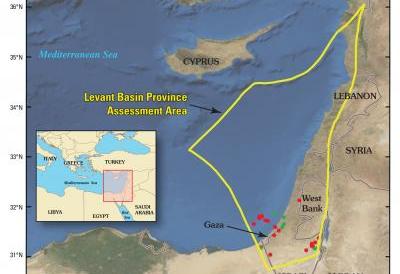
As Israel started oil and gas extraction, it was clear that the basin of the Mediterranean had entered the game and that Syria was either to be attacked or that the whole region was going to enjoy peace since the twenty-first century was the century of clean energy.

What we know about this issue is that the Mediterranean basin is the wealthiest in gas and that Syria would be the wealthiest state, according to the Washington Institute which also speculates that struggle between Turkey and Cyprus would heat due to Ankara’s inability to bear its losses of the Nabucco gas despite the contract Moscow signed with Ankara on December 2011 to transport part of the South Stream gas via Turkey.

Embracing the secret of the Syrian gas will let all know how big the game over gas is. According to China, who controls Syria could control the Middle East, grip on the Gateway to Asia, possess the Key to Russia’ house (as Catherine the 2nd put it), and could set foot on the Silk Road. Most importantly, they who could penetrate Syria for gas have the ability to dominate the world, especially since the coming century will be the Century of Gas. With the contract Damascus signed to transport Iranian gas to the Mediterranean through Iraq, the geopolitical space would open and the gas space would close on the scene of Nabucco that used to be Europe and Turkey’s lifeline. Syria, undoubtedly, would be the key to the coming epoch.

  • Originally appeared at Agencia ipi.

Windows to Russia!

Fear: Thy Name is the Western Empire and the Terrorists have won…

Let me tell you a story about a war on terror…

Once upon a time when it was decided to use the word terror (terrorist) as a instigation word to promote the spread of democracy and to steal other countries resources. A war was declared on terrorists. A war that was really upon a very tiny group of individuals and they did not in anyway stand for the majority of people in any country anywhere in the world…

So the West went guns blazing after doing what ever lies it took to sway the populace of their country to accept the fact that we had to go to war and eradicate all terrorists in the world…

This war has been going on for a long long time and the West is just about financially broke. Better to say, “The West is financially broke!” But we have become so scared of our own shadow that we have to keep spending and spending and spending to stop the bogey man that we invented…

That bogey man is intentionally breaking the bank of the West and he plays upon the fears that the Western government has propagated to get its way, but it has back fired and now the populace of the West lives in fear that there is a terrorist/bogey man behind every corner…

So now for the first time since WWII – Britain is protecting the skies again against this time a maybe attack that might be…

Britain’s military has told residents of an upscale apartment development near the Olympic Park in east London it is installing a missile battery on top of a tower within their housing complex to defend the 2012 Games this summer. This is one of many batteries being installed all over the city. We got to be prepared for the worse…

Notice an issue in the Western world? We live for what might be and what might happen and for maybe terrorists and it is all caused by ourselves in the first place…

You realize that the saying that we have: “They won the battle but lost the war!” The terrorists have lost many battles and always look like they are being slaughtered, but when the true details of the war finally come out. The terrorist are still there and still defiant against the greatest war machine in the worlds history…

Not sure who is worse anymore? The so called terrorists or our so called governments that egg the situation on or the scared Western populace that hides in fear…

The terrorists have won…

Kyle Keeton
Windows to Russia!

Bloody Ridiculous Investment Concept: Western View of the BRIC’s…

A History of the World, BRIC by BRIC by Pepe Escobar:

Goldman Sachs — via economist Jim O’Neill — invented the concept of a rising new bloc on the planet: BRICS (Brazil, Russia, India, China, South Africa). Some cynics couldn’t help calling it the “Bloody Ridiculous Investment Concept.”

Not really. Goldman now expects the BRICS countries to account for almost 40% of global gross domestic product (GDP) by 2050, and to include four of the world’s top five economies.

Soon, in fact, that acronym may have to expand to include Turkey, Indonesia, South Korea and, yes, nuclear Iran: BRIIICTSS? Despite its well-known problems as a nation under economic siege, Iran is also motoring along as part of the N-11, yet another distilled concept. (It stands for the next 11 emerging economies.)

The multitrillion-dollar global question remains: Is the emergence of BRICS a signal that we have truly entered a new multipolar world?

Yale’s canny historian Paul Kennedy (of “imperial overstretch” fame) is convinced that we either are about to cross or have already crossed a “historical watershed” taking us far beyond the post-Cold War unipolar world of “the sole superpower.” There are, argues Kennedy, four main reasons for that: the slow erosion of the US dollar (formerly 85% of global reserves, now less than 60%), the “paralysis of the European project,” Asia rising (the end of 500 years of Western hegemony), and the decrepitude of the United Nations.

The Group of Eight (G-8) is already increasingly irrelevant. The G-20, which includes the BRICS, might, however, prove to be the real thing. But there’s much to be done to cross that watershed rather than simply be swept over it willy-nilly: the reform of the UN Security Council, and above all, the reform of the Bretton Woods system, especially those two crucial institutions, the International Monetary Fund (IMF) and the World Bank.

On the other hand, willy-nilly may prove the way of the world. After all, as emerging superstars, the BRICS have a ton of problems. True, in only the last seven years Brazil has added 40 million people as middle-class consumers; by 2016, it will have invested another $900 billion – more than a third of its GDP — in energy and infrastructure; and it’s not as exposed as some BRICS members to the imponderables of world trade, since its exports are only 11% of GDP, even less than the US.

Still, the key problem remains the same: lack of good management, not to mention a swamp of corruption. Brazil’s brazen new monied class is turning out to be no less corrupt than the old, arrogant, comprador elites that used to run the country.

In India, the choice seems to be between manageable and unmanageable chaos. The corruption of the country’s political elite would make Shiva proud. Abuse of state power, nepotistic control of contracts related to infrastructure, the looting of mineral resources, real estate property scandals — they’ve got it all, even if India is not a Hindu Pakistan. Not yet anyway.

Since 1991, “reform” in India has meant only one thing: unbridled commerce and getting the state out of the economy. Not surprisingly then, nothing is being done to reform public institutions, which are a scandal in themselves. Efficient public administration? Don’t even think about it. In a nutshell, India is a chaotic economic dynamo and yet, in some sense, not even an emerging power, not to speak of a superpower.

Russia, too, is still trying to find the magic mix, including a competent state policy to exploit the country’s bounteous natural resources, extraordinary space, and impressive social talent. It must modernize fast as, apart from Moscow and St Petersburg, relative social backwardness prevails. Its leaders remain uneasy about neighboring China (aware that any Sino-Russian alliance would leave Russia as a distinctly junior partner). They are distrustful of Washington, anxious over the depopulation of their eastern territories, and worried about the cultural and religious alienation of their Muslim population.

Then again the Putinator is back as president with his magic formula for modernization: a strategic German-Russian partnership that will benefit the power elite/business oligarchy, but not necessarily the majority of Russians.

Dead in the Woods

The post-World War II Bretton Woods system is now officially dead, totally illegitimate, but what are the BRICS planning to do about it?

At their summit in New Delhi in late March, they pushed for the creation of a BRICS development bank that could invest in infrastructure and provide them with back-up credit for whatever financial crises lie down the road. The BRICS know perfectly well that Washington and the European Union (EU) will never relinquish control of the IMF and the World Bank. Nonetheless, trade among these countries will reach an impressive $500 billion by 2015, mostly in their own currencies.

However, BRICS cohesion, to the extent it exists, centers mostly around shared frustration with the Masters of the Universe-style financial speculation that nearly sent the global economy off a cliff in 2008. True, the BRICS crew also has a notable convergence of policy and opinion when it comes to embattled Iran, an Arab Sprung Middle East, and Northern Africa. Still, for the moment the key problem they face is this: they don’t have an ideological or institutional alternative to neo-liberalism and the lordship of global finance.

As Vijay Prashad has noted, the Global North has done everything to prevent any serious discussion of how to reform the global financial casino.1 No wonder the head of the G-77 group of developing nations (now G-132, in fact), Thai ambassador Pisnau Chanvitan, has warned of “behavior that seems to indicate a desire for the dawn of a new neocolonialism.”

Meanwhile, things happen anyway, helter-skelter. China, for instance, continues to informally advance the yuan as a globalizing, if not global, currency. It’s already trading in yuan with Russia and Australia, not to mention across Latin America and in the Middle East. Increasingly, the BRICS are betting on the yuan as their monetary alternative to a devalued US dollar.

Japan is using both yen and yuan in its bilateral trade with its huge Asian neighbor. The fact is that there’s already an unacknowledged Asian free-trade zone in the making, with China, Japan, and South Korea on board.

What’s ahead, even if it includes a BRICS-bright future, will undoubtedly be very messy. Just about anything is possible (verging on likely), from another Great Recession in the US to European stagnation or even the collapse of the eurozone, to a BRICS-wide slowdown, a tempest in the currency markets, the collapse of financial institutions, and a global crash.

And talk about messy, who could forget what Dick Cheney said, while still Halliburton’s CEO, at the Institute of Petroleum in London in 1999: “The Middle East, with two-thirds of the world’s oil and the lowest cost, is still where the prize ultimately lies.” No wonder when, as vice president, he came to power in 2001, his first order of business was to “liberate” Iraq’s oil. Of course, who doesn’t remember how that ended?

Now (different administration but same line of work), it’s an oil-embargo-cum-economic-war on Iran. The leadership in Beijing sees Washington’s whole Iran psychodrama as a regime-change plot, pure and simple, having nothing to do with nuclear weapons. Then again, the winner so far in the Iran imbroglio is China. With Iran’s banking system in crisis, and the US embargo playing havoc with that country’s economy, Beijing can essentially dictate its terms for buying Iranian oil.

The Chinese are expanding Iran’s fleet of oil tankers, a deal worth more than US$1 billion, and that other BRICS giant, India, is now purchasing even more Iranian oil than China. Yet Washington won’t apply its sanctions to BRICS members because these days, economically speaking, the US needs them more than they need the US.

The world through Chinese eyes

Which brings us to the dragon in the room: China.

What’s the ultimate Chinese obsession? Stability, stability, stability.

The usual self-description of the system there as “socialism with Chinese characteristics” is, of course, as mythical as a gorgon. In reality, think hardcore neo-liberalism with Chinese characteristics led by men who have every intention of saving global capitalism.

At the moment, China is smack in the middle of a tectonic, structural shift from an export/investment model to a services/consumer-led model. In terms of its explosive economic growth, the last decades have been almost unimaginable to most Chinese (and the rest of the world), but according to the Financial Times, they have also left the country’s richest 1% controlling 40%-60% of total household wealth. How to find a way to overcome such staggering collateral damage? How to make a system with tremendous inbuilt problems function for 1.3 billion people?

Enter “stability-mania.” Back in 2007, Prime Minister Wen Jiabao was warning that the Chinese economy could become “unstable, unbalanced, uncoordinated, and unsustainable.” These were the famous “Four Uns.”

Today, the collective leadership, including the next Prime Minister, Li Leqiang, has gone a nervous step further, purging “unstable” from the Party’s lexicon. For all practical purposes, the next phase in the country’s development is already upon us.

It will be quite something to watch in the years to come.

How will the nominally “communist” princelings — the sons and daughters of top revolutionary Party leaders, all immensely wealthy, thanks, in part, to their cozy arrangements with Western corporations, plus the bribes, the alliances with gangsters, all those “concessions” to the highest bidder, and the whole Western-linked crony-capitalist oligarchy – lead China beyond the “Four Modernizations”? Especially with all that fabulous wealth to loot.

The Obama administration, expressing its own anxiety, has responded to the clear emergence of China as a power to be reckoned with via a “strategic pivot” — from its disastrous wars in the Greater Middle East to Asia. The Pentagon likes to call this “rebalancing” (though things are anything but rebalanced or over for the US in the Middle East).

Before 9/11, the Bush administration had been focused on China as its future global enemy number one. Then 9/11 redirected it to what the Pentagon called “the arc of instability,” the oil heartlands of the planet extending from the Middle East through Central Asia. Given Washington’s distraction, Beijing calculated that it might enjoy a window of roughly two decades in which the pressure would be largely off. In those years, it could focus on a breakneck version of internal development, while the US was squandering mountains of money on its nonsensical “Global War on Terror.”

Twelve years later, that window is being slammed shut as from India, Australia, and the Philippines to South Korea and Japan, the US declares itself back in the hegemony business in Asia. Doubts that this was the new American path were dispelled by Secretary of State Hillary Clinton’s November 2011 manifesto in Foreign Policy magazine, none too subtly labeled “America’s Pacific Century.” (And she was talking about this century, not the last one!)

The American mantra is always the same: “American security,” whose definition is: whatever happens on the planet. Whether in the oil-rich Persian Gulf where Washington “helps” allies Israel and Saudi Arabia because they feel threatened by Iran, or Asia where similar help is offered to a growing corps of countries that are said to feel threatened by China, it’s always in the name of US security. In either case, in just about any case, that’s what trumps all else.

As a result, if there is a 33-year Wall of Mistrust between the US and Iran, there is a new, growing Great Wall of Mistrust between the US and China. Recently, Wang Jisi, Dean of the School of International Studies at Peking University and a top Chinese strategic analyst, offered the Beijing leadership’s perspective on that “Pacific Century” in an influential paper he coauthored.

China, he and his coauthor write, now expects to be treated as a first-class power. After all, it “successfully weathered … the 1997-98 global financial crisis,” caused, in Beijing’s eyes, by “deep deficiencies in the US economy and politics. China has surpassed Japan as the world’s second largest economy and seems to be the number two in world politics, as well … Chinese leaders do not credit these successes to the United States or to the US-led world order.”

The US, Wang adds, “is seen in China generally as a declining power over the long run … It is now a question of how many years, rather than how many decades, before China replaces the United States as the largest economy in the world … part of an emerging new structure.” (Think: BRICS.)

In sum, as Wang and his coauthor portray it, influential Chinese see their country’s development model providing “an alternative to Western democracy and experiences for other developing countries to learn from, while many developing countries that have introduced Western values and political systems are experiencing disorder and chaos.”

Put it all in a nutshell and you have a Chinese vision of the world in which a fading US still yearns for global hegemony and remains powerful enough to block emerging powers — China and the other BRICS — from their twenty-first century destiny.

Dr Zbig’s Eurasian wet dream

Now, how does the US political elite see that same world? Virtually no one is better qualified to handle that subject than former national security adviser, BTC pipeline facilitator, and briefly Obama ghost adviser, Dr Zbigniew (“Zbig”) Brzezinski. And he doesn’t hesitate to do so in his latest book, Strategic Vision: America and the Crisis of Global Power.

If the Chinese have their strategic eyes on those other BRICS nations, Dr Zbig remains stuck on the Old World, newly configured. He is now arguing that, for the US to maintain some form of global hegemony, it must bet on an “expanded West.” That would mean strengthening the Europeans (especially in energy terms), while embracing Turkey, which he imagines as a template for new Arab democracies, and engaging Russia, politically and economically, in a “strategically sober and prudent fashion.”

Turkey, by the way, is no such template because, despite the Arab Spring, for the foreseeable future, there are no new Arab democracies. Still, Zbig believes that Turkey can help Europe, and so the US, in far more practical ways to solve certain global energy problems by facilitating its “unimpeded access across the Caspian Sea to Central Asia’s oil and gas.”

Under the present circumstances, however, this, too, remains something of a fantasy. After all, Turkey can only become a key transit country in the great energy game on the Eurasian chessboard I’ve long labeled “Pipelineistan” if the Europeans get their act together. They would have to convince the energy-rich, autocratic “republic” of Turkmenistan to ignore its powerful Russian neighbor and sell them all the natural gas they need. And then there’s that other energy matter that looks unlikely at the moment: Washington and Brussels would have to ditch counterproductive sanctions and embargos against Iran (and the war games that go with them) and start doing serious business with that country.

Dr Zbig nonetheless proposes the notion of a two-speed Europe as the key to future American power on the planet. Think of it as an upbeat version of a scenario in which the present Eurozone semi-collapses. He would maintain the leading role of the inept bureaucratic fat cats in Brussels now running the EU, and support another “Europe” (mostly the southern “Club Med” countries) outside the euro, with nominally free movement of people and goods between the two. His bet – and in this he reflects a key strand of Washington thinking – is that a two-speed Europe, a Eurasian Big Mac, still joined at the hip to America, could be a globally critical player for the rest of the twenty-first century.

And then, of course, Dr Zbig displays all his Cold Warrior colors, extolling an American future “stability in the Far East” inspired by “the role Britain played in the nineteenth century as a stabilizer and balancer of Europe.” We’re talking, in other words, about this century’s number one gunboat diplomat. He graciously concedes that a “comprehensive American-Chinese global partnership” would still be possible, but only if Washington retains a significant geopolitical presence in what he still calls the “Far East” – “whether China approves or not.”

The answer will be “not.”

In a way, all of this is familiar stuff, as is much of actual Washington policy today. In his case, it’s really a remix of his 1997 magnum opus The Grand Chessboard in which, he once again certifies that “the huge Trans-Eurasian continent is the central arena of world affairs.” Only now reality has taught him that Eurasia can’t be conquered and America’s best shot is to try to bring Turkey and Russia into the fold.

Robocop rules

Yet Brzezinski looks positively benign when you compare his ideas to Hillary Clinton’s recent pronouncements, including her address to the tongue-twistingly named World Affairs Council 2012 NATO Conference. There, as the Obama administration regularly does, she highlighted “NATO’s enduring relationship with Afghanistan” and praised negotiations between the US and Kabul over “a long-term strategic partnership between our two nations.”

Translation; despite being outmaneuvered by a minority Pashtun insurgency for years, neither the Pentagon nor NATO have any intention of rebalancing out of their holdings in the Greater Middle East. Already negotiating with President Hamid Karzai’s government in Kabul for staying rights through 2024, the US has every intention of holding onto three major strategic Afghan bases: Bagram, Shindand (near the Iranian border), and Kandahar (near the Pakistani border). Only the terminally na๏ve would believe the Pentagon capable of voluntarily abandoning such sterling outposts for the monitoring of Central Asia and strategic competitors Russia and China.

NATO, Clinton added ominously, will “expand its defense capabilities for the twenty-first century,” including the missile defense system the alliance approved at its last meeting in Lisbon in 2010.

It will be fascinating to see what the possible election of socialist Fran็ois Hollande as French president might mean. Interested in a deeper strategic partnership with the BRICS, he is committed to the end of the US dollar as the world’s reserve currency. The question is: Would his victory throw a monkey wrench into NATO’s works, after these years under the Great Liberator of Libya, that neo-Napoleonic image-maker Nicolas Sarkozy (for whom France was just mustard in Washington’s steak tartar).

No matter what either Dr Zbig or Hillary might think, most European countries, fed up with their black-hole adventures in Afghanistan and Libya, and with the way NATO now serves US global interests, support Hollande on this. But it will still be an uphill battle. The destruction and overthrow of Muammar Gaddafi’s Libyan regime was the highpoint of the recent NATO agenda of regime change in MENA (the Middle East-Northern Africa). And NATO remains Washington’s plan B for the future, if the usual network of think tanks, endowments, funds, foundations, NGOs, and even the U.N. fail to provoke what could be described as YouTube regime change.

In a nutshell: after going to war on three continents (in Yugoslavia, Afghanistan, and Libya), turning the Mediterranean into a virtual NATO lake, and patrolling the Arabian Sea non-stop, NATO will be, according to Hillary, riding on “a bet on America’s leadership and strength, just as we did in the twentieth century, for this century and beyond.” So 21 years after the end of the Soviet Union — NATO’s original raison d’etre — this could be the way the world ends; not with a bang, but with NATO, in whimpering mode, still fulfilling the role of perpetual global Robocop.

We’re back once again with Dr Zbig and the idea of America as the “promoter and guarantor of unity” in the West, and as “balance and conciliator” in the East (for which it needs bases from the Persian Gulf to Japan, including those Afghan ones). And don’t forget that the Pentagon has never given up the idea of attaining Full Spectrum Dominance.

For all that military strength, however, it’s worth keeping in mind that this is distinctly a New World (and not in North America either). Against the guns and the gunboats, the missiles and the drones, there is economic power. Currency wars are now raging. BRICS members China and Russia have cordilleras of cash. South America is uniting fast. The Putinator has offered South Korea an oil pipeline. Iran is planning to sell all its oil and gas in a basket of currencies, none dollars. China is paying to expand its blue-water Navy and its anti-ship missile weaponry. One day, Tokyo may finally realize that, as long as it is occupied by Wall Street and the Pentagon, it will live in eternal recession. Even Australia may eventually refuse to be forced into a counterproductive trade war with China.

So this twenty-first century world of ours is shaping up right now largely as a confrontation between the US/NATO and the BRICS, warts and all on every side. The danger: that somewhere down the line it turns into a Full Spectrum Confrontation. Because make no mistake, unlike Saddam Hussein or Muammar Gaddafi, the BRICS will actually be able to shoot back.


  • First appeared at Asia Times.
    1. See “The G-77 awakes,” Asia Times Online, April 17, 2012. [↩]

    Pepe Escobar is the author of Globalistan: How the Globalized World is Dissolving into Liquid War (Nimble Books, 2007) and Obama does Globalistan (Nimble Books, 2009). Read other articles by Pepe.