Recipe From Russia: Simple Vegetable – Fruit Paste!

In Russia they have a variety of Vegetable pastes that I love to spread on black bread. I have even used these pastes to make a variety of dishes that really have a wonderful and unique flavor. Since there are about 400,000,000 types of veggy paste lets grab a good simple one and try it out.

Vegetable Paste with Red Beets and Prunes:

Ingredients:

500 grams of red beets
300 grams of red onions
300grams of prunes
100 grams of raisins

Lets Make:

Rinse the red beet, peel it and grate coarsely into a sauce pan add a glass of water and start cooking with a cover over low heat – add after a few minutes the prunes and raisins after thoroughly rinsing them both. (You should now have beets, raisins and prunes cooking in the sauce pan.)

The idea is to cook the beets, raisins and prunes but not turn them to mush and waste product…

Then peel the onions, chop them very fine and saute in a light vegetable oil on medium heat in a skillet. (just get them to turn opaque)

After everything is done drain excess moister off by using a colander. (Leave the oil on the onions.)

Then mix and create a paste with the vegetables and fruit in a blender. Make sure to mix well. You should have a thick paste that a spoon will stand up in. Very important that you drain all excess moisture. That is why we do not cook the veggies and fruit to death. (Russians will use a grinder to mix these items but there are many good food processors that will do the same job.)

I love to eat this paste warm but it fantastic chilled and makes a great nutritious spread for toast in the morning times. Yummy!

Windows to Russia!
comments always welcome.

Recipe From Russia: Simpler No Meat – Russian Potato Salad!

I have posted this salad before and it is called Olivier and or Russian potato salad. I love this salad very much and decided to refine the recipe so that it would be a lot simpler to make. The original recipe is long and takes much longer. This version has no meat in it and is much more true to the term potato salad. It also has no pickles in it. This is not just a summer salad in Russia it is a anytime of the year salad. So give it a try or give the other recipe a try – You will find that you like any version of the Russian Potato Salad…

No Meat – Russian Potato Salad:

6 to 7 medium potatoes – peeled and cut up in cubes
1 cup of sour cream
1 medium can of peas
1 medium can of diced carrots
1 cup Mayonnaise or Miracle Whip – according to which part of world you are from!
1 onion, finely diced
2 eggs – hard boiled and diced
Salt and pepper to taste

Lets make:

Cook potato cubes until done (firm not mush) – Drain.

Add can of peas and can of carrots – drain excess liquid off – Mix with the hot potatoes to help cool the potatoes down.

Inportant – While still warm, add diced onion, mayonnaise, sour cream and diced eggs.

Mix well and season to taste. (I know that many will eat salad at this point and it is very good warm…)

Potatoes will absorb moisture as it cools in refrigerator. So you may want to add more mayonnaise if you so desire.

Once cooled – you can garnish with an extra sliced hard boiled egg and parsley if desired. Paprika is nice to sprinkle on top.

Time to eat and say Yummy for the Tummy…

Note: I like to add diced cheese also to this salad. I also like to leave the peeling on but that is not a Russian tradition. A touch of fresh garlic makes this salad come to life also. In fact you can add almost anything you want to this salad and it will come out great. – well almost 🙂

Windows to Russia!
comments always welcome.

Russian News From Russia: September 26th, 2009!

South Russian district chief unharmed after bomb attack:
A home-made bomb went off outside the house of a district chief in the south Russian republic of Ingushetia during the night, but no one was injured, local police said on Saturday.

California says historic Russian fort to stay open:
Fort Ross, built in 1812 in California by Russian settlers, will remain open as a state park, local authorities announced.

Washington praises visit of Russia’s Drug Control Service head:
Russia and the United States have a lot to share in the fight against drugs turnover, a spokesman for the U.S. Department of State said.

G20 may discuss anti-crisis strategy in June 2010 – Medvedev:
Russian President Dmitry Medvedev said on Saturday that he expects the Group of 20 leading economies to discuss a strategy to tackle the global financial crisis at a summit in June 2010.

Moscow reiterates readiness for equal-basis cooperation with NATO:
The Russian foreign minister said on Saturday that Moscow is still ready to cooperate with NATO, but only on equal-rights basis.

Medvedev decides against Iskander missiles in Kaliningrad:
Russian President Dmitry Medvedev said on Saturday he decided against deploying Iskander missiles in Russia’s Kaliningrad Region, near Poland, after the U.S. shelved its nuclear missile shield plans for Europe.

Russia voices concern over Iran’s second enrichment plant:
Russia’s president voiced concern on Friday over Iran’s revelations on a second uranium enrichment facility, and urged the country to provide reassurances over its nuclear program.

Russian patriarch calls on Belarus to uphold spiritual values:
The head of the Russian Orthodox Church called on Belarusians during a visit to Minsk on Friday to maintain the spiritual and moral values of their ancestors based on the Orthodox faith.

“Iran is Russia’s Joker before the US”:
Diplomatic experts suggest Russia has a fine line to tread in reacting to Iran. Dmitry Suslov from the Council on Foreign and Defence Policy told RT that Moscow will benefit from keeping Tehran onside.

Russia’s Medvedev: Speech At University of Pittsburgh, USA!

September 25, 2009,
Pittsburgh, USA.

Meeting with Students and Staff of the University of Pittsburgh:

PRESIDENT OF RUSSIA DMITRY MEDVEDEV: My name is Dmitry Medvedev. I want to start by apologising for the delay. I hope the wait was not too tedious. The delay was not due to my being too busy, but was caused by the summit underway today and tomorrow in Pittsburgh. It was a circumstance beyond my control.

Before answering your questions, I would like to thank all of the University of Pittsburgh’s staff and students for the opportunity to speak here today and for inviting me to visit your university. I have found it a very pleasant and interesting experience to come here and see your university, known for its traditions, the outstanding figures it has produced, and of course, your teachers. And I am sure that it will have further achievements to its name. It is therefore a great pleasure to be here and address these words to you today.

I think there is no need to tell you about myself, seeing as I was kindly introduced just now and you heard the details of my academic and political career. But I want to say that it is a great pleasure to have this opportunity to share with you my vision of events past and present in Russia, Russian-American relations, the global challenges and problems that we all face, and, of course, the ideas that Russia and other countries are proposing.

It is particularly interesting to know that exactly 50 years ago, one of the Soviet leaders visited this very place. I cannot say that we are close politically, or that I share his views, but it is interesting whatever the case to note this coincidence. Nothing is ever completely coincidence, after all. There was a reason why this had to happen, and I am very pleased that it is so.

I hope too that you will not ask me the same questions as were put to Nikita Khrushchev 50 years ago, because life has gone on and we have all changed since then. Actually, I can’t say that I have changed since then because I was not even born 50 years ago, but there is no question that our countries have undergone great change since then. We are no longer divided by the barriers of ideology and values that existed then. We share practically the same views on global development issues and respond in the same way to problems at home. There are no doubt issues that arouse in us different emotions, things on which we do not see eye-to-eye, but this is good too, for this is one of the driving forces that has been helping humanity to develop over thousands of years.

We are all different, and this is good. At the same time, we share common values, and this is also good.

I think I have said enough for now. It is with pleasure that I am ready to answer any questions you may have.

Please, go ahead.

QUESTION: What future do you see for relations between Russia and Georgia?

DMITRY MEDVEDEV: I am sure that our two countries will have good relations based on our centuries-old friendship and common history and traditions, including religious traditions. That is, I am sure our relations will be as they were until not so long ago. The problem today is not that serious issues have arisen between Russia and Georgia, but that we differ in our assessment of events, in our assessment of the aggression launched in August last year, to be more precise. As far as Russia is concerned, we do not at all hold the Georgian people and the Georgian state responsible for this. Our assessment applies only to the actions of one individual, namely, the Georgian president. I have answered this question before, and I can say to you that Russia will build the best possible relations with Georgia, with the Georgian government and Georgia’s leadership, but I personally do not want to have any dealings with President Saakashvili, because I believe he has committed a crime against his own people and against the peoples of South Ossetia and Abkhazia.

Time will be the judge and will set everything in its place, but I am sure that the Russian and Georgian peoples will maintain good and brotherly relations. This is something that politicians cannot undo.

QUESTION: Being president of the world’s biggest country makes you someone with international influence. What is the most important piece of advice you could give to the students here at Pittsburgh?

DMITRY MEDVEDEV: Thank you for asking your question in Russian. I am not president of the world’s biggest country. You would be right if it were Hu Jintao standing here. But Russia is indeed a very big country in terms of territory. In this you are right. Giving advice is not an easy job at all. I am no longer a teacher, you see, but a politician, a country’s leader. It is better to seek advice from those who tell you about life, about what the future holds, those who give you learning. But as a former teacher, I will give you one small piece of advice: Treasure this time in your life. This is the happiest time of your life, and I can say this for sure. I have had all sorts of experience in my life. I was a graduate student, a teacher, a lawyer, a barrister, I worked in business, became a civil servant, worked in the Government. Now I am president of a large country. But I can tell you that those years when I was a law student were the happiest years of my life. It was an unforgettable time. It is also an important foundation for your future lives and should motivate you to seek learning every single day. So, my advice to you is to treasure this time. I envy you.

QUESTION: Mr Medvedev, I am sorry, but I did not prepare my question in Russian.

Now that the Obama administration has decided to renounce the missile defence plans, people are saying that Russia will support UN sanctions against Iran. Do you think that such sanctions could actually be effective in reducing the tension over Iran?

DMITRY MEDVEDEV: I feel like I’m still with Barack Obama. He spoke at quite some length about this issue yesterday. We discussed the matter for about half an hour no doubt, and now you are continuing the same subject. I tried to answer this question yesterday, and I will do so again now, of course, in this splendid venue. First of all, I think that we share common responsibility for the state of affairs in the world. We all share equal and collective responsibility. Countries should not try to shirk this responsibility, and in this respect, Russia, is a responsible member of the international community, like the United States and other countries.

Second, we are all working on developing nuclear energy. Iran also has a right to its own peaceful nuclear programme, but what we are talking about here is solely peaceful nuclear energy and not development of a nuclear weapon. Our position is very clear on this and is no different to the position taken by other responsible countries, including the United States of America. I said this yesterday to Barack Obama.

Third, I do not think that sanctions are the best means of obtaining results. Sanctions have been imposed on Iran on past occasions. But at the same time, we are talking about the fact that we do have various doubts about what Iran is doing. If all possibilities for influencing the situation have been exhausted, we could consider international sanctions. This is a fairly conventional approach. I will not go into sanctions’ effectiveness, but sometimes there is no other option. I therefore think that, together with the USA and other countries, we need to continue offering Iran positive incentives to work on peaceful nuclear energy development, while at the same time pushing it towards making all of its programmes open, so that they are no longer a cause of concern for the Middle East and the entire world. This is the main direction our action should take, but if we fail in these objectives, we will have to consider other steps.

QUESTION: Mr President, developing the education sector is one of your policy priorities. What plans do you have for developing cooperation between Russia and the USA in the education sector and in support for young graduates? It is no secret, after all, that people are having an ever harder time finding a job after graduating. Thank you.

DMITRY MEDVEDEV: I have already begun developing education-sector cooperation between Russia and the United States. I am continuing this work right here and now, and I will keep doing so in the future.

Concerning the current situation, it is true that graduates do not face the easiest prospects, whether in Russia, the USA or other countries. But I would not over-dramatise the situation. The crisis will not last forever. We are seeing the signs that times are changing for the better, and the Russian and American economies are starting to grow again. I do not think, therefore, that the situation is really so dramatic. Regarding the situation in Russia, on my initiative, several decisions regarding graduates were taken a few months ago. They include job creation measures and legal amendments making it possible to establish small businesses at universities, where graduates would work. I had to make a special effort to push this law through our parliament, the State Duma, because it had not been passed in time.

I hope that the first of these small businesses offering employment to graduates will be established this very month. This will not resolve all the problems, but we absolutely must create these kinds of new jobs. As for developing educational programmes and education-sector contacts between Russia and America, I think that your university is an excellent example of what can be achieved. You have quite a large number of teachers who have Russian origins or are Russian citizens, not to mention examples from further back in history, Zvorykin and others. Quite a few students from Russia study here. This is good to see and, to be honest, it was one of the reasons why I wanted to come and meet with you in particular.

QUESTION: Mr President, what kind of relations would you like to see between Russia and the USA in five years time?

DMITRY MEDVEDEV: I would like them to be better than they are today, although today they are already better than they were yesterday. This is no joke. I can tell you quite frankly that around a year ago, I had the impression our relations were at a dead end and had practically sunk to the Cold War-era level. I don’t want to point the finger at anyone or put all the blame on the previous U.S. administration, but my position is that we in Russia certainly did not seek this situation. What happened then is not important now, but we should always remember it all the same. It is important now to reduce the number of differences between our countries and our politicians.

I have said before, and I say again now that I feel very comfortable in my contacts with the current U.S. president. There are several reasons for this. For a start, we are of the same generation and we studied in the same field. I recalled how, when I was a graduate student, I even read legal reviews that Barack Obama edited at that time. This is an interesting coincidence. I didn’t know, of course, that he edited them. If I’d known, I would have paid them greater attention perhaps. But it’s a curious coincidence all the same.

I think that these questions of world outlook are important. But what is even more important is that, when I talk with the President of the USA today, I have the feeling that he listens attentively to what is being said, and that he does not hand out ready-made recipes or take a mentoring tone. Taking a mentoring tone does no one any service no matter who you may be, president of a small country or president of the USA. He does not have this fault. I think it is for this reason that he has won the hearts of so many people, not just here in the USA, but in other countries too. And this is why he has achieved success in some areas where past attempts had failed.

On the personal side of things, it seems to me that if relations between our countries’ leaders stay as good as they are now it will be easier for us to build good relations for the future. Sincerity and a desire to listen to your partner are what are needed.

I have not spoken about this yet, but will say nonetheless that the U.S. president’s recent decision to renounce plans for deploying missile defences in Europe is a decision dictated, of course, by his vision of how best to protect the United States’ interests. This is not a pro-Russian, pro-Chinese or pro-European decision. It is an American decision. But what is very important here is that, in making this decision, Barack Obama did listen to and, it seems, analysed what I had to say, and this was also something taken into account in making this decision. This means that we are learning to listen to each other. I think this is extremely important, even on such complex and sensitive issues as domestic security.

Sometimes we need to take decisions that require courage. I think that decisions such as this one are courageous. It is not an easy decision to change the previous administration’s line regarding not domestic but foreign policy. I tried putting myself in his place, and I can say that this would not at all be an easy decision to make. I think this alone deserves respect.

I do not know where things will go from here. No one knows, probably. Perhaps they at the top know. In any case, if we continue listening so attentively to each other our relations will have a good future.

QUESTION: Mr President, my name is Alina and I am president of the students’ Russian club, Pitt. We have students here who are interested in Russia, speak Russian, have Russian roots. We have a whole three Russian shops here in Pittsburgh.

DMITRY MEDVEDEV: It would be good to visit at least one of them. All the other shops in Pittsburgh are closed today.

QUESTION: We all love Russian food, only we’d like to have not just Russian ‘bread’ but some more Russian ‘circus’ too, more cultural events. Could you help us to get Russian theatres, performers and concert tours to include Pittsburgh on their list of venues? You have come to visit us. Perhaps others will follow?

DMITRY MEDVEDEV: Thank you for your words. It makes me happy to hear your wish. I can promise you that others will definitely follow. I do not know who yet, but if this is what you want, they will certainly come. Write me a list of who you would like to see. I am not a magician, of course, but we can try to send someone out here. Is that agreed?

QUESTION: In his introduction, the university’s president said that when you studied law your teachers said you were an excellent student who could find solutions to problems that others could not solve. My question then is, what particular effective solutions do you have for finding a way out of the financial crisis?

Thank you.

DMITRY MEDVEDEV: I studied law more than economics, of course, but they are related areas, all the more so as I studied civil law, as the president said, commercial law, and this is the economy in its legal form.

I do have some ideas, but I cannot share them with you right now. I want to wait until dinner and share them with my G20 partners. If I tell you about them now, someone might hear about our discussion, take my ideas and present them as their own, and I’d rather assert my priority to the copyright.

But speaking seriously, there is no universal recipe, of course, and I don’t think anyone will propose one. We are gathering for the third time now. I can tell you very clearly that I am positive about the summit and about how we are working. The idea to meet like this first came up in Washington slightly less than a year ago, and I had the feeling then that it would just be a meeting to talk a bit, share our woes, tell each other about our own problems, but no, what was proposed in Washington and subsequently in London is working. Of course these are not magic solutions that will solve everything and pull this or that economy out of the crisis, but as I see them, they do represent a systemic package of measures.

As far as the decisions taken in London go, they are a fairly concrete set of measures that address issues including the way the international financial institutions will function in the future. It seems very likely, by the way, that here in Pittsburgh we will finalise this issue: agreement on most points has been reached concerning the future shape the international financial system will take, including the difficult and long-running issue of the quotas’ distribution among the different countries.

This includes too issues such as supervision of national economic parameters, macro-regulation issues, audit, and other matters that will determine the outlines of the new financial system.

We are always saying that we need a new financial system, but so far we have not actually succeeded in building it yet. I have no doubt now, though, that we have begun laying its foundations. If the G20 ultimately succeeds in building the base for this new financial system, if not this year then next, I think we will have fulfilled our task.

Maybe we will not achieve any amazing feats, but we will at least lay the base for our economies to function over the next decades. This work is absolutely unique in nature, because when the Bretton Woods agreements were drawn up there were a lot fewer countries involved. The economy today is global and we are all in the same boat. The financial system that we are building today will be one that we can rightly call our common decision. This is what makes me positive. I hope that this work will enable us to foresee and, if possible, avoid the kind of serious crisis that has hit the global economy and affected our national economies today.

Let’s wait and see.

QUESTION: Good evening, Mr Medvedev. After the collapse of the Soviet Union, the Republic of Belarus remained Russia’s ally, Russia’s younger sister, as it were. But it is no secret that relations have undergone some strain of late, and the ‘milk war’ in the summer of 2009 seems to me evidence of this.

What measures will the Russian Government take if Belarus declares that it is establishing borders, customs borders? And what strategy do you have for restoring economic and diplomatic relations between Belarus and Russia?

Thank you very much.

DMITRY MEDVEDEV: We do not see Belarus as our younger sister but simply as our sister. No good ever comes out of trying to say who is senior and who is junior. It can lead to family ties being severed and marriages falling apart. Nothing good ever comes of it all.

I do not think that our relations with Belarus have worsened. There are indeed a number of issues on which we differ, and which we are discussing openly and quite emotionally. But what else can we do? Sometimes we have no choice but to argue our case with emotion, especially during a crisis period. I understand the Belarusian leadership, the president.

What is most important here is that this polemic, these emotions, do not hide something more complex.

I have no reasons for thinking that our relations have worsened or are in need of revival. We have very close relations. I will be meeting with the President of Belarus upon my return from the United States, and we will discuss all the different issues together, including issues that really are matters between allies.

This does not mean that everything will be smooth sailing, but we are continuing on from our previous contacts and will try to find solutions to the problems that exist, because this is in our peoples’ interests.

We are sovereign countries, very close countries, and I think these are the principles that should continue to underpin our partnership.

QUESTION: Hello, Mr President. My name is Olga Dmitriyeva and I am from Ukraine. My question is very similar to the last one. How do you view the current state of relations between Russia and Ukraine, and what policy do you have for their future development?

DMITRY MEDVEDEV: I see them pretty much the same as I see Russian-Belarusian relations, because we are very close countries, very close peoples, and it is the politicians’ job to build political cooperation based on our common history, our relations as neighbours, and interest in our mutual economic development. I feel the same way about the Ukrainian state and all who live there. But as far as our intergovernmental relations go, the situation is a little different to that with Belarus. I wrote a letter to the President of Ukraine recently, you perhaps saw it or read it. I recorded a video address on my blog too. Its main idea was that, unfortunately, our intergovernmental relations have deteriorated over recent years, and our task now is to try to rebuild them. In my opinion, the Ukrainian leadership, above all the president, I think, have not done enough to try to develop these relations. On the contrary, as we see it, these relations have often taken second place to other plans and have taken a direction that is not in our peoples’ interests. This is my view, of course, the view of the Russian president, and I know that President Yushchenko does not agree and thinks that all is fine. But I think that not everything is as fine as it might look from Kiev, and our countries’ leaders, the future leaders of Russia and Ukraine, therefore have the task of doing everything they can to resolve the problems in our relations and set them on a course of mutually advantageous development based on the particularly close feelings that our peoples have always had for each other and always will. That is the only real difference that I see between us today. I do not think it is fatal. The main thing is simply to make a common effort to put our relations back on a normal and constructive track, and Russia is ready to do this.

To be continue…

Russia Today: The G20 Riots in Pittsburgh, USA!

Americans take anger out on G20:

25 September, 2009, 12:16

The first day of the G20 summit in Pittsburgh, USA has been marred by violent clashes. Police use pepper spray and rubber bullets to stop protesters from marching towards the venue of the summit.

The streets of Pittsburg have seen controlled chaos as hundreds of anti-globalization protesters rallied against the G20 leaders meeting. Violent clashes between demonstrators and riot police have led to the arrests of at least nineteen people.

The unwelcome streets of a city on lockdown: the financial summit brought out protesters in the hundreds, and police in full armor, blocking every entrance to the city center.

It was meant to be a peaceful event, but a tough economy is pushing people to the brink. Police surrounded the crowd, and used tear gas to quell the unrest.

With anarchy symbols leading the front of the line, few things could make it clearer that Americans are angry with the way things are going in their country, and they don’t think a global financial summit will work in their favor.

I like the little part about Medvedev’s speech to the University of Pittsburgh students. Medvedev said, “Love! What can be more important? Love towards people closest to you, those who are near. To my mind, it’s in line with any commandments – both moral and religious. It is the sense of life. Each of us understands the world differently, but it is probably the most important thing in life.!”

While Medvedev’s speech of love was going on – the freedoms of expressions outside in America, were being destroyed by America. (Somehow the love was lost!)

Oops the Military state of America is showing her colors to the world…

Windows to Russia!
comments always welcome.
Arctic Sea Did What?


As you know I have been following the story (tale) on the Arctic Sea Freighter. This poor freighter has been accused of all sorts of bad things: From (WMD) Weapons of Mass Destruction to the largest shipment of illegal drugs on earth. It has been denied entry into the port it was to have gone to. It has been denied entry into any port. It has run out of food, fuel and water. It was recently being escorted for safety reasons by a Russian warship after no one else cared what happened to it.

Now it has disappeared again… (Along with the Russian Warship!)

“The cargo vessel and the warship disappeared from our radars, which cover an area with a radius of 25-30 nautical miles.” (Link)

Maybe this freighter should become a new weapon in someone’s Navy. It seems to have an uncanny ability to disappear! (This time a Russian Warship went with it…)

I say – that next we will find the ship in very deep waters at the bottom of the ocean…

Windows to Russia!
comments always welcome.
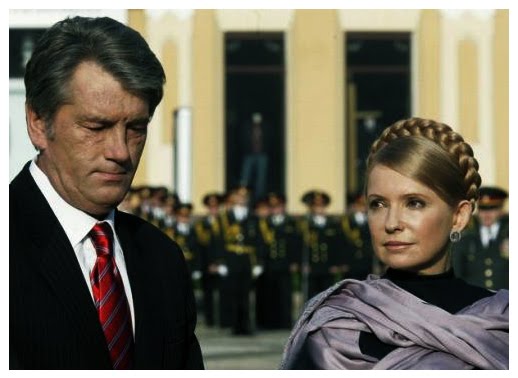
Russia Today: Not Allowed to Report the News at UN Meeting in New York!

Russia Today (a Russian News Agency) found out first hand about freedom of press in America. Russia Today found out that America has no room for criticizing anyone else in the world. The funny thing (not ha ha funny) is that they were told that they were doing nothing wrong…

So America can never talk down about Russia anymore for America is now doing what they claim the rest of the world is doing… Suppressing Freedoms!

NY police comes down on RT correspondent:

25 September, 2009, 05:18

As the UN session continued, RT correspondent Marina Portnaya was verbally abused and harassed by overzealous New York police officers.

She was prevented from broadcasting and denied the use of her phone, but was later told she had done nothing wrong.

However, a live broadcast associate was told that our correspondent still could not broadcast live from outside the UN. Eurovision New York – the company managing the site – put out the following statement through its senior producer, Ian Johnson:

“Your correspondent got into a confrontation with the New York Police Department and they have denied her access to our stand-up position outside the United Nations as a result. She has attempted to go back, and the police have again denied her access.”

“We have been warned by the NYPD that our operation will be shut down if they see her involved in a live shot from our position,” the statement says.

Seems that America is turning into a Police State right in front of your eyes. Don’t blink too many times because you may miss the transformation. I will let you seek out the information on the riots in Pittsburgh over the G20 meeting. But to show you a little sample of a Police State watch this video…


It Actually is Kinda Scary Looking Really, Talk About Overkill!

Windows to Russia!
comments always welcome.

Russia’s President Medvedev is Going to be Busy the Next Few Days!

What is Medvedev up to this week?

1. Russian President Dmitry Medvedev has arrived in the United States to attend a number of key international events and hold talks with foreign leaders.

2. Medvedev will address on Wednesday the 64th session of the UN General Assembly with his vision of the current world order and the system of international relations.

3. Medvedev will also hold talks with U.S. President Barack Obama, Chinese President Hu Jintao, Japanese Prime Minister Yukio Hatoyama, Austrian President Heinz Fischer and NATO Secretary General Anders Fogh Rasmussen.

4. On Thursday, the Russian President will attend a UN Security Council’s summit on nuclear disarmament, and hold talks with Algerian President Abdelaziz Bouteflika.

5. Later travel to Pittsburgh for a G20 summit to continue dialogue on steps to overcome the global economic crisis.

6. On the sidelines of the G20 summit he will hold bilateral talks with German Chancellor Angela Merkel and French President Nicholas Sarkozy.

That seems like a full plate to me… (Glad he likes his job!)

Windows to Russia!
comments always welcome.

Russian News From Russia: September 22nd, 2009!

Russia begins patrolling Abkhazian waters:
The first Russian patrol boat has arrived in the Republic of Abkhazia to protect the sea borders of the young state which declared independence from Georgia last summer following Tbilisi’s attack on South Ossetia.

EU to blame Georgia for the South Ossetian war:
An independent international commission working for the EU has put the blame for last summer’s war in South Ossetia on Georgia, but claim part of the responsibility also lies with Russia.

Melting ice may change world shipping:
Global warming could pave the way for a boom in commercial shipping across the eastern Arctic. Use of the Northern Sea Route, which links the Atlantic and Pacific oceans, would save companies time and cut fuel costs.

Iconic Soviet spy dies at 97:
Legendary Soviet undercover agent Elizaveta Mukasey died in Moscow at the age of 97 following a heart attack. She had been working for the country’s foreign intelligence for over half a century.

Russia’s first couple present Siberan bear cubs to Swiss capital:
The Russian president and his wife presented two Siberian bear cubs to Bern at a ceremony on Tuesday, on the second day of Dmitry Medvedev’s state visit to Switzerland.

Russia’s state defense order to rise 8% to $36 bln in 2010:
Russia’s state defense order will rise 8% in 2010 year-on-year to 1.1 trillion rubles ($36 billion), Deputy Prime Minister Sergei Ivanov said on Tuesday.

Five police officers injured in mortar attack in south Russia:
At least five police officers were injured when their vehicle came under mortar attack in the southern Russian republic of Ingushetia, police said on Tuesday.

Russia and Switzerland: a comparison chart:
Russian President Dmitry Medvedev arrived in Switzerland on September 21. The Russian leader will hold talks with his Swiss counterpart Hans-Rudolf Merz and meet with leading Russian and Swiss business representatives.

Russian, Chinese warships escort 23-vessel convoy off Somalia:
Russian and Chinese warships have completed a joint anti-piracy exercise which involved escorting a convoy of 23 merchant vessels in the Gulf of Aden, a Pacific Fleet official said on Monday.

Russia Can Steal Your Heart and Never Let Go!

Darrell and Dennis

Hello.

We wrote about a father and son who came to Russia a month ago. Denis has left a comment on Windows to Russia and gives out what his heart says about Russia. We are reprinting this comment because it tells from inside Dennis how he feels about Russia!

Lets read what Dennis wrote:

After returning home to the USA from Russia a few weeks ago, I can honestly say my feelings never changed about Russia. I have visited Russia four times since 2003, and each time I return to USA, I become more and more homesick for Russia. I suffer from withdrawal symptoms being away from Russia. I often go into depression for many weeks or months. The sudden change from Russian life to American life is very brutal to me physically and mentally. People in America often told me that I would experience culture shock when I arrived in Russia. The truth is simply the opposite!!! The real culture shock is coming back to America to the fast pace of life. In America it seems money, competition, and greed are the only things American people worry about. Americans are constantly worried about the kind of car they drive, the size of their house, where their children shall go attend college, and the size of their yearly income. I never felt this attitude or stiff competition in Russia. People in Russia don’t worry from day to day about what they don’t have, they simply live life!!! Each time I come to Russia, I pack only 2 bags of belongings, and I have every thing I could possibly need!!! I saw ordinary Russia people everyday who have very little and suddenly all the things I have accumulated in America doesn’t seem that important to me anymore. I definitely know I could add an additional 20 years to my life if I would simply walk away from this stressful life in American!!! Russia is in my blood and I hope your readers do not think I am crazy!!! I left my heart and soul in Russia!!!

Link to comment: russia-come-to-russia-you-may-not-want.html#comment-16934169

Thank you Dennis and we do not think that Dennis is crazy and if you do, then I (Kyle) am also crazy. I do know that I have added years to my life and I feel the same way that Dennis does…

We want Dennis and his son to know that they are welcome anytime!

Anyone else interested in coming to Russia drop me an email…

Windows to Russia!
comments always welcome.

More reading on Dennis and his son: Link 1 Link 2 Link 3