Russia: Happy Birthday – International Space Station (ISS) !


Hello,

Ten years ago on November 20, 1998 a Russian Proton rocket blasted off from the Baikonur Cosmodrome in Kazakhstan. Its mission was to put the first piece of the International Space Station (ISS) into orbit – a 12.5 metre, 19.3 tonne Zarya module. It was the first step for mankind’s most daring space project. (Link)

The International Space Station(ISS) which is a research facility currently being assembled in space. The on-orbit assembly of ISS began in 1998. The space station is in a low Earth orbit and can be seen from Earth with the naked eye: it has an altitude of 350-460 km (189-248 statute miles) above the surface of the Earth, and travels at an average speed of 27,700 km (17,210 statute miles) per hour, completing 15.77 orbits per day. The ISS is a joint project among the space agencies of the United States (NASA), Russia (RKA), Japan (JAXA), Canada (CSA) and several European countries (ESA).

The ISS is a continuation of what began as the U.S. Space Station Freedom, the funding for which was cut back severely. It represents a merger of Freedom with several other previously planned space stations: Russia’s Mir 2, the planned European Columbus and Kibo, the Japanese Experiment Module. The projected completion date is 2010, with the station remaining in operation until around 2016. As of 2008, the ISS is already larger than any previous space station.

The International Space Station has a role to play as NASA moves forward with a new focus for the manned space program, which is to go out beyond Earth orbit for purposes of human exploration and scientific discovery. “The International Space Station is now a stepping stone on the way,” says Griffin, “rather than being the end of the line”. He says ISS crews not only will continue to learn how to live and work in space but also will learn how to build hardware that can survive and function for the years required to make the round-trip voyage from Earth to Mars.

I find it wonderful that the world can work together and build this Space Station! It is really something to be proud of, but it makes me wonder why: Even in Soviet Union times, that world scientific groups could work together to achieve great goals, but Governments of Countries have to play games?

Think about it: If governments would get along like the Scientific Community does in the World, We would probably have a lot less problems! Scientist from all over the world work together many times, they respect intellect! Knowledge is Power! (Link)

Kyle & Svet

comments always welcome

Russia: The Slow Move to Rubles!

Hello,

I posted the other day about Belarus was going to buy all oil and gas from Russia in Rubles, no Dollars. Today The CIS countries (Russian Federation, Belarus, Ukraine, Moldova, Tajikistan, Armenia, Azerbaijan, Turkmenistan, Kazakhstan, Kyrgyzstan, and Uzbekistan) are getting the formalities out of the way to start making the Russian Ruble a International currency.

Heads of national banks and finance ministers from the CIS countries will discuss the use of the ruble to settle accounts with Russia for energy deliveries. Currently, payments are made in dollars, which are then converted into rubles in Russia. The extra expense of converting currency is reflected in the oil and gas prices, so the change would be beneficial to the importers. The change would also give the ruble a big boost as a regional currency, since the majority of the countries of the former USSR are consumers of Russian energy sources. (Link)

The Dollar has become such a burden to the stability of the Global financial system, that countries such as Russia, China, Japan and of the European Union are looking at alternatives.

Interesting….

Kyle & Svet

comments always welcome.

Russia: Medvedev On Russian Peoples Rights and Freedoms!

“Commenting on amendments to the Constitution under which the government will have to report to parliament, the president said: “This will not turn us into a parliamentary republic, and honestly speaking, I think Russia must never become a parliamentary republic, which would be the death of us.”

Medvedev said, however, that the constitutional amendments would strengthen the powers of the lower house of parliament, giving the State Duma additional levers to oversee ministerial decision-making.

Medvedev said the inviolability of people’s rights and freedoms was more important than the potential reform of the country’s political system.

“The Constitution must guard the stability of people’s rights, the protection of their rights and freedoms, the fundamentals of the system, property rights and justice – these things must not be altered,” Medvedev said.” (Link)

Rusian News: November 18th, 2008!

Hot News!RBC, 18.11.2008, Moscow 14:30:22.Head of the State Duma’s defense committee Viktor Zavarzin has warned the NATO Parliamentary Assembly against relying solely on Georgia’s viewpoint when forming an opinion on the Russian-Georgian conflict. He told journalists that the organization was expected to make a statement on the conflict during a session today. It is important that NATO PA’s opinions and estimates are based on the whole picture, Zavarzin maintained, rather than only on information provided by Georgia. The republic’s propaganda machine is striving to make an impression that during the operation Georgian troops adhered to the highest standards of observing human rights and ensuring security for civilians. In its attempts to prove it, Georgia quotes falsified or genuine estimates of non-governmental organizations, Zavarzin stressed, though it is still another blatant and cynical lie.

RBC, 18.11.2008, Moscow 14:08:18.Gazprom’s Deputy CEO Alexander Medvedev does not see any need to sell the gas giant’s stake in Gazprombank under current circumstances, he told journalists today during the Russian Gas 2008 forum. Earlier, Andrei Kruglov, also the gas giant’s deputy CEO, said Gazprom had already decided to sell its 14.5 percent in Gazprombank, but was waiting for a fair price for the asset. The decision was made public in June. Initially, it was presumed that part of the stake would be sold to a strategic investor, and the remainder during the bank’s IPO, if it was eventually approved. However, if no IPO was to be ventured, Gazprom intended to sell the whole of the stake directly. At that time, Gazprombank put its value at $25bn. However, Gazprom will still retain a controlling stake in the bank, as most of its cash flows pass through it. The current stake is to be reduced to a controlling one as part of Gazprom’s strategy to withdraw from non-core assets.

RBC, 18.11.2008, Moscow 13:43:03.Russia’s Economy Ministry has expressed hope that Russia will become a member of the World Trade Organization (WTO) from January 1, 2010, deputy director of the ministry’s trade relations department Andrei Kushnirenko said during the 7th annual Adam Smith Institute Russian Food and Beverage Forum. However, he pointed out that import duties would only be decreased after one year from the country’s accession date. The market will start to really open up in 2011, and the transition period for changing tariffs is expected to last for three to four years, Kushnirenko indicated.

RBC, 17.11.2008, Moscow 18:17:18.Russia expects its trade with Latin American countries to reach $15bn by the end of 2008, the Foreign Ministry’s information and press department said, quoting head of the ministry Sergei Lavrov today. He noted that the figure was rising rapidly, growing 25 to 30 percent per year. The minister also added that Russia intended to develop trade and economic ties with Latin America, including investment relations. Among the key areas of cooperation, Lavrov cited Russia’s high-tech exports, the energy sector, oil and gas production and transportation, mechanical engineering, metals and transportation industries, the peaceful use of nuclear energy, and space exploration. At the same time, he stressed that the expansion of ties between Russia and Latin America was not an instrument of diplomatic rivalry with the United States.

RBC, 17.11.2008, Moscow 15:29:53.Russia’s bailout plan is in line with the decisions made at the G20 summit, Deputy Finance Minister Dmitry Pankin told a press conference in Moscow today. He stressed that the wording of the summit communique was rather noncommittal and there were no statements obliging all countries to adopt tax incentives or take other steps suggested in the document. Pankin also pointed out that each country would have to take its own national peculiarities into account when implementing the measures proposed at the summit. Particularly, tax incentives introduced by a nation must not undermine its financial stability, the official stated.

RBC, 17.11.2008, Moscow 14:08:30.Russia is considering granting Iceland a loan of no more than $4bn. Even if Russia does resolve positively on providing Iceland with the loan, the amount will be less than the $4bn requested by Iceland. As Russia’s Deputy Finance Minister Dmitry Pankin told journalists today, $4bn is “a lot for both Russia and Iceland.”

Russia: Don’t Say You Were Not Warned!

ANKARA, November 18 (RIA Novosti) – The Russian defense minister warned on Tuesday that Georgia’s military buildup and drive to join NATO could cause a conflict worse than the five-day war over South Ossetia in August. (Rest of Article: Link)

Russia: 14th Century Stained Glass – WWII Bounty – Being Returned to Germany

BERLIN, November 18 (RIA Novosti) – Russia has returned six fourteenth-century stained glass windows that were among objects seized by Soviet troops during WWII to a church in Germany.

In 2002, Russia returned 111 stained glass windows to St. Mary’s Church, Marienkirche, in Frankfurt-upon-Oder. They had earlier been stored in the Hermitage museum in Russia’s St. Petersburg. Authorities later discovered that Moscow’s Pushkin Museum of Fine Arts had a further six panes from the church in their storehouse. (Link)

Russia: Today it’s the 20th anniversary of the historic flight of Buran.

Hello,

Today is the 20th anniversary of the historic flight of Buran. What you may ask is a Buran?

The Buran spacecraft (Russian: Буран, “Snowstorm” or “Blizzard”), GRAU index 11F35 K1, was the only fully completed and operational space shuttle vehicle from the Soviet Buran program. With a design that borrowed heavily from the American Space Shuttle, the Buran completed one unmanned spaceflight in 1988 before cancellation of the Soviet shuttle program in 1993. The Buran was subsequently destroyed by a hangar collapse in 2002.

Like its American counterpart, the Buran, when in transit from its landing sites back to the launch complex, was transported on the back of a large jet aeroplane. It was piggy-backed on the Antonov An-225 Mriya aircraft, which was designed for this task and remains the largest aircraft in the world.

Several shuttles were produced, one of those, the OK-GLI was modified to fly with jet engines for aerodynamic testing. One painted mock shuttle (the former static test-article OK-TVA) is now a ride simulating space flight in Gorky Park, Moscow. The OK-GLI was sold by its owner NPO Energia, shipped to Sydney in Australia and subsequently displayed at the Sydney Olympics in 2000. Shortly after, the new owner went bankrupt and the OK-GLI shuttle then went to Bahrain for a number of years while legal ownership status was in dispute. The Sydney/Bahrain (OK-GLI) shuttle was acquired by the German Technikmuseum Speyer in 2004, and has been transported to the museum, where it is exhibited to the general public.

Pavel Sharov from Cosmonauts News Magazine explains the advantages the Soviets had over their rivals in the U.S.

“The USSR surpassed the Americans in technology – U.S. shuttles can only be landed by humans, while the Buran lands automatically,” Sharov said.

Magomet Talboev was one of the pilots who test-flew the shuttle without going into orbit. He said the Soviet authorities had high hopes for the multi-billion dollar spacecraft.

“The Energia-Buran programme was started to get the capability to attack the United States, just like the shuttle was able to attack the USSR. We also wanted to take the Skylab space station from orbit. Buran was supposed to put it in its cargo bay and deliver it back to Earth for studies,” Tolboev said.

On May 12, 2002, a hangar housing a Buran 1.01 orbiter (the actual Buran that flew in 1988) collapsed due to poor maintenance in Kazakhstan. The collapse killed eight workers and destroyed the orbiter as well as a mock-up of an Energia booster rocket.

Buran technologies may make an unexpected return to the space industry as well.

Because NASA will soon retire its ageing space shuttle fleet, some American and Russian scientists are beginning to think of ways to revive the Buran programme.

It may be more economical than developing an entirely new spacecraft from scratch.

Kyle & Svet

comments always welcome.
www.buran-energia.com.

Read About Russia and Nothing but Russia!

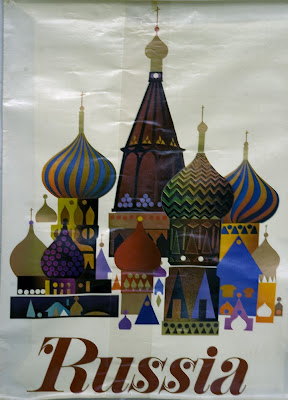
Poster downtown Moscow!

Hello,

Bored? Well read this……

Geography: Russia is the largest country in the world, covering 17.1 million square kilometer. Extending nearly halfway around the northern hemisphere and covering much of eastern and north-eastern Europe as well as the whole of northern Asia, Russia has a maximum east-west extent, along the Arctic Circle, of some 7,700 kilometers and a north-south width of 2,011 to 2,976 kilometers. Russia has an enormous variety of landforms and landscapes. Arctic deserts lie in the extreme north, giving way southward to the tundra and then to the forest zones, which cover about half of the country and give it much of its character. South of the forest zone lies the wooded steppe and steppe, beyond which are small sections of semi-desert along the northern shore of the Caspian Sea. Much of the federation lies in latitudes where the winter cold is intense and there are many rivers, lakes, and swamps, which are freeze in winter.

Climate: Owing to its vast size and the fact that most of Russian’s territory is far removed from any ocean, the climate throughout the country is extremely continental, with distinct periods of warm and cold weather. The continentality of Russia’s climate increases as one travels east, with average temperature differences between the warmest (July) and coldest (January) periods in Eastern Siberia, for example, varying as much as 65 degrees Celsius (117 degrees Fahrenheit). There is, however, much variation in climate based on latitude and physical geography. Temperatures for Moscow and St. Petersburg range from highs of 32 C in the summer to low – 25 C in winter

Population: Of a population of about 145.5 million, nearly 80% are concentrated in Western Russia. Moscow, the largest city in Europe, has a population of 11 million people, and St. Petersburg (former Leningrad) has 5 million inhabitants. Around two-thirds of the population now live in cities. The population size is currently on the decline. Pensioners constitute 23% of the population and the average family size is three people. The average life expectancy rate is much lower than that of other developed countries.

Language: Russian is the country’s official language. It uses the Cyrillic alphabet (rather than the Latin one used by most Western countries), and contains 33 letters. However, the 120 or so nationalities of the Commonwealth of Independent States speak about 48 other languages. Those of Slavic origin (i.e. Russians, Ukrainians and Belorussians) account for approximately 75% of the total population. In Moscow or St Petersburg it is not uncommon to find Russians who speak European languages, especially English.

Living Standards: The Soviet system provided accommodation with very low rents, free social services, subsidized vacations, assisted factory canteens, shops and sports facilities. Few of these remain. Prior to price liberalization, food, drink, cigarettes, public transport and utilities were also very cheap.

Today the recent reforms have forced a significant share of the population (especially pensioners) below the poverty line as inflation has outstripped increases in state benefits. There is a developing middle/commercial class involved in legitimate business. Only a very small proportion have become extremely wealthy, commonly known as ‘novye Russkie.’

Culture & Social Life: Theater, cinema, music and arts are important parts of Russian life; as with other countries funding has fallen for these, and private sponsorship is emerging. Features of Russian culture, which are at the highest of international standards, include the Bolshoi Theater, Pushkin Art Gallery in Moscow and Mariinsky (Kirov) Theater and the Hermitage in St. Petersburg. Russians also spend a considerable amount of their leisure time at the homes of friends and relatives – they place much importance on friendship and family. Consequently anniversaries and birthdays are celebrated with more gusto than expatriates may be used to at home.

Religion: Russian Orthodoxy is the main religion in Russian, followed to a lesser extent by Islam, Catholicism, Protestantism and Judaism. Religion has become more popular in Russia over the last few years as the Russian Orthodox Church has received official encouragement through the return of property confiscated during the Soviet period. The rebuilding of Christ the Saviour Cathedral (in Moscow) is symbolic of the restoration of the right to practice a religion in Russia, and this development has evoked much emotion amongst Russian (and foreign) people alike.

Ethnic diversity: The territory of Russia is home to more than 100 different ethnic groups representing a multiplicity of national histories and cultures and many distinct language groups, including Indo-European Slavic, Turkic, Finno-Ugric and others. The vast majority of the population – over four fifths – consists of ethnic Russians with another four percent consisting of Ukrainians and Belarussians.

International time: Moscow and St. Petersburg are three hours ahead of London time and eight hours ahead of New York time. Vladivostok is seven hours ahead of Moscow. Travel time to Moscow is about 3 hours and 35 minutes by air from London or Paris, 9 hours from New York, and 10 hours and 25 minutes from Tokyo.

Now that was exciting?

Kyle & Svet

comments always welcome.

Russia: Santa Time Again!

Hello,

I was just drinking my morning cup of coffee and trying to decide what to do. So I started to read the Moscow Times and realized that the ads in the paper were all about Christmas. Or better yet Russian Christmas with Father Frost and his Grand Daughter.Last year we ran several posts about the Russian Christmas time and Santa Clause. (Link) (Link) (Link) (Link) (Link)

Seems like I just read that Christmas (Western Version) is about 40 days away!

Get this widget!

So we put this countdown to Christmas just so everyone can be reminded how soon Christmas is coming.

Kyle & Svet

comments always welcome.

Russian News: November 14th, 2008!

Hot News!RBC, 14.11.2008, Moscow 13:43:59.State Duma deputies have approved in the first reading amendments to the Constitution on the extension of the terms of the president and the lower chamber of parliament. The changes were easily passed by 388 deputies voting for it and 58 against.

RBC, 14.11.2008, Moscow 12:51:37.Russia is expected to see the creation of a new consultative body to unite the majority of Russia’s television market participants prior to the general transfer to digital broadcasts. The new alliance is most likely to be known as Digital Alliance of Russia and headed by Russian Communications and Mass Media Minister Igor Shchegolev. Eduard Sagalaev, president of the National Association of TV and Radio Broadcasters (NAT), made a statement to this effect today. He pointed out that the alliance would become a place for its members to meet and discuss the development of digital television and radio in Russia. Cable operators, broadcasters, telecommunications operators, producers of television equipment and other market participants are all expected to join the alliance, Sagalaev noted.

RBC, 14.11.2008, Moscow 12:28:47.Russia and Belarus have agreed on switching to rubles in settlements for oil and gas, Belarusian Deputy Prime Minister Andrei Kobyakov announced following the signing of a memorandum of understanding between the governments of Russia and Belarus on coordinating measures to increase their national economies’ competitiveness. According to Kobyakov, such a transition will be one of the key items in the joint action plan to be prepared by early February 2009. “This will be our contribution to giving the ruble the status of a regional reserve currency,” the official said.

RBC, 14.11.2008, Moscow 11:56:19.The net profit of GAZ Group under IFRS dropped 14.5 percent to RUB 2.821bn (approx. USD 102m) in the first half of 2008 compared to the same period a year earlier, the company’s unaudited financial statement reads.

RBC, 14.11.2008, Moscow 11:47:14.President of Russia Dmitry Medvedev will take part in the Russia-EU summit in Nice, France. The EU will be represented by President of France Nicolas Sarkozy, currently holding the EU’s rotating presidency and President of the European Commission Jose Manuel Barroso as well as Javier Solana, secretary general of the Council of the European Union and high representative for the common foreign and security policy.

RBC, 14.11.2008, Moscow 10:38:57.The consolidated net profit of Razgulay Group under IFRS nearly doubled in the first half of 2008 and reached RUB 736m (approx. USD 26.60m), the Russian agricultural holding indicated in its financial statement today. Revenue surged 35 percent to RUB 11.476bn (approx. USD 415m) in January-June 2008 compared to the same period of the previous year. At the same time, gross profit stood at RUB 2.854bn (approx. USD 103m), having increased 85 percent. Pretax profit rose 2.6 times to RUB 1.439bn (approx. USD 52m).

RBC, 14.11.2008, Moscow 10:25:22.Russia and Belarus signed a memorandum on understanding in which they vowed to coordinate measures to raise the competitive edge of their respective national economies. Under the memorandum signed by Deputy Prime Ministers Alexei Kudrin of Russia and Andrei Kobyakov of Belarus, Russia will grant its partner a loan of $2bn in 2008-2009 for a period of 15 years at the interest rate of LIBOR plus 3 percent. In addition, the parties converged on the first tranche of the loan ($1bn) to be extended within a few days. A respective agreement on the second tranche will be signed as soon as the parties hammer out a joint action plan to improve their competitiveness – tentatively, by the beginning of February 2009. The payment itself is to be made before February 28, 2009.

RBC, 14.11.2008, Moscow 09:58:45.Russia’s full-year inflation is set to reach 13.5 percent in 2008. The estimate voiced yesterday by Russia’s Deputy Prime Minister Alexander Zhukov suggests that the inflation growth rate has been slowing down. Zhukov believes the rate is likely to be below 14 percent.

RBC, 13.11.2008, Cannes 19:43:12.The global economy’s overall losses from the financial crisis amount to $1.5 trillion, Russian President Dmitry Medvedev told the 10th round table meeting of Russia-EU industrialists in Cannes, France, on Thursday. Such serious consequences of the financial crisis call for giving serious consideration to the idea of reforming the global financial system, specifically its main institutions: the International Monetary Fund and the World Bank, the Russian leader believes. He also indicated that Russia was set to pass a package of bills by the end of 2008 to establish an international financial hub in the country.

RBC, 13.11.2008, Moscow 13:53:04.Russia’s federal budget cash surplus stood at RUB 2.75 trillion (approx. USD 100.11bn) in January-October 2008, according to a preliminary budget performance estimate drafted by Russia’s Finance Ministry. Primary surplus ran up to RUB 2,885.5bn (approx. USD 105.04bn).