 Hello,

Grab a cup of coffee and sit a moment to read Putins speech:
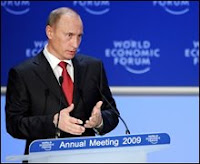
For the first time in the history of the Forum – Russian politician Prime Minister Vladimir Putin has delivered the key-note opening speech at Davos World Economic Forum.
Here is the speech:
————————————————————-
Esteemed participants of the World Economic Forum,
Ladies and gentlemen,
I am grateful to the organisers of the Forum for this opportunity to share with you my considerations about what is happening in the world economy today, and to tell you about our plans and proposals.
The world today has encountered the first really global economic crisis. Moreover, the speed at which the crisis manifestations are unfolding is breaking all records.
The current situation is often compared to the Great Depression at the end of the ‘20s and beginning of the ‘30s in the last century. To be sure, the parallels are actually visible.
Yet, there are principle differences. In the epoch of globalisation, the crisis has affected everyone – all countries irrespective of their political or economic systems. All of them are in the same boat.
There is, I believe, quite a well-known concept such as “the perfect storm.” That is when the unleashed natural elements focus in one point of the ocean and continue to build up their destructive force manifold. The current crisis looks precisely like “the perfect storm.”
Responsible and well-versed people must prepare for such a storm. But even so, it comes unexpectedly. And that’s what has happened this time. The crisis was actually hanging in midair. However, the majority who were trying to get a bigger piece of the pie – a billion or one dollar – did not wish to notice the rising tidal wave.
During the past several months, practically any statement that was made on the subject of the crisis began with rebukes addressed to the USA. I am not going to do that.
I would only like to remind you that only a year ago, from this rostrum, we heard the words of American representatives about the fundamental stability and cloudless prospects of the US economy. But today, the pride of Wall Street – the investment banks – have practically stopped existing. For the past year, they have had to acknowledge losses far exceeding their profits for the past quarter of a century. This example alone reflects the real state of affairs better than any criticism.
The time has come to see the light. We must calmly, and without gloating, try to look into the deep-lying causes of what has happened and to try to look into the future.
As we see it, the crisis was triggered by a combination of several factors simultaneously.
This is the collapse of the existing financial system. It is the result of poor quality regulation. And as a result of this, huge risks were overlooked.
This has been prompted by colossal imbalances that piled up over the recent years. First of all, this concerns imbalances between financial operations and the fundamental value of assets. This is the result of the increasing burden on international credits and the sources providing them.
There was a serious malfunction in the very system of global economic growth – namely, when one regional center endlessly prints money and reaps the benefits; whereas, another center produces not very costly commodities and saves money that other states have printed.
To this, I can add that in such a system, whole regions of the world, including Europe, found themselves on the periphery of global economic processes. And this means they were outside the framework of the key economic and financial decisions.
What is more, the benefits that were generated were distributed very disproportionately. In fact, such disproportions could be seen between layers of the population in individual countries and even in highly developed countries, as well as between different countries and regions of the world.
For a significant part of mankind, comfortable housing, education and qualitative medical care are still inaccessible. And the world upsurge of recent years has not radically changed this situation.
And last, but not least – this crisis was triggered by elevated expectations. The appetites of corporations in regard to growing demand were unjustifiably encouraged. The race of stock market indices and capitalisation obviously began to dominate over raising productivity and the real efficiency of companies.
Unfortunately, elevated expectations existed not only in the business medium. They prompted a rapid growth of standards of individual consumption – first of all, in the developed countries. And this growth, we must directly admit, was not backed up with real possibilities.
This was a well-being that was not earned. This was a well-being in debts that will have to be paid off by future generations.
Sooner or later, this “pyramid of expectations” had to come crashing down – which is actually something that we have witnessed with our own eyes.
* * *
Dear colleagues,
It is common knowledge that during times of crises there is a strong temptation to seek simple and popular recipes. But if one treats only the symptoms of an illness, then in the final count, one can receive much graver complications.
Understandably, the governments of all countries, the leaders of business must act with maximal resoluteness. Nonetheless, even in these force majeure circumstances, it is important to avoid taking steps for which we may be sorry in the future.
That is why I would like to begin with what in our opinion, should not be done. And what we in Russia intend to refrain from doing.
One must not allow oneself to skid down to isolationism and unbridled economic egoism. At the “Big 20” Summit, the leaders of the foremost economies of the world agreed to refrain form setting up barriers in the way of world trade and movement of capital. Russia shares these principles.
Even if amid crisis a certain strengthening of protectionism becomes inevitable, we will still need to keep the sense of proportion.
The second possible mistake would be excessive interference into the economic life of the country. And the absolute faith into the all-mightiness of the state.
Of course, the role of the state becomes more direct during crises – it is a natural response to the faults of the market. However, instead of improving market mechanisms there is always a temptation to enlarge the sphere of the immediate interference of the state in the economy.
The flip side of the anti-crisis measures in almost every country is the concentration of the excessive assets in the hands of the state.
During the time of the Soviet Union the role of the state in economy was made absolute, which eventually lead to the total non-competitiveness of the economy. That lesson cost us very dearly. I am sure nobody would want history to repeat itself.
We should also be aware that for during the last months, we have been witnessing the washout of the entrepreneurship spirit. That includes the principle of the personal responsibility — of a businessman, an investor or a share-holder – for his or her own decisions. There are no grounds to suggest that by putting the responsibility over to the state, one can achieve better results.
Another thing – handling crisis must not turn into financial populism, into rejecting a responsible macro-economic policy. Unreasonable expansion of the budget deficit, accumulation of the national debt — are as destructive as an adventurous stock market game.
* * *
Dear Ladies and Gentlemen,
Unfortunately, we are still far from fully fathoming the real scale of the current crisis. One thing though is obvious: the intensity and the continuance of the recession will largely depend on how precisely we will define the direction of our actions; and how coordinated and professional we shall be.
The first step that we think is essential to take in the nearest future is to literally and figuratively draw the line under our past. It is show-down time. We need to figure out the real state of affairs.
The businesses need to write off their irrecoverable debts and “bad” assets. Yes, it is a very painful and unpleasant process. And not everyone does it willingly, having fears for their capitalisation, bonuses or reputation.
But, avoiding clearing the balance means “preserving” and prolonging the crisis. I think that the writing-off mechanism must be effective and fit the realities of today’s economy.
Secondly, together with clearing the balance, it is time to go free from virtual money, made-up reports and doubtful ratings. The understanding of the health of the world economy and the real state of things with corporations must not be made vague by illusions. Even if the authors of those illusions sit in the world’s largest audit and consulting agencies.
The essence of our suggestion is that the principle of fundamental asset cost would be returned and put as the basis for the reform of audit, accounting and rating system standards. That is, the evaluation of this or that business must be built upon its capacity to generate the added value. We think that the economy of the future must be the economy of real values. How to get there? – That is the question put forward for all of us. Let’s work on it together.
Thirdly, the excessive dependence on what is basically the only reserve currency is dangerous for the world economy. So it would be reasonable to stimulate a process of getting a number of strong reserve currencies in the future. It is time to start a specific dialogue on how to make the transition into a new model – smooth and irreversible.
Fourthly, most countries keep their international reserves in foreign currencies. And they would want to be confident of their security. In their turn, the emitters of the reserve and accounting currencies are objectively interested to see that their money is in demand in other countries.
That is, that mutual interest and mutual dependence are clearly in place.
It is of vital importance that the countries responsible for the world’s reserve currencies offer more transparency for their credit and monetary policies.
These countries should take up a commitment to be guided in those policies by internationally adopted rules of macroeconomic and financial security.
And demand for such committed approach is pressing.
But beyond global finances, there are many other issues that are calling for a solution.
The unipolar pattern of the world economy that is completely outdated by now must be replaced by a new system based on cooperation of several big centres.
But to avoid chaos and unpredictable behaviour in a multipolar world, we need to bolster the network of global regulators – working in full compliance with international law and multilateral agreements. This is why we are calling for a re-think of the role of leading international organisations and institutions.
I am convinced that we are able to build a more fair and effective economic architecture for the whole world. However, due to time restraints it’s impossible to outline all the details of the proposed structure in this short speech.
Still, it’s obvious that in such a system all the countries must have guaranteed access to the resources they need for life, also access to new technologies and resources for further development. The world must work out guarantees that would allow minimising the risks of a new economic crisis.
We need to continue the discussion of all these issues, including debates at such venues as the G 20 meeting in London.
The decisions that we are now making must not only respond to the current situation, but also address the demands of a new, post-crisis world.
While struggling its way out of the crisis, the global economy may face a shortage of energy resources. There will simply be no juice for the future growth.
Three years ago Russia held the G8 summit focused on global energy security. We called for mutual responsibility on the part of suppliers, consumers and transit states. I believe it’s high time for action. We need to launch a system of responsibility that would really work.
The only way to ensure a true energy security for the whole world is to forge an interdependency, including an exchange of assets, – but without discrimination or double standards. Such interdependency is something that is definite to bring about a genuine mutual responsibility.
Unfortunately, the existing energy charter has failed to become a working tool that could be used to solve problems.
I propose to work out a new international legal framework for energy security. If implemented, our initiative could have the same economic impact as the Treaty establishing the European Coal and Steel Community. That is, we will be able to unite consumers and producers in a common energy partnership that would be real and based on clear-cut international rules.
We all realise that sharp and abrupt price fluctuations for energy resources are a strong factor that destabilises the world economy. The current price collapse could lead to the increase in non-expedient consumption of resources.
On the one hand, investment into energy saving projects and alternative energy sources will decline. But on the other hand, oil companies will cut the spending for the oil extraction – inevitably prompting a fall. That, in its turn, will again lead to skyrocketing prices and a new crisis.
We must get back to an averaged price based on the balance of demand and supply. We need to make our market clear of speculations brought about by secondary financial instruments.
One of the key problems is the safe transit of energy. There are two ways to solve the issue and both of them must be used.
The first way is transition to universally recognised market principles of tariffs formation for transit services. They can be fixed in international legal documents.
The second way is development and diversification of transportation routes for energy resources. We have been actively working in this direction for a long time.
Only in recent years we fulfilled such projects as gas pipelines “Yamal-Europe” and “Blue Stream”. Life has proved their urgency and demand.
I am convinced that such projects as “South Stream” and “Nord Stream” are equally vital for the energy security of Europe. Their total capacity is about 85 billion cubic metres of gas a year.
“Gazprom” together with its partners, the companies “Shell”, “Mitsui”, “Mitsubishi” will soon start operating facilities for liquefying and transportation of natural gas produced in the area of Sakhalin Island. It is also Russia’s contribution to the global system of energy security.
We have been developing the infrastructure of our oil pipelines. The first phase of constructing the Baltic pipeline system has already been completed.
BPS-1 provides produces up to 75 million tonnes of oil a year. Moreover, it directly delivers it to consumers through our ports in the Baltic Sea. In this way, transit risks are absolutely eliminated.
At present the work for designing and construction of BPS-2 is under way. Its oil carrying capacity is 50 million tonnes a year.
We intend to develop transport infrastructure in all directions. The first stage of the Eastern Siberia – Pacific Ocean” oil pipeline is nearing completion. Its final point will be a new oil port in the Kozmin Bay and a refinery in the Vladivostok area. In the future, in parallel to the pipeline, a gas pipeline will be laid towards the Pacific Ocean and China.
* * *
I would also like to mention the effect the global crisis had on the Russian economy. It has affected us in a most serious way.
But nevertheless, but unlike many countries, we have accumulated substantial resources.
And they expand our possibilities to assertively pass through the period of global instability.
The crisis has exposed the challenges we have. These are excessive orientation of export and the economy, in general, on raw materials and a weak financial market. There is a greater demand for the development of basic market structures, first of all, the entire competitive environment.
We were aware of these problems and have worked for their consistent solutions. The crisis just forces us to more actively move ahead according to the declared priorities without changing the strategy itself, whose essence is the qualitative renewal of Russia within the next 10-12 years.
Our anti-crisis policy is directed to internal demand support, social security of citizens and creation of new working places. Like many other countries, we are reducing taxes on production, investing money in the economy. We are optimising state expenses.
I’d like to reiterate that along with the measures of first response, we are elaborating a platform for post-crisis development.
We are confident that the leaders of world economy rehabilitation will become those who will create attractive conditions for investments already today as well as those who will manage to preserve and strengthen the sources of strategically important resources.
Therefore, the creation of a favourable entrepreneur ambience and development of competition, creation of a sustainable credit system based on internal resources and realisation of transport and other infrastructural projects are among our priorities.
At present, Russia is already one of the biggest exporters of several food products. And our input to provision of global food security will only increase.
We will also actively develop innovative sectors of the economy, first of all, those where Russia has competitive advantages in outer space, nuclear energy and aviation. In these directions, we have already been actively developing technological cooperation with other countries. The field of energy saving can also become a prospective subject for mutual cooperation. The increase of energy efficiency is just considered to be a key factor of energy security and future development.
We will continue reforms in Russia’s energy sector. We are implementing a new system of pricing for domestic consumers which is based on economically justified tariffs. This is important, among other things, to promote energy conservation. We will continue with our policy of being open to foreign investment.
I think that the 21st-century economy is an economy of people, not of factories. The intellectual aspect in the global economic development has grown immensely. That’s why we plan to concentrate on creating additional opportunities for our people to realise their potential.
Even today, we are a well-educated nation. But we need Russian people to get the best and the most modern education, to obtain professional skills which will be in great demand in the world today. Thus, we will develop educational programs for key professions in Russia with utmost vigour.
We will expand the practice of student exchange and organise internships for our students in leading universities and most advanced companies. We will create conditions for the best scientists, professors and teachers—regardless of their ethnic background and nationality—to desire to work in Russia.
History gives our country a unique chance. The way events unfold requires that we reform our economy and modernise our social sphere. And we are not going to miss this chance. Russia should come out of this crisis renewed, more powerful and more competitive.
* * *
Now I’d like to say a few words about problems that are not specifically economic—and yet, they are quite urgent under current conditions.
Unfortunately, more and more often we hear that increasing military spending will help solve today’s social and economic problems. The logic here is quite simple. Additional allocations for military needs create new jobs.
For reference:
The growth of military spending:
USA—$529 billion in 2006, $555 billion in 2007, and $583 billion in 2008. Experts expect $606 billion in 2009.
Great Britain—£27 billion in 2006, £31 billion in 2007, £34 billion in 2008, and £35.2 billion planned for 2009.
Germany—€23 billion in 2006, €24 billion in 2007, and €25 billion in 2008.
China—$38 billion in 2006, $44 billion in 2007, $58 billion in 2008, and a 17% increase in 2009 (around $66 billion).
Georgia (according to the Stockholm International Peace Research Institute)—$49 million in 2002, $80 million in 2004, $362 million in 2006, $592 million in 2007, and $1.104 billion in 2008.
At a glance, it seems to be merely a method to fight the crisis and unemployment. Perhaps, in the short run, such a measure may yield some results. But in reality, instead of solving the problem, militarisation pushes it to a deeper level. It draws away from the economy immense financial and material resources, which could have been used much more efficiently elsewhere.
I am confident that if we limit our military spending, at the same time strengthening global stability and security, this will definitely produce serious economic dividends as well.
I hope this point of view will prevail in the world. On our side, we are ready to work actively in the sphere of disarmament.
I would also like to draw your attention to the fact that the economic crisis may aggravate the negative tendencies that are present in global politics. The world has recently been confronted with an unparalleled growth of aggressive manifestations—Georgia’s adventure in the Caucasus, terrorist acts in India and the escalation of violence in the Gaza Strip. On the face of it, these events are not directly related, but their development reveals some common aspects.
It is above all the inability of existing international structures to offer constructive resolutions to regional conflicts and work towards achieving positive results in settling inter-ethnic and interstate contradictions. Essentially, multilateral political mechanisms have yielded as little effect as the institutions of financial and economic regulation.
Let us be frank: provoking military-political instability and other regional conflicts is also a convenient way of deflecting people’s attention from mounting social and economic problems. Regrettably, further attempts of this kind cannot be ruled out.
We will have to make the system of international relations much more effective, more secure and stable if we are to prevent this course of events.
There are quite a few pressing issues on the global agenda where the interests of the majority of countries objectively concur. These include the need to overcome the world economic crisis, joint efforts to reform international financial institutions, improve mechanisms of regulation and achieve reliable security in the sphere of energy and diffuse the world’s food crisis, something that has not yet receded into the background.
Russia is ready to make its contribution to the solution of top-priority tasks confronting the international community. We hope that all of our partners in Europe, Asia, America and elsewhere – I also have in mind the new US Administration, and we wish it success – will display an interest in joint and constructive work.
Ladies and gentlemen,
The set of problems facing the international community is exceptionally complicated. It sometimes seems that it is simply impossible to cope with them. But as the saying goes, a journey of a thousand miles begins with a single step.
We must seek support in the moral values that have ensured the progress of our civilisation. Honesty and hard work, responsibility and faith in our strength are bound to bring us success.
There should be no place for despondency. The crisis can and must be fought by uniting our intellectual, spiritual ad material resources.
This kind of consolidation of efforts is inconceivable without mutual trust. This does not only concern participants in business life. Primarily this concerns states.
Achieving mutual trust is a key task that all of us will have to pursue.
It is trust and solidarity that will help us overcome existing difficulties, avoid numerous upheavals and achieve prosperity and well-being in the current century.
Thank you for your attention.

 Picture above: This is new Flats (Apartments) in Kiev! Compare to Soviet era below.
 The Soviet era flats above are located just across the street from the new Flats in the first picture.
 The Picture above was cops that stopped the ones who did not stop for the cop below! 🙂
 Below: One lone Ice Fisherman! Looks cold …
 Below: These wires believe it or not were alive. If you touched several of them together the light pole lit up. Of course I being curious had to play with them!
 Below: I loved my walks in Kiev!
 Below: Inside Kiev Train Station – It is like this 24 hours a day!
 Below: Kiev 24 hour McDonald’s at the train station – Always very busy!
 Below: Singing for Money and they were very very good!
 Below: My Birthday Champagne from the Hotel!
 Below: The Lobby of the Hotel and Svetlana!
 Below: A Cafe at the Train Station not very busy considering thousands of people an hour go through the station!
 That is it for now. I just thought that I would show you some parts of Kiev that you may have never seen. I have some more pictures but that is another story so stay tuned for a couple of more Kiev, Ukraine posts. 🙂


