
Russia: Vacation Here We Come!

Hello,

Left Saturday, 29th.

We are on Vacation and will be gone at least two weeks. We are going to post but not near as often. Maybe every 3 to 4 days. (We hope.) Counts on wireless availability.

We want to thank all our readers & do not think that we have run away.

Do not be a stranger while we are gone, check out the archives. We will get to comments as soon as we can…….

Windows To Russia, has 467 Posts.

Windows to Russia: News, has 568 Posts.

Windows To Russia: Video, has 54 Posts.

Windows To Russia: CCCP, has 17 Posts.

Windows To Russia: Photo, has 13 Posts.

Windows To Russia: Did You Know?: has 45 Posts.

That is 1164 Posts to look at while we are gone!

Kyle & Svet

Subscribe in a reader

Russian News: March 28th, 2008!

RBC, 28.03.2008, Moscow 11:40:45.According to the Economy Ministry’s estimates, Russia’s GDP growth stood at 7.8 percent in January-February 2008 compared to the same period a year earlier, the ministry’s monitoring report on the economic situation in the country states. Meanwhile, GDP rose 8.2 percent in February 2008 against the same month of 2007.

RBC, 28.03.2008, Moscow 11:09:45.Rosneft’s net profit under RAS decreased 1.3 times from nearly RUB 213.217bn (approx. USD 9.07bn) in 2006 to RUB 162bn (approx. USD 6.89bn) in 2007, the Russian oil producer said in a statement today. Meanwhile, Rosneft’s net profit stood at RUB 70.691bn (approx. USD 3.01bn) in the fourth quarter of 2007, up 33.26 percent compared to RUB 53.047bn (approx. USD 2.26bn) in Q3 2007. Rosneft attributes the rise in quarterly profit to higher global prices of oil and oil products.

RBC, 28.03.2008, Moscow 10:59:11.Inflation is expected to reach 1-1.2 percent in Russia in March. This projection was made in a monitoring report on the macroeconomic situation in Russia for January-February 2008. As of March 17, Inflation stood at 0.6 percent. Consumer prices rose 1.2 percent (up from 1.1 percent a year earlier) in February and 3.5 percent over the first two months of 2008 (up from 2.8 percent over the same period of the previous year).

RBC, 28.03.2008, Moscow 10:27:27.More than half of Russians (55 percent) feel that innovations will improve the country’s economy and social life, a poll conducted by the Russian Public Opinion Research Center (VCIOM) showed. Younger people were especially optimistic about innovations, with 65 percent of respondents between 18 and 24 years old sharing this opinion. Meanwhile, 16 percent of Russians believe that innovations cannot change life greatly. The figures have remained virtually unchanged from a year earlier, VCIOM reported.

RBC, 28.03.2008, Moscow 09:56:09.The Association of Regional Banks of Russia (the Russia Association) has drafted a strategy for increasing the accessibility of financial services, which stresses the need to provide Russian Post with a “broad range of powers” on the lending and savings market, the RBC Daily newspaper wrote today. It has been proposed that POS terminals should be set up at all post offices, and that Russian Post should start issuing its own plastic cards and electronic money in the mid term.

RBC, 28.03.2008, Moscow 09:28:37.Renova Media yesterday announced its Comcor TV broadband Internet subscriber numbers in a report, which for the first time consolidated the figures of companies the media group acquired in 2006-2007. According to Renova’s estimates, this has placed the company second on the Moscow market, as Corbina Telecom has been moved down to third place, the RBC Daily newspaper wrote today. Analysts agree with Akado’s estimates, while competitors believe the figures are far-fetched. According to Comcor TV General Director Sergei Alimbekov, Comcor’s subscriber base in Moscow reached 369,000 users in 2007. According to the company’s data, it took second place with a 19.4-percent market share against 34.4 percent mustered by Comstar Direct (the Stream brand), with Corbina Telecom in third place with 15.5 percent (according to J’son & Partners’ estimates).

RBC, 27.03.2008, St. Petersburg 19:26:52.The ent profit of Polymetal under RAS shrank by a factor of 101.5 to RUB 537,000 (approx. USD 22,697) in 2007 compared to a year earlier, the Russian precious metals producer reported today. Net loss stood at RUB 40.571m (approx. USD 1.71m) in the fourth quarter of 2007. As reported earlier, the company’s net prodit stood at RUB 41.108m (approx. USD 1.74m) during the first nine months of 2007.

RBC, 27.03.2008, Moscow 19:03:22.The Russian stock market closed with most blue chips rising more than one percent. The MICEX index increased 1.56 percent to 1,618.61 points, while the RTS index went up 1.75 percent to 2,030.13 points. Among the RTS’s top gainers were Rosneft (up 4.76 percent), LUKoil (up 3.54 percent), and Surgutneftegas (up 3.56 percent). On MICEX, Rosneft surged 4 percent, LUKoil climbed 3.57 percent, and Gazprom Neft added 2.09 percent.

RBC, 27.03.2008, Moscow 15:47:17.Russia is currently reviewing US proposals for the strengthening of transparency and trust regarding the anti-missile defense system, Foreign Minister Sergei Lavrov told journalists today. He explained that, although the US had not abandoned its unilateral plan to deploy a missile shield in Eastern Europe, it had offered a number of steps to ensure that the shield does not harm Russia. However, Russia’s stand was that the US needed to scrap its anti-missile plan and switch to an alternative joint project involving Russia and other countries. This could help lift Russia’s concerns that the shield would be used against it, Lavrov said. Meanwhile, consultations between Russia and the US are still underway in Washington D.C.

RBC, 27.03.2008, Moscow 13:41:22.Russia’s gold and foreign exchange reserves stood at $502.2bn as of March 21, 2008, up $100m, or 0.2 percent from the previous showing. Coupled with a $21.1bn rise over the previous five-week period, the reserves have now increased by $21.2bn, or 4.4 percent, over the past 30 business days. The rise, which has been the smallest in several years, has been fueled by the euro’s considerable appreciation against the dollar on international exchanges, as well as significantly larger amounts of foreign currencies bought up by the Central Bank on the domestic market. As a result, Russia has been able to somewhat narrow the gap separating it from the world leaders in international reserves, China and Japan. China’s reserves currently exceed $1.65 trillion, having increased by more than $57.3bn in February alone and $61.6bn in January, due to the country’s huge trade surplus. Japan currently boasts over $1 trillion in reserves.

Subscribe in a reader

Russia: Visa Information!

Hello,

Just a short video on Russian Visa Issues. Worth a watch….

Subscribe in a reader

Russia: I Am Watching The Dollar Sink, One kopek at a time!

Hello,

I have watched the Dollar slide downhill slowly but steadily! This effect was not very apparent when I lived in the USA, but living outside of the USA, I see how the Dollar decline is conjunctively with all currencies……
————————————————————–
Dollar down 13.88 kopeks, euro up 16.91 kopeks – Central Bank

27/03/2008 13:48 MOSCOW, March 27 (RIA Novosti) – The official dollar rate set by the Russian Central Bank from March 28 is 23.5171 rubles, down 13.88 kopeks from Thursday, the Central Bank said.

The official euro rate for Friday is 37.0794 rubles, up 16.91 kopeks from Thursday.
————————————————————–
The dropping of the dollar adds up ……

Something my Grandmother(who lived through the Depression) said to me several times in my life when I was young.

Grandma said. “Never pass a penny laying on the ground.” She said. “Pick it up & save it for a rainy day.” She also said, “One day the Government will not have any pennies left & you will need those that you find!”

I have found thousands upon thousands of pennies, (now I find kopeks) They really do add up.

Look around you as you walk…….

Kyle & Svet

Subscribe in a reader

Russia: Spy Vs. Spy!

Hello,

Seems that here in the last few weeks there are spy’s everywhere. Now Belarus has uncovered another spy ring. They must not be very good spy’s because they keep getting caught.

Reminds me of: Spy Vs Spy……
———————————————————–
Belarus says uncovers U.S. spy network
Tue Mar 25, 2008 2:17pm EDT

MINSK (Reuters) – Belarus said on Tuesday it had uncovered a spy ring working for Washington, deepening a diplomatic and human rights row between the countries.

Hundreds of demonstrators from the ex-Soviet state’s liberal and nationalist opposition, meanwhile, staged an unauthorized rally in the centre of Minsk and clashed with police. Eyewitnesses said dozens were detained.

The U.S. ambassador this month left Belarus, whose president, Alexander Lukashenko, is accused by the West of violating basic rights. Authorities objecting to what they saw as new sanctions against Belarus had urged her to go.

The U.S. embassy has since stopped issuing visas and complied with a request to cut diplomatic staff in Minsk.

On Tuesday, Belarus’s intelligence service, still known by its Soviet-era initials KGB, said a spy ring of Belarussian citizens had been uncovered in the country of 10 million.

“The information about this group being exposed is completely true,” a KGB official said. “A group conducting espionage for the United States has been uncovered.”

KGB chairman Yuri Zhadobin later told Belarussian media that no arrests had been made in what he said was a “preventive” operation. New checks would determine if laws had been broken.

Tightly controlled state television reported at the weekend that a spying network of 10 Belarussian nationals had been exposed, but gave no details of concrete charges against them.

“We have no spies working on the territory of Belarus. These are people working for the diplomatic security service,” U.S. charge d’affaires Jonathan Moore told local media.

The report showed people described as embassy employees working as informers for the U.S. Federal Bureau of Investigation. Some told an interviewer they were gathering information to prevent terrorism.

OPPOSITION RALLY

In the evening, several hundred opposition activists gathered in a Minsk square to mark the 90th anniversary of the creation of the Belarussian People’s Republic, crushed within months by Bolshevik forces.

No authorization had been granted for a city-center rally.

Riot police surrounded the anti-Lukashenko protesters and broke them up into smaller groups. Clashes broke out and dozens were seen being led away to a police bus.

The opposition, often hit by internal divisions, has rarely attracted large crowds during protests in recent months.

Both the United States and European Union have long accused Belarus of crushing freedom of press and assembly.

Both bar entry to Lukashenko on grounds he rigged his 2006 re-election. U.S. officials, more critical, have denounced Belarus as “the last dictatorship in Europe”.

Lukashenko, at odds with traditional ally Russia over energy prices, seeks better ties with the West, particularly the EU. Several detainees deemed political prisoners have been freed.

Washington last year prohibited dealings with national oil products firm Belneftekhim, but denies Belarussian allegations that it has since imposed new punitive measures.

The Foreign Ministry called for sanctions to be lifted.

“If the U.S. side truly regrets what has happened and truly wants new and different relations with our country, it must rescind sanctions against Belarus,” a ministry statement said.

U.S. ambassador Karen Stewart last week said Belarus could end the logjam by freeing Alexander Kozulin, who ran against Lukashenko in 2006 and was sentenced to 5-1/2 years for staging protests after his landslide re-election.

Lukashenko remains broadly popular and says social benefits have spared Belarussians the turmoil of other ex-Soviet states.
By Andrei Makhovsky
———————————————————–
British Council rejects Russian spying allegation

25/03/2008 21:58 LONDON, March 25 (RIA Novosti) – The British Council rejected on Tuesday comments made by Russian president-elect Dmitry Medvedev suggesting that the organization is linked to British intelligence-gathering activities.

When asked by the Financial Times last Friday whether he believed the British Embassy’s cultural arm was involved in spying in Russia, Medvedev said: “The information that from time to time appears in the press and the reports that I get as one of the leaders of the country show that there is a problem with this.”

“This is not very surprising because these types of organizations are traditionally used for the collection of information,” said Medvedev, who will become Russia’s president on May 7.

A spokesman for the council told RIA Novosti: “The British Council does not cooperate with intelligence services of the U.K.”

Russia ordered the closure of the British Council’s offices in Russian regions in January following accusations of legal status irregularities and tax arrears, and amid growing tensions between Russia and the U.K.

Media attention was again focused on the organization last week, when reports emerged that two brothers with Russian-U.S. citizenship, one of whom has links with the British Council, had been arrested for industrial espionage.

The Federal Security Service arrested TNK-BP’s Ilya Zaslavsky along with his brother Alexander on March 12 for “illegally gathering secret commercial information for the benefit of several foreign oil and gas companies, in order to give them advantages over Russian competitors.”
———————————————————-
Oil major BP recalls 148 employees from Russia

25/03/2008 20:30 MOSCOW, March 25 (RIA Novosti) – A total of 148 employees of Britain’s BP working in Russia for TNK-BP have been recalled from the country due to problems with registration, the Russian-British venture said on Tuesday.

“We confirm that 148 employees of BP have been recalled from TNK-BP. The reason for their recall is that the status of their stay in Russia has not been fully regulated in line with Russian migration laws,” a TNK-BP spokesperson said.

The statement follows reports by some Russian and foreign media on Tuesday that about 150 TNK-BP employees were facing problems in extending their work visas. The Federal Migration Service has not commented on the reports.

Sources close to the situation earlier said that some of the company’s staff had travelled to Russia on business visas, while they should have obtained work visas.

Police seized documents last week from the central office of TNK-BP, one of the largest crude producers in Russia. The Moscow office of British oil major BP was also raided by police.

Security officials said copies of official documents, papers on oil and gas production believed to contain commercial secrets, as well as ID cards belonging to foreign military organizations and to the CIA were found during the searches.

The Federal Security Service said that on March 12 officers had detained TNK-BP’s Ilya Zaslavsky, along with his brother Alexander, who has links with the British Council, for “illegally gathering secret commercial information for the benefit of several foreign oil and gas companies, in order to give them advantages over Russian competitors.”

The British Council, the U.K. Embassy’s cultural arm, said Ilya Zaslavsky was not on its staff but was a member of the embassy’s alumni club for foreign graduates of British universities. The British Council, whose regional offices in Russia were closed down earlier this year over alleged tax violations, subsequently voiced its concern over the arrests.

However, the Foreign Ministry denied there was a connection between the two matters. “There is no sense in looking for a connection between these two completely separate cases,” Andrei Krivtsov, a deputy head of the Foreign Ministry’s information and press department, said on Friday.

Despite Russia’s denial that the two cases are unrelated, the arrests have the potential to further worsen Russian-British relations, already strained following the murder of Russian security service defector Alexander Litvinenko in November 2006 in London, and more recently by the closure of British Council offices.
———————————————————–
Last But Not Least:
———————————————————–
March 21, 2008, 12:19
American brothers accused of spying in Moscow
The Russian Security Service has charged two brothers, who are joint Russia-U.S. citizens, with commercial espionage. One of the Zaslavsky brothers works for TNK-BP, while the other is a member of a British Council’s alumni club. They have allegedly acquired classified information on Russian oil and gas companies for foreign firms.

The Federal Security Service of Russia, the FSB, detained the two men on March 12 and charged them on March 18.

The arrested men are brothers with the surname Zaslavsky. One of them heads a British Council’s Graduate’s Club project and his brother is the head of TNK BP Management’s English Department.

According to FSB spokesman Sergey Ignachenko, the Zaslavsky were “apprehended during an attempt to obtain commercial classified information from a citizen of Russia, an employee of one of the ‘closed’ Russian oil and gas companies”.

They are suspected of gathering classified information for foreign oil and gas companies.

“The persons have been collecting commercial classified information for a number of foreign oil and gas companies, in order for them to obtain advantages over their Russian competitors, for instance, on the CIS market,” Ignachenko said.

On March 19, the Russian security service conducted a search in TNK-BP’s offices, during which they have found material evidence confirming the industrial espionage.

Among the documents seized during the search, the FSB spokesman says, were “copies of Russian government documents, analytical reports relating to subsurface resources management, preliminarily rated as commercial classified information, as well as visit cards of representatives of foreign military agencies and the CIA”.

The Zaslavsky brothers have been released, but are not allowed to leave the country.

An investigation is underway.

Meanwhile, the British Embassy in Moscow says it is watching the situation closely, but refrained from commenting on the news.

The British Council is also monitoring the situation. They have pointed out that one of the Zaslavsky brothers is not an employee of the organisation, but a head of a project within it, the Alumni Association.

Aleksandr Shadrin, the spokesperson of the joint Russian-British oil company, TNK-BP, says the company is working closely with law enforcement agencies and the latest events have not interfered with its business.

“TNK-BP operates strictly in accordance with Russian law and we will not tolerate any action which could damage either the reputation of the Russian Federation or any of our business partners. We are opposed to unethical business relations or unlawful methods of competition. In this particular case we’ve co-operated fully with law-enforcement agencies,” he said.

He added that the company continues to operate in its normal manner and recent events haven’t affected its activities in any way.

It’s feared the arrests may increase tension between Russia, the UK and the US.
———————————————————–
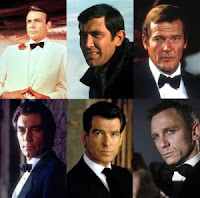
Where is James Bond when you need him?

Now, how many spy’s are not caught, that is the question????

Kyle & Svet

comments always welcome.

Subscribe in a reader

Russia: Is Chechnya Getting Safer?

Hello,

I was drinking my morning cup of delicious Russian coffee & thinking about Chechnya. I was thinking about doing an article on the troubled area. It has seemed to me that the conflict has mellowed out a lot down that way.

Just as I was getting ready to start the article I saw that Yuri Mamchur from “Russia Blog” decided to write the article first. So I am going to let you see his article and give him all the credit……
———————————————————-

Is There Still Terrorism in Chechnya?
Yuri Mamchur

Many positive political and economic developments are taking place in Moscow. Russia Blog has noticed that many of them have been ignored since the elections of the new Russian president. The doom-and-gloom scenario predicted by the Washington think-tanks did not take place, and the scholars along with journalists ran out of negative steam relatively fast.

The reporting about the troubled Caucasian region has disappeared from the Western media coverage as well. Grozny and Chechnya are in much better shape today than they were three years ago, with nearly half a million refugees returned to their home and nearly 100,000 private businesses started. However, terrorism remains to be an issue, and random minor attacks take place on a weekly basis. For detailed reporting and analysis of the attacks happening in the region, please visit the website of the “Russia-Eurasia Daily Watch”.
———————————————————-
Most of my Chechnya articles are in the “Windows To Russia: News!” blog.

Yuri is very correct about what he says in the article & I am glad he wrote it.

Thanks Yuri!

Kyle & Svet

Subscribe in a reader

Russian News: March 25th, 2008!

RBC, 25.03.2008, Moscow 17:46:23.Severstal reckons to achieve a synergetic effect worth $50m generated by the acquisition of Sparrows Point, the Russian steel maker said. The company’s management expects that the synergy between the companies will result from lower expenses and higher operating efficiency.

RBC, 25.03.2008, Moscow 17:21:03.LUKoil and Iraq have agreed to form a working group for the implementation of the Western Kurna-2 project, the Russian oil company’s press office reported today, referring to the talks held by its President Vagit Alekperov and Iraq’s authorities. Furthermore, LUKoil Overseas, the operator of the oil producer’s foreign projects, is to take part in tenders for new projects that will be announced by Iraq’s government following the introduction of a new oil law.

RBC, 25.03.2008, Moscow 16:50:59.The Federal Tax Service has transferred RUB 555.5bn (approx. USD 23.3bn) to Russia’s federal budget in January-February 2008, or 31.7 percent more than in the same period a year earlier, the tax authority said in a statement. The tax on the production of mineral resources and the value-added tax accounted for large portions (45 and 24 percent respectively) of the total revenue reported by the Federal Tax Service.

RBC, 25.03.2008, Moscow 16:33:37.Consultations between Russia and the US on Russia’s accession to the WTO will be held on March 26-27 in Washington D.C., the Russian Foreign Ministry reported to RBC today. The talks are a logical continuation of the recent negotiations held in the “two-plus-two” format in Moscow, the ministry reported. Russia will be represented by Deputy Foreign Minister Sergei Kislyak.

RBC, 25.03.2008, Moscow 15:45:12.Russia’s revenue from oil and gas sales is expected to decline to 6 percent of GDP in 2011 if global oil prices stand at $75 per barrel, the country’s Deputy PM and Finance Minister Alexei Kudrin said during the Economy Ministry’s board meeting today. He noted, however, that the government did not intend to cut budget spending despite the anticipated slide in revenues. Kudrin reiterated that the transfer of oil and gas revenues to the federal budget was expected to decrease from 5.5 percent of GDP this year to 3.7 percent of GDP in 2011.

RBC, 25.03.2008, Moscow 15:38:25.A decision on the increase of gas production tax has been postponed until 2010, Russia’s Deputy Prime Minister and Finance Minister Alexei Kudrin told journalists today. He pointed out that the government had reviewed all presented materials on the matter and postponed the increase, due to Gazprom’s substantial investment program.

RBC, 25.03.2008, Moscow 14:56:27.During the placing of RBC Information Systems commercial papers, demand exceeded supply, resulting in oversubscription, Alexander Kuznetsov, Director for debt capital market operations at Alfa-Bank, has reported. Alfa-Bank is acting as the underwriter for the loan. The results of the placing will be announced this evening.

RBC, 25.03.2008, Moscow 14:13:07.Stabilization Fund resources placed by the Finance Ministry in foreign assets continue to bring profit, even amid the ongoing global crisis, Deputy PM and Finance Minister Alexei Kudrin said during an Economy Ministry board meeting today. He reiterated that the reserve funds had been placed conservatively, adding that he was pleased not to have charged to invest more boldly in corporate bonds, as these securities had now slumped 30 percent. According to Kudrin, although Russian money was placed in mortgage company securities that had been hit by the financial crisis, the market slump did not influence them, as these were bonds guaranteed by the US government, and the Russian Stabilization Fund increased in value as its earnings rose.

RBC, 25.03.2008, Moscow 12:59:55.The placement of commercial papers of RBC Information Systems has started on MICEX. This is the first issue of this type of securities on the Russian market. Alexander Kuznetsov, Director for debt capital market operations at Alfa-Bank, the underwriter of the issue, said that the bank expected the loan to yield 12 percent per annum. The first tranche which is to be placed today is worth RUB 1.5bn (approx. USD 62.92m) and has a maturity period of one year. The entire issue totaling RUB 12bn (approx. USD 503.36m) matures on the 364th day after the start of placement.

RBC, 25.03.2008, Moscow 11:55:34.Russia expects to sign a protocol in April on the completion of talks with the United Arab Emirates (UAE) on its accession to the WTO, director of the Russian Economy Ministry’s trade negotiations department Maksim Medvedkov told journalists today. The talks with the UAE are nearing completion, and all the matters are expected to be settled this week, Medvedkov said.

RBC, 25.03.2008, Moscow 10:58:36.The Russian government is set to choose the founders of the St. Petersburg commodity exchange on Wednesday, Deputy Economy Minister Kirill Androsov told journalists today. The matter is to be discussed during a meeting held by Russian Prime Minister Viktor Zubkov. The ministry has drafted a package of constitutuent documents, a business plan for the exchange, and ideas about potential founders, which include both state-owned and private companies, Androsov noted.

RBC, 25.03.2008, Moscow 10:06:57.Russia’s Economy Ministry has revised Urals oil price forecast upwards, from $74 per barrel to $86 per barrel in 2008, head of the ministry’s macroeconomic forecasting department Gennady Kuranov said. Oil price forecasts for 2008-2011 were hiked 10 percent on average, with the price expected to reach $75 per barrel in 2009 (up from $66), $72 in 2010 (up from $62), and $70 in 2011 (up from $60). However, the ministry is scrutinizing other possible scenarios as well. Some of them predict that the oil price range will be $96-100 per barrel in 2008-2011.

RBC, 25.03.2008, Moscow 09:45:54.Russia officially resumes air links with Georgia today. AirZena Georgian Airlines will make its first flight on Tuesday on the Moscow-Tbilisi route after a 1.5-year break. Aeroflot – Russian Airlines will begin direct service between Moscow and Tbilisi on March 27. Moscow severed air links with Georgia on October 3, 2006 arguing that Georgia owed some $3.6m for the operation of flights. However, simultaneously Russia banned all transport links, as well as postal service on account of detention of four Russian military officers in Georgia.

RBC, 24.03.2008, Moscow 18:58:52.According to preliminary data, sales of National Computer Corporation (NCC) grew 35 percent to nearly RUB 40.252bn (approx. USD 1.693bn) in 2007 compared to a year earlier, the company’s President Alexander Kalinin told a press conference today following the release of the financial performance of computer equipment producer Aquarius, an NCC subsidiary.

RBC, 24.03.2008, Moscow 17:47:04.Russia’s production of conventional weapons is expected to grow 30 percent by 2010 and by a factor of 2.2 by 2015, the Vesti TV channel cited First Deputy PM Sergei Ivanov as saying during Russian President Vladimir Putin’s traditional Monday meeting with the cabinet. Ivanov noted that the share of civil products manufactured at defense enterprises was expected to increase to 53 percent of their total production by 2010 and to 59 percent by 2015. He also said that a military-industrial commission meeting on the development strategy of companies producing conventional weapons would be held on March 26. In addition, the Federal Service for Defense Contracts’ first project for 2009 is to be discussed at the meeting, Ivanov said.

RBC, 24.03.2008, Moscow 17:18:59.According to the estimate of Russia’s Federal State Statistics Service (Rosstat), real disposable cash incomes of Russians grew 11.2 percent in January-February 2008 compared to the same period a year earlier. Real cash incomes rose 10.6 percent in February 2008 against February 2007. Meanwhile, the average monthly accrued wages were estimated at RUB 15.214 (approx. USD 640), up 27.7 percent compared to a year earlier.

Subscribe in a reader

Russia: Spring Is Trying To Start!

Hello,

Moscow has been having some warm days, today has hit over 12.4 degrees C. That is about 54.2 degrees F. These are record temperatures for this time of the year. The previous record for March 25 was 12.2 degrees (53.9 F.) which was registered in 1973. The meteorological bureau said temperatures could climb even higher by the end of the day.

The trees are starting to bud out, and I expect to see flowers growing any time soon. Spring is here & I hope that Old Man Winter does not try to freeze the new growth.

I still think that he may be waiting around the corner……….

Kyle & Svet

comments always welcome.

Subscribe in a reader

Russia!

Still The Soul Of Russia: The Village!

Hello,

The second cup of morning coffee brought forth this really good article on Mother Russia. (The Country!) It gives a positive perspective about Russia and the one area I disagree with is matter of personal outlook on the Russian people! (I give my difference at the end of the article.) I understand this attraction to Mother Russia. Being 1/2 German and 1/2 Britain my roots are deep in Europe…….
———————————————————–
The Attraction of Mother Russia

By Olga Sharapova

Special to The St. Petersburg Times

Alexander Belenky / The St. Petersburg Times

To the frequent surprise of Russians themselves, many westerners choose to live and work in Russia, some of them permanently. Some are inspired by Russian Orthodoxy, while others come in search of a beautiful Russian bride.

When Peter the Great started building St. Petersburg in 1703, his vision was of a new capital that would resemble a western city in both appearance and customs. With impressive energy and entrepreneurial skills, Peter I tried to bring the best European achievements to Russia, such as business knowledge, practicality, good organization and attention to education, arts and science.

But even today, few Russians identify their homeland as a completely European country. There are many historical, political and cultural reasons for this — not least that it needs more time to integrate the Russian economy into international business processes than the 16 years that have passed since the break-up of the Soviet Union.

Step by step however, Russia is becoming an increasingly open country. Foreigners come to live in Russia for various reasons, such as to do business, study or working in the diplomatic service. Naturally, they bring with them their own cultures, experiences and habits. Moscow and St. Petersburg, where most expatriates in Russia are based, now offer considerable resources for foreign communities, from newspapers to schools, art festivals to ethnic restaurants and much more. Successful westerners may also unintentionally enhance the very popular idea among Russians that life in the West is completely different and far easier than in Russia.

According to the Russian mentality — or rather the Soviet way of thinking that is still alive in most adult Russians — wealthy foreign countries seem to many Russians to be the best places in the world. In the words of Arjen Roodvoets, a Dutch citizen who teaches his native language to Russians at both St. Petersburg State University and the Netherlands Institute, “Russians often think that life in the West is much better than here, but it is often not true. There is also an understated self-appreciation in Russia. In my opinion, Russia is a really special and original country. Russians should just be who they are, be natural and maintain their native values, such as a strong education system and culture.”

Roodvoets, who has lived and worked in Russia for nine years, has become deeply involved in Russian society and has adapted to Russian life. “I like many things in Russia, enjoy the Russian language and dealing with local people. One of the best things is my job here, because I like communicating with Russians.” Roodvoets, who speaks fluent Russian, was baptized in Russia and his favorite place in St. Petersburg is Valaamskoe Podvorie church on Staropetergovski prospekt.

“I think it is Orthodoxy that distinguishes Russia from other European countries and has formed the national mentality,” he says.

The cultural exchange between Russians and ex-pats is a two-way process. It is generally accepted that many aspects of Russian life have been westernized in a positive way (primarily business and management), and it is also true that there are a number of foreigners who enjoy exploring the differences between their own lifestyle and life in Russia.

Cobus van Rooijen, Group Sales and Distribution Director for Heineken Russia, says, “In my free time I usually explore cultural and natural attractions — recently, for example, I went hunting near Lake Baikal in temperatures of -35 degrees Celsius, and also attended a magnificent performance of “The Nutcracker” directed by Alexei Ratmansky at the Mariinsky theater.”

Yury Mikhailov, Managing Partner at Consort Consulting Group, has considerable experience of interacting with westerners and says he even knows some ex-pats who have become more Russian than Russians themselves by studying its history, literature, politics and character traits.

Generally, however, Mikhailov believes that “Most foreigners stay the same by going to their ex-pat bars, restaurants, clubs and consular events. This of course does not allow them to integrate and become familiar with local life.”

As to the differences between Russians and westerners, in Mikhailov’s opinion, “Foreigners often seek to achieve more recognition in professional circles as well as in their personal relationships.”

Walter Ragonese, who is from the U.S. and works in Russia as the Security and Business Continuity managing director of InterComp, concurs. “Most of the ex-pats I know have very fulfilling professional and social lives in Russia. Work is generally the focus of the professional/social life balance, but family and friendships are usually very significant factors in making the experience well rounded and personally satisfying.”

Ragonese’s colleague, Daniel J. Hill, who is general manager of InterComp Outsourcing in Russia, explains, “After 14 years in Russia, I am still here because I still find it an exciting, vibrant and dynamic place in which to work and live. I think many westerners (myself included) try to find a balance between maintaining ties with their home culture and friends, and embracing all of the new and interesting aspects of developing Russian friends and experiencing Russian culture.”

Asked what inspires foreigners to come here, Ragonese says, “Moscow and St. Petersburg in particular are very cosmopolitan and attractive locations that rank alongside other cities around the world for expatriates looking to develop their careers.

“Russia has always been open to the employment of westerners who have the necessary skills required by an organization,” he adds. “This hasn’t changed from 16 years ago when I first arrived in Russia. Obviously the required skills have become more specific with every year as the Russian market for management talent has become more developed.”

A good investment climate and very good corporate career opportunities are among the most positive factors about working in Russia, according to Cobus van Rooijen, top sales manager of Heineken Russia. But he cited the common problem often complained about by foreigners — elements of bureaucracy. His words were echoed by Consort Consulting Group’s Mikhailov: “Of course there is a certain amount of legal issues and bureaucracy, and dealing with red tape has never been easy, but it is a much more achievable goal than it used to be.” He adds, “If you just think for a minute, it’s not that easy to settle and work in other parts of the world unless you are an EU citizen wanting to work in other EU countries.”

From Mikhailov’s diverse professional experiences, he knows that many westerners who have entrepreneurial skills and an aptitude for business say that Russia became the land of opportunity several years ago. On the issue of why Russia has become a popular country in which to work, he says, “Profitability rates and sales turnover growth are much higher here than in the west, and this is what attracts businessmen seeking a faster return on their initial investments.”

Svetlana Sokhatskaya, branch manager of Kelly Services St. Petersburg, suggests that “Foreigners, in most cases, know how to count money and they realize that taxes in Russia are much lower. Many companies provide top managers from other countries with free apartments while they are working in Russia and it is, no doubt, a great advantage for westerners.”

Now there is a general tendency among local firms to invite foreign managers in to make the business more efficient. “It just means,” continues Sokhatskaya, “that in comparison with Russian specialists, westerners possess more international experience in business and management.”

The most popular and attractive segments of the local market for foreign investment are construction, real estate, the automotive industry, IT, the hospitality industry, publishing, food and the sale of different kinds of equipment. According to Mikhailov, “The number of companies is increasing every year. Since we work closely with Finnish companies, we know that there are more than 400 Finnish firms on the local market”.

InterComp’s Ragonese considers that “The most popular spheres of employment for ex-pats are auditing services, taxation consulting, and law firms. Real estate consultancy and management also employ a significant number of expatriates.”

One of the most dynamic industry segments is IT — virtually all the major brands are in St. Petersburg now, including Alcatel-Lucent, EMC, Motorola, Nokia, Microsoft, Google, Sun Microsystems and Intel.

The latest International Technical Exhibition at Lenexpo illustrated the level of interest in the Russian market — there were more than 100 companies from India alone at the fair, which focused on metallurgy and mechanical engineering, illustrating the line of business cooperation that Indian companies are planning to take in the near future.

The profitable hospitality industry, specifically the restaurant business and tourism, also tend to attract foreign managers. A myriad of different cuisines are on offer in the Northern capital — not just the usual Italian and French restaurants, but also Greek, Indian, Thai, Mexican, Korean, and many more. However, the active international presence on this business scene in turn spurs on Russians to increase their activity on the market and attract ex-pats and tourists to visit different Russian restaurants and clubs.

The private and daily lives of ex-pats in Russia may not differ greatly in some respects from the experiences of ex-pats in other foreign countries. But every country has its customs and idiosyncrasies. Van Rooijen of Heineken Russia thinks that foreigners here have several dreams — to learn the Russian language, to understand local customs and traditions, and to enjoy support in their business initiatives.

“What westerners lack in Russia,” says Mikhailov of Consort Consulting Group, “is the greater sense of security and stability that they have become so attached to back home — that’s why from time to time they tend to take off and head home for a couple of months to recharge their batteries, touch base with their friends and relatives, and share their Russian experiences.”

InterComp’s Ragonese has a keen interest in outdoor activities, and therefore lives outside the city and commutes to work every day. The most negative aspects of Russia, in his opinion, are corruption among local officials (especially the traffic police) and the aggressive behavior that Russians can display in public, even with total strangers.

But locals should not feel offended — it’s not so bad to know that westerners feel the same as Russians when the latter curse their country’s poor roads, corruption and impoliteness.
———————————————————–
I have to say that it is very accurate in almost all aspects! I do have one strong disagreement:

“The most negative aspects of Russia, in his opinion, are corruption among local officials (especially the traffic police) and the aggressive behavior that Russians can display in public, even with total strangers.”

I agree with corrupt officials, but I have never had in two years living here, a single Russian act out of line or aggressive! (At least when I compare to my life in America.) The Russians are some of the most polite and quiet people that I have met & my wife and I travel all over the country and Moscow. (This is my perspective.)

Thanks to Olga Sharapova for a very good article that talks good about Russia……

Kyle & Svet

comments always welcome.

Subscribe in a reader

Ukraine: Worlds Tallest Man!

Hello,

How would you like to be this tall……
———————————————————–
[24.03.2008 17:02]
Leonid Stadnik`s phenomenal height has forced him to quit a job he loved, to stoop as he moves around his house and to spend most of his time in his tiny home village because he cannot fit in a car or bus, according to AP.

But Stadnik, who according to the Guinness World Records is the world`s tallest human, says his condition has also taught him that the world is filled with kindhearted strangers.

Since his recognition by Ukrainian record keepers four years ago, and by Guinness last year, people from all over Ukraine and the world have shipped him outsized clothing, provided his home with running water and recently presented him with a giant bicycle.

“Thanks to good people I have shoes and clothes,” said the 37-year-old former veterinarian, who still lives with his 66-year-old mother.

In 2006, Stadnik was officially measured at 2.57 meters tall (8 feet 5 inches), surpassing a Chinese man to claim the title of the world`s tallest person.

His growth spurt began at age 14 after a brain operation that apparently stimulated the overproduction of growth hormone. Doctors say he has been growing ever since.

While he may appear intimidating due to his size, Stadnik charms visitors with a broad grin and childlike laugh. He seems at times like a lonely boy trapped in a giant`s body, even keeping stuffed toys on his pillow.

Stadnik`s stature has earned him worldwide attention, but it has mostly a burden to him. He has to battle to lead anything close to a normal life.

All the doorways in his one-story brick house are too short for him to pass through without stooping. His 200 kilograms (440 pounds) cause constant knee pain and often force him to move on crutches.

Stadnik loves animals, but he had to quit as a veterinarian at a cattle farm in a nearby village, after suffering frostbite when he walked work in his socks in winter. He could not afford specially made shoes for his 43-centimeter (17-inch) feet.

But his recent fame has brought him friends from all over the world and taught him not to despair.

A German man who said he was his distant relative invited Stadnik for a visit several years ago. On the trip, Stadnik got to sample frog legs in an elegant restaurant and saw a roller coaster in an amusement park — both for the first time.

Shortly after that, Stadnik came home one day and saw a brand-new computer connected to the Web sitting on his desk — a gift from a local Internet provider. Company workers “sneaked into the house like little spies” to install the equipment, Stadnik joked.

Since then he has made numerous online friends, including several in the United States, Australia and Russia. Stadnik hopes to learn English so he can communicate better with his Anglophone contacts; currently, he relies on computer translations, which he says are often inadequate.

Ukraine`s President Viktor Yushchenko`s personal tailor has made Stadnik two track suits and the president plans to present Stadnik with a giant car. Local authorities have also promised to supply gas to Stadnik`s village, 200 kilometers (125 miles) kilometers west of the capital, Kiev.

On Sunday, a local organization for the disabled gave Stadnik a giant bike so he can pedal to the grocery store, which is in a nearby village. The group also presented Stadnik with a fitness machine.

“I have always dreamt that my life and the life of my loved ones … would become more comfortable,” Stadnik said. “My dream is coming true.”

His neighbors joke that they may also benefit from Stadnik`s success. “Of course we are proud of him — we may have gas here soon thanks to him,” said Nila Kravchuk, 75.

Since he quit his job, Stadnik has concentrated on managing the family garden and taking care of his three cows, one horse and assorted pigs and chickens. He lives with his mother Halyna, 66, and his sister Larysa, 42.

Stadnik says his dream now is finding a soul mate, just like the former titleholder, China`s Bao Xishun, who was married last year.

“I think the future holds that for me,” he said.

AP

ctnstant URL of article:
http://www.unian.net/eng/news/news-242793.html

———————————————————–
I am 6’3″(190+ cm), he is 2’2″(66+ cm) taller than me! (256 + cm tall)

His health is failing, read this article here… LINK!
A beautiful video about Leonid Stadnik: watch HERE!

Kyle & Svet

Subscribe in a reader