Seems Russians Would Like Versatility in Politics…

Russia is threatening a political crisis and the Russian government is less legitimate in the eyes of the citizens, from the report by the Center for Strategic Research. Ending this political crisis requires fair elections, the loss of most of the “United Russia” people in the State Duma and the substitution of the first three levels of politicians. That means starting with president on down three levels…

Read More – but in Russia: http://www.gazeta.ru/politics/2011/03/24_a_3564305.shtml

By the way this information came from a report by a think tank that advises the presidential administration…

Windows to Russia!
IKEA’s Broken Reputation and the Smear Campaign on Russia…
Coffee and I Wasn’t Going to Say Anything, But…
I Think I Saw “Chicken Little” This Morning While I Walked The Dog…
Too Little and Too Late, the Natives are Restless…
Coffee and Russia and Parking and Police…
Russia: Volga Automobile, Part 1 History!

Libya: The coalition is perfect and kills no civilians…

What you see above is a cruise missile in action. They have been hitting the capital of Libya with these…

The coalition is perfect and kills no civilians…

However, US Defense Secretary Robert Gates has dismissed assertions by the Libyan government that coalition strikes have killed nearly 200 civilians. In a taped interview with American news organization CBS, Gates accused Qaddafi of planting bodies of people he had killed at sites attacked by coalition warplanes. Gates said this was a ploy to blame civilian casualties on the US-led coalition, adding it was hard “coming up with proof of any civilian casualties that we have been responsible for.” He also went on to praise the coalition air forces for being “extremely careful” during their operations…

So the West is the perfect war machine and we are to believe that we are so damn good that we can not find evidence that we have killed any poor unsuspecting civilians…

US President Barack Obama, meanwhile, has sounded an upbeat note on the mission in Libya, saying Qaddafi’s air defenses have been disabled and his forces pushed back. “Make no mistake, because we acted quickly, a humanitarian catastrophe has been avoided and the lives of countless civilians…have been saved,” he said in his weekly radio address on Saturday.

Have you ever seen the destruction power of a 1000lb Tomahawk cruise missile? I have and if you think that we should believe no one has died, then you are dumber than the politicians telling you that we have killed no civilians. Oh by the way, We have done all this for humanitarian reasons…

Than why is it we don’t care, that there have been revolutions and major riots and killing protests in multiples of countries. No we just care about saving Libya…

Well maybe when NATO America NATO takes over we can admit we have killed civilians. Nah – Oh I forgot, they are not civilians they are collateral damage and that does not count as a death…

So pardon me – while I don’t believe a stinking word of anything that the Western governments are telling us…

Windows to Russia!
Sacked ambassador stokes Russian tension over Libya
Putin is Correct and Medvedev is Incorrect…
Libya Follows UN Resolution: Oops Now What Will The West Do?
In Russia I Can Hear The Drums Tonight About Libya: Boom Boom Boom…
Starting to Look Like the West Will Cross the Rubicon River…

Anna Chapman: Agent provocateur

Anna Chapman, the “sultry Russian secret agent” who hit the headlines last year after being exposed as a deep-cover operative in the United States, says she bears no ill will towards the man who betrayed her. And why should she? Since being freed as part of a dramatic spy swap deal in Vienna in July 2010, the flame-haired daughter of a Russian career diplomat has rarely been out of the limelight, taking up a number of lucrative job offers and positioning herself for a move into big-time politics. “It was the start of something great and beautiful,” Chapman gushed on a recent Russian TV show. Or, as she puts it on her newly launched website: “The day I returned to Moscow was my second birthday.”

It wasn’t hard to predict that only good things awaited Chapman once she was safely back in Russia. The country’s all-powerful premier, Vladimir Putin, had said that Chapman and her former comrades would “work in worthy places” and have “bright, interesting lives”.

“Every single one of these people has gone through a difficult time… in the interests of their homeland,” said Putin, the ex-KGB officer. And while a number of her former colleagues have reportedly been rewarded with cushy posts at state-run companies, it is Chapman’s star that has risen by far the highest.

A month after their deportation, Putin joined up with the failed spies for a karaoke-type evening, where they crooned together the Soviet-era song – and unofficial Russian intelligence service anthem – “From Where the Motherland Begins”. After that cosy night out, things moved fast for Chapman. She was awarded a top state honour by President Dmitry Medvedev, posed for erotic – and lucrative – photos for men’s magazines, and was handed her own primetime TV show. She did, however, turn down a role in a porn film, despite being offered a “substantial” fee by the Vivid Entertainment adult-film company.

Chapman has also been made the face of the ruling United Russia party’s youth movement and has been tipped to win a seat in parliament in upcoming elections. On top of all this, she has registered her surname as a trademark; has brought out a poker app and a slew of Chapman-own products, including perfume, watches and vodka, is expected to hit the shops soon. The 29-year-old provincial Russian also has a Max Clifford-type agent to handle “commercial projects”, which include highly paid interviews and photo shoots.

Chernobyl 25 years on: a poisoned landscape

Yuri Tatarchuk has a disconcerting way of demonstrating Chernobyl’s grim radioactive legacy. An official guide at the wrecked nuclear power plant, he waves his radiation counter at a group of abandoned Soviet army vehicles that were used in the battle to clean up the contamination created by the reactor explosion in 1986.

“Some of these trucks are quite clean, but some of them not,” he announces. A sweep of his counter reveals only a few clicks from their doors and roofs. Then he passes the device over one vehicle’s tracks. A sudden angry chatter reveals significant levels of radiation.

“Wheels and tracks pick contamination from the soil,” he tells the group that has gathered round him. “There is still plenty of radioactive isotopes – caesium, strontium, even some plutonium – in the ground and we cannot get rid of them.” Twenty-five years on, Chernobyl remains a poisoned landscape.

Set among lakes, sandy soil and forests on steppe lands north of Kiev, Chernobyl achieved global notoriety in 1986 when technicians carried out an experiment aimed at testing backup electrical supplies to one of the plant’s four reactors. The flow of water – used as a coolant to carry away the mighty heat of the reactor core – was raised and lowered.

After a few minutes, there was a sudden jump in reactor power. Ten seconds later the core was blown apart by a massive explosion.

Without a containment vessel, the reactor’s deadly radioactive contents were borne high into the air by the heat of the core’s burning graphite and spread over much of Europe, triggering an international panic.

In the blast’s immediate aftermath, 31 plant operators and firemen died – they were not told the reactor was the cause of the blaze or that radiation levels were lethal – while thousands more people, living on land that is now in Ukraine and Belarus, received doses that undoubtedly shortened their lives, although scientists still dispute the death toll. The World Health Organisation puts it at 4,000; Greenpeace says 200,000.

Significant levels of radioactive caesium-137, strontium-90 and plutonium isotopes still pollute the ground. In one zone, dubbed the Red Forest, it reached levels 20 times higher than the contamination at Hiroshima and Nagasaki and remains highly dangerous.

The Chernobyl explosion was the world’s worst nuclear accident and is the only one classified as level 7 on the International Nuclear Event Scale. Next month will mark the 25th anniversary of the blast, a birthday that has acquired a dramatic resonance following the Fukushima reactor fires in Japan, which have resurrected global fears that nuclear mayhem could afflict the planet again – though it should be noted that the accident there measured only 5 on the nuclear event scale.

Chernobyl clearly has much to tell us about the dangers of nuclear power. Hence the recent soaring interest in the plant which, bizarrely, has become a popular tourist destination for foreign visitors to Ukraine. My coach trip last Thursday from Kiev was a sellout – with the 25-strong party including 15 members of the German, US, Russian, Dutch and British media. Television crews fought to interview the few baffled punters on the bus about the forthcoming anniversary, while other journalists simply interviewed each other. Your correspondent was cross-examined for Russian TV about the safety of nuclear power as he stood in front of the radioactive ruins of reactor no 4.

It was an extraordinary affair led by the ebullient Tatarchuk, a chunky, cheerful Ukrainian wearing a T-shirt bearing the slogan “Hard Rock Café – Chernobyl”. Sites on our strange tour included the buried village of Kopachi, a close-up look at reactor number 4 itself, a very quick drive through the Red Forest, and an exploration of the abandoned city of Pripyat. Radiation counters were handed out, and if these started to chatter too quickly – usually if we wandered off paths and on to open soil – we were told to make a detour. It was startlingly casual and, in the end, highly unsettling.

The Ukrainian steppe is still frost-burned and the trees leafless at this time of year. There are no buds on branches and little hint of greenery, a combination that only enhances the eerie desolation inside the 30km exclusion zone around the reactor. This land has seen harrowing times. It was occupied by German troops and most communities have memorials to the Soviet soldiers who liberated them – including the village of Kopachi inside the zone. In fact, Kopachi’s memorial is just about all that is left of the place, thanks to Chernobyl.

“Kopachi was very badly contaminated and so it was decided to bury it, house by house,” says Tatarchuk. “It seemed a good idea at the time, but it wasn’t. The digging only pushed radioactive material deeper into the soil and closer to the water table, so that contamination spread even further.” It transpires that devastating errors like these were common.

The only other evidence of Kopachi’s existence is the primary school near the memorial. Its windows have rotted and the front door hangs on a single hinge. It is also clear that it was abandoned in haste. Schoolbooks, jotters, sheets of music and road safety leaflets litter the hall floor while a single doll – its face blackened and cracked – lies on a cot inside one classroom.

Equally disturbing is the vast artificial lake built near the main plant, which was used to provide water coolant for its four reactors. The lake is frozen now, but while Chernobyl’s reactors were operating its water was warm all year round. Lichen blossomed, so a fish farm was built to populate the lake with catfish that ate the lichen and kept the waters clear.

After the reactor explosion, the lake was showered with radioactive debris which sank to the bottom. Today water has to be pumped constantly from the nearby river Pripyat to stop the lake evaporating in summer and exposing its toxic sediments, which would dry out and be spread by the wind.

However, it is Pripyat that provides the most disturbing evidence of the events of 25 years ago. The city was built to house the families of workers who manned the vast reactor complex at Chernobyl. Four reactors had been built by 1986 and two more were under construction. This was to be the biggest nuclear power complex in Europe. Fifty thousand people had homes here.

Reactor no 4 blew up in the early hours of 26 April, but no one told the people of Pripyat. All that day, children were allowed to play outside, despite the plume of radioactive material emerging from the reactor a few kilometres away.

Of course, there were rumours of a fire, but people had been indoctrinated to believe a reactor accident was impossible – until a fleet of buses arrived at 2pm the next day, 36 hours after the explosion, and Pripyat’s people were shipped off to camps and resettlement centres. At the time, they were told they would be allowed back to their homes within three days, but in the end they were never allowed to return.

For an hour, our group wandered round Pripyat, stepping over broken glass and lumps of wood and stone, with the constant chirrup of our radiation counters providing warnings if we strayed too far. Everywhere nature can be seen to be taking back its territory. Trees have erupted through the thick concrete steps of Pripyat’s central plaza, while the surrounding woods – which now provide homes for healthy populations of wolves, deer and boar – have spread over every piece of open ground.

Inside the city, books are littered over the grimy floors of the main library while outside, a Ferris wheel – set up to celebrate May Day that year – is slowly rusting.

How many people received fatal doses of radiation in those 36 hours of exposure remains a matter of dispute. Although cheery for most of the trip, Yuri’s anger about the fate of the people of Pripyat at the hands of Ukraine’s former Soviet masters became all too clear: “People were told that they had received a radiation dose of no more than 25 rems, enough to cause only minor illness. But that just was not true. They must have got hundreds of rems, fatal doses.

“It was criminal. People should have been given proper diagnoses and proper treatment. They got nothing. At least 5,000 people were badly affected at the time, while women who were pregnant were simply told to have abortions. It was a cruel time.”

Today workers are allowed to live in the village of Chernobyl, but for no more than four days at a time. With all four reactors at the plant closed down, they are helping to decontaminate the land within the exclusion zone and to decommission the plant’s first three undamaged reactors. As to reactor no 4, the concrete sarcophagus that hides its wrecked, exposed, radioactive core is now crumbling and work has started on a replacement – although Ukraine has made it clear that it will need international assistance to ensure the project’s successful completion.

This is a nation which will have to bear the consequences of the world’s worst nuclear accident for a long time to come.

As to the comparison between Fukushima and Chernobyl, Tatarchuk is emphatic: “No, it is not as bad in Japan as it was here, not by a long way. But there are lots of similarities. Basically, we had high radiation and no information in 1986, and that seems to be going on once more. That is the pattern when these things happen.”

  • Experts compare Fukushima and Chernobyl disasters (news.windowstorussia.com)
  • Japan declares Nuclear Emergency as Russia Mulls Remembrance of Chernobyl… (windowstorussia.com)
  • Fukushima reactors cooled with seawater (news.windowstorussia.com)
  • Efforts to build new Chernobyl cover cost $125 mln in 2011 (news.windowstorussia.com)
  • Difficult to predict end of Fukushima crisis – Japanese spokesman (news.windowstorussia.com)

Think of the cows: clocks go forward for the last time in Russia

Time change at the start of Daylight Saving Time
Spring Forward

Cows will be calmer, doctors happier and crooks less active.

That’s the thinking as Russia puts forward its clocks for the last time this weekend.

Leading the way in an incipient global trend that rejects the notion of changing the clocks in spring and autumn, the Russian authorities believe the move will reduce human – and animal – misery.

It means Russia, which stretches across nine time zones from Kaliningrad in Europe to the Kamchatka peninsula in the Pacific, will stay permanently on summer time from this Sunday, gaining extra daylight in the afternoons during its seemingly interminable winter.

The president, Dmitry Medvedev, said Russians were fed up with the time changes because they caused “stress and illnesses” and “upset the human biorhythm”.

“It’s irritating, people wake up early and don’t know what to do with themselves for the spare hour,” he said. “And that’s not to mention the unhappy cows and other animals that don’t understand the clocks changing and don’t understand why the milkmaids come to them at a different time.”

The only other country in Europe without switches to and from daylight saving time is Iceland, but Belarus and Ukraine are also considering abandoning the system.

Some critics suggested it was a populist move by the Kremlin to distract from more serious social issues, but many experts supported the idea.

Arkady Tishkov, a geography professor and member of the working group that advised cancelling twice-yearly time adjustments, said they provoked a litany of problems, including disruption of sleep patterns, aggravation of chronic diseases and increased traffic accidents.

“During the period of the clocks changing, the number of heart attacks increases by 50% and the number of suicides by 66%,” he said. Crime will also drop when the clocks are not put back in October because thieves are less active during daylight hours, Tishkov added.

Tatyana Rybalova, head of the research centre of Russia’s National Union of Milk Producers, told the Guardian that Medvedev was right to highlight the effect on livestock. “It’s true that cows are a lot more sensitive than humans to the changing of the clocks,” she said.

“I remember when daylight saving time was introduced in the Soviet times, there were protests by milkmaids in Novosibirsk and Omsk. It seemed to particularly upset the cows in Siberia.”

Russia is not blazing a lonely trail. Chile delayed its switch to winter time for three weeks to 2 April because of a looming energy crisis following drought and falling water levels in reservoirs serving hydroelectric plants. The time delay caused problems as clocks, mobiles and laptops flipped back an hour automatically.

It was the third recent occasion on which Chile had pushed back a time change to save energy. The first was in 2008, when there was another drought, while the second, last year, added daylight to help cope with the aftermath of Chile’s own earthquake and tsunami in February 2010.

In Australia, a small single-issue party, Daylight Saving for South East Queensland, is also gearing up for what it hopes will be a wave of support for its demands when the state parliament debates a bill seeking a referendum on the issue, probably next month or in May. It wants the state split into two time zones – so that the south-east of the state – where, it says, the population wants more evening daylight for business and the outdoor lifestyle – can go its own way.

In Britain, the daylight savings bill going through parliament is pressing for a government review of how and when the clocks are changed. MPs are collecting evidence on benefits and pitfalls of the idea, which is being promoted by Lighter Later, part of the 10:10 climate change campaign.

Kremlin moves to save Arctic oil deal with BP

Kremlin-controlled oil group Rosneft insists it is pressing ahead with its controversial alliance with BP, after the venture was blocked by a Stockholm court.

Igor Sechin, Rosneft’s chairman and Russia’s deputy prime minister, declared he intended to proceed with the alliance and claimed the court had merely extended an existing temporary injunction on the project by a fortnight. He also threatened to sue for any losses that Rosneft incurred from the court action taken by BP’s Russian oligarch partners AAR.

AAR sought to block the deal between BP and Rosneft that involved the companies swapping $16bn (£10bn) of shares and forming a joint venture to explore the Arctic for oil. AAR, which owns half of TNK-BP, BP’s existing joint venture in Russia, claimed the Rosneft deal breached an agreement under which the UK company is required to offer any business in Russia to TNK-BP first. The tribunal ruled on Thursday that the temporary high court injunction preventing the deal from being consummated should remain in place.

“The court didn’t block [the deal], it extended the injunction until 7 April . We must await the court’s verdict,” Sechin told reporters, putting him at odds with the other parties involved who believe the court’s verdict this week was final. “In any case, we want to follow the plan. We are satisfied with BP as a partner.”

Sechin also issued his warning that Rosneft could seek compensation for losses relating to the delay of the deal: “Rosneft is considering who is responsible for the collapse of this agreement. Certain losses are already arising. The partners know about this. The company will react appropriately.”

BP pledged to salvage what it could from its proposed alliance with Rosneft, saying it would now seek permission to swap its shares with Rosneft on the basis that the proposed Russian joint venture was scrapped.

Stan Polovets, AAR’s chief executive, opposed slimming down the agreement between BP and Rosneft to a straightforward share swap, saying the ruling “was perfectly clear in that BP is precluded from completing any element of its strategic transaction with Rosneft, including the exchange of shares”. He said the joint venture attempt “has harmed BP’s reputation in Russia”.

In addition to pressing ahead with its attempt to complete the share swap, BP is expected to seek talks with Rosneft and TNK-BP to see if the three parties can come up with a mutually acceptable agreement that would allow TNK-BP to participate in the joint venture.

The setback has put the spotlight on BP chief executive Bob Dudley, who announced the proposed alliance at a press conference in January, shortly after taking up the reins. He presented the venture as a transformational deal that would help put BP on the path of recovery following the Deepwater Horizon oil spill.

Arbuthnot Securities analyst Dougie Youngson said: “Given his [Dudley’s] past relationship in Russia, how difficult it has been, he should have been a bit more appreciative of how tricky it can be operating in Russia.”

Dudley has intimate knowledge of the workings of TNK-BP and the Russian oil industry at large, having previously headed BNP-TK until he was forced out of Russia after falling out with the oligarchs who co-founded the business.

Artem Konchin, an oil analyst at UniCredit in Moscow, added: “BP took a dive, not because of diminished prospects for growth, but because of what people perceived to be a miscalculation.”

Separately, the decision to block the deal was welcomed on environmental grounds.

James Marriott, of oil industry watchdog Platform, said: “It’s good that the arbitration ruling has delayed BP’s dangerous Arctic drilling. Despite the motivation for the injunction, the practical outcome is that it protects the Arctic from risky efforts to explore for oil.

“The British government should now take the responsible position of promoting an Arctic moratorium, as Norway has done.”

Shares in BP fell by more than 1% in early morning trading today, before rising on hopes that some kind of deal could still be agreed, to end 2.65p higher at 483.55p.

  • BP’s Russian deal with Rosneft blocked by court (windowstorussia.com)
  • Remember The Arctic Sea Incident? (The End of the Tale?) (windowstorussia.com)
  • Stockholm TNK-BP ruling puts BP Rosneft deal on ice (news.windowstorussia.com)
  • BP, Rosneft and AAR – The road ahead (news.windowstorussia.com)
  • TNK-BP posts FY 2010 net income of $5.8 billion (news.windowstorussia.com)

Coffee and March Madness in Russia…

Windows to Russia
Man flying a kite

Being from America most my life. I have a tendency to still equate my life in America to Russia. One of the hardest times to conform mentally to the differences is when you first wake up in the morning…

Sometimes I wake up and forget that the world I live in is so vastly physically different from that world that I came from…

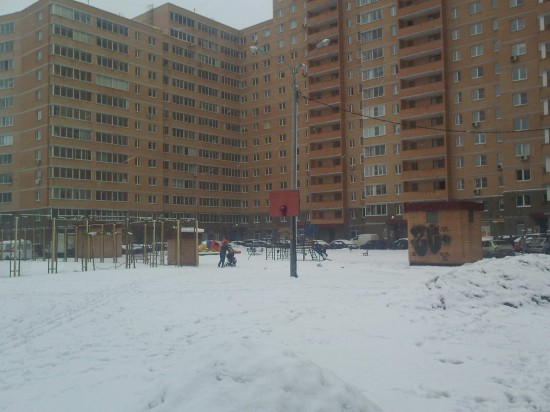
While sipping coffee this morning. I realized when I woke up today was a good example: I had gone to the window and looked out into Russia. That is when those moments of confusion happen and you are taken back by the weather until your brain acclimatises. You see it was snowing so hard that I could not see 2 meters from the window into the outside world. The temperature was about -6 Celsius and the wind was blowing just like a March wind does. So I went Ugh and grumbled about it going on the end of March and Father Frost has made a return trip…

Sveta just smiles at me and comments that they have a saying for March: “Make sure you put on several pairs of extra Long Underwear!” I understood her to mean, do not forget that March can be deadly cold and don’t be a fool…

So as I got ready to walk the dog. I had to use a scarf, heavy coat, long sleeve shirt, long underwear and heavy gloves. Now the dog is happy. He has his fur coat on all the time and he was ready to venture into the wild outside…

I am always amazed at March in Russia. I have talked to Sveta that in America we like to consider March the “kite flying” month. It also has been the month that you can have your first cookouts and picnics…

Humm – I can’t even find a place to have a cookout the snow is so deep, but we could fly kites… 🙂

Sacked ambassador stokes Russian tension over Libya

THE KREMLIN, MOSCOW. With President-Elect Dmit...
Medvedev and Putin...

Russia’s former ambassador to Libya has stoked new tension between President Dmitry Medvedev and Vladimir Putin, the prime minister, after calling the Kremlin’s acquiescence to air strikes targeting Libya a “betrayal of Russia’s interests”.

Putin and Medvedev, who are close political allies, appeared to clash on Monday after the former condemned support for the bombing as “a medieval call for the Crusades”.

Medvedev, who is responsible for setting the country’s foreign policy, responded by saying it was “inadmissible to use expressions like the Crusades that, in essence, can lead to a clash of civilizations”.

Aides to the two men have moved quickly to downplay the disagreement, but Vladimir Chamov has reignited it after flying home to Russia on Wednesday night. Chamov, who was sacked as ambassador to Tripoli by Medvedev earlier this month, told reporters that Moscow’s failure to oppose the bombing raids would lose Russian companies huge sums of money in arms and other contracts.

He denied rumors that he wrote a telegram to Medvedev calling him a traitor, but said: “I wrote a telegram in which I underlined that I represent the interests of Russia in Libya. Recently, our countries have aimed at close co-operation, and it is not in the interests of Russia to lose such a partner.”

He added: “Russian companies have signed very advantageous contracts for billions of euros for several years ahead that could be lost or have already been lost. In a certain way, that can be considered a betrayal of Russia’s interests.”

Russia abstained last week during the UN security council vote which approved military intervention in Libya.

Chamov, who was reportedly greeted at Moscow’s Sheremetyevo airport by Russian nationalists bearing bunches of flowers, declined to comment on Medvedev personally.

However, he said Qaddafi was “a very adequate person” and, when asked to comment on Putin’s Crusades comment, he replied: “Vladimir Vladimirovich, and this is something I particularly like about him, gave a very precise, short and profound definition. And here, I think, he is not far from the truth.”

Analysts said Putin’s comments reflected his desire to please patriotic voters, while Medvedev had acted shrewdly to preserve respect in the west while bolstering Russian interests.

“Russia took a pragmatic decision by abstaining in the security council vote,” said Alexei Fenenko, an international security expert at the Russian Academy of Sciences. “If the United States wants a third war, let them have it. There was already fighting in Libya even without the intervention, so our companies will lose out, bombing or not. Plus Russia’s past experience shows that the US is ready to act without UN support – a veto doesn’t stop them.”

Medvedev and Putin have both said they will agree together who contests the Russian presidency next March. Some observers think any disagreements between the two are cosmetic.

However, Gleb Pavlovsky, an analyst with close ties to the Kremlin, said discord in the ruling tandem had “become a generator of nervousness” in the political elite. “We need to enter a regime of certainty, when we know exactly who will run in the presidential elections,” he told the daily newspaper, Moskovsky Komsomolets.

BP’s Russian deal with Rosneft blocked by court

BP Logo
BP Logo
Rosneft

BP’s controversial alliance with the Kremlin-controlled oil company Rosneft is in tatters after a tribunal backed the company’s Russian partners in blocking the deal.

The London tribunal, called to settle the dispute between BP and its Russian oligarch partners AAR over the proposed deal, ruled that the temporary high court injunction preventing it from being consummated should remain in place. The deal involved BP and Rosneft swapping $16bn (£10bn) of shares and forming a joint venture to explore the Arctic for oil.

BP issued a statement on Thursday night saying it was “disappointed” that the deal could not go ahead as proposed and that it would try to proceed with the share swap without forming the Arctic venture.

But it is likely that AAR will also seek to block this plan unless it wins key concessions from BP. AAR owns half of TNK-BP, which is BP’s existing joint venture in Russia. AAR claims that BP’s proposed rival joint venture with Rosneft breaches the terms of its shareholder agreement governing TNK-BP.

Under the terms, BP is required to offer any business opportunity in Russia to TNK-BP first, rather than pursue it unilaterally. AAR is keen to turn TNK-BP into a global oil major and sees the Arctic joint venture with Rosneft as an opportunity to achieve its ambitions. AAR fears that if the two companies swap shares, even without forming the Arctic venture, it makes it more likely that it will be excluded from future projects in Russia.

AAR’s CEO Stan Polovets said: “AAR welcomes the decision of the arbitration tribunal, which we expect BP to honour fully and absolutely.”

The ruling from the tribunal is a serious blow to Bob Dudley, BP’s new chief executive, who announced the proposed alliance at a press conference in January. Dudley, himself a former chief executive of TNK-BP before he was hounded out of Russia by AAR in 2008, presented the alliance as a transformational deal as the company recovers from the Deepwater Horizon crisis.

It is not clear how BP’s investors would view a standalone share swap with Rosneft even if AAR did not succeed in blocking it. BP has raised more than $20bn from asset sales since the Gulf Crisis to focus on boosting production and finding new reserves. Its record in Russia has been marked by disputes with its partners.

BP said it was hopeful that it would be able to resurrect its plan to explore the Arctic. Dudley, along with executives from Rosneft, has pointed out that TNK-BP has no experience of offshore exploration, let alone in an environment like the Arctic, which makes it an unsuitable partner. AAR hopes that the tribunal ruling will persuade both companies to find a way for it to participate.

BP looks forward to finding a way to resolve its differences with its Russian partners to allow these important Russian Arctic developments to proceed in future,” a statement from BP said.

BP has a long history as a leader in oil and gas exploration and the development of new technologies. BP intends to continue in that role for decades to come as the world looks to satisfy its increasing demand for secure, affordable energy supplies. BP has the scale and experience to use these new technologies to develop frontiers like the Russian Arctic.

BP is disappointed that these agreements, which are important for Russia, for Rosneft and for BP, cannot for now go ahead in the form intended, due to legal challenge by AAR. BP intends to continue to honour the TNK-BP shareholders’ agreement to which it is a party with AAR, and will respect the decision of the arbitrators. BP has always been and remains, fully committed to investing in Russia. TNK-BP is BP’s primary business vehicle in Russia and BP fully supports its strategy and investment programme. BP is also continuing with its exploration programme with Rosneft offshore Sakhalin.”

Obama affirms U.S. support of Russia’s WTO bid

WTO...

U.S. President Barack Obama told Russian President Dmitry Medvedev that he was committed to support Russia’s bid to join the World Trade Organization (WTO).

Obama and Medvedev spoke by phone on Thursday to discuss a wide range of issues in U.S.-Russia relations.

President Obama affirmed his support for Russia’s accession into the WTO this year and also affirmed his commitment to work with the U.S. Congress to terminate the application of Jackson-Vanik to Russia and establish Permanent Normalized Trade Relations with Russia,” the White House said in a statement.

Russia has been in membership talks with the 153-nation WTO for 17 years and remains the only major economy still outside the organization. It is expecting to join the “global trade club” by the end of this year.

Another important issue on the bilateral economic agenda is the long-standing Jackson-Vanik Amendment on restricting trade with the Soviet Union, which the U.S. Congress had adopted in 1974 to pressure the USSR into allowing emigration.

The controversial amendment is still applied to Russia, and has proved a key barrier for the country’s entry to the World Trade Organization.

The U.S. Congress may terminate the application of Jackson-Vanik to Russia as early as this spring.

WASHINGTON, March 25 (RIA Novosti)